HEALTH There's been a pneumonic plague outbreak at a BSL-3 lab in Siberia, Russia.

That one concerns me. (In general, not this incident specifically.) It is so easily mistaken for influenza, and by the time people catch a clue that it's plague, it's usually too late. And the vast majority of people are not prepared to deal with pneumonic plague, or anything else for that matter. Just let the public catch a whiff about pneumonic plague in their communities, and I'm sure all heck will break loose.
 
I HOPE they are isolating all the people exposed to that and quarantining travel in the area.

I STILL have the cough from 'the crud" that started going around in late summer. I still wonder if this weird "cold" is not some mutated form of Covid, because of the way it messes with body temperature (you 'feel' hot and cold--but it's not fever (in fact I ran below-normal temperature) or having chills--it's more like the "hot flashes" I used to get in pre-menopause (over 20 years ago and I'm looong over that). Headaches (like I had w covid); drainage, and a cough that won't quit & feels like someone is trying to strangle you around the neck.

ETA: Doc tested me for both flu & covid; both tests negative but it was telling that he said, "There's no test for it because they don't know what it is, yet." BTW, he is a very conservative Doctor--believes Covid was deliberately created & released in Wuhan, very anti-vax, prescribed his "cocktail" of ivermectin, hydrochloroquine, zinc, doxycycline, etc. for the Covid the two times I had it.

I've had pneumonia 5 times, and am told each time one gets it, it leaves more damage to the lungs. Pneumonia is really, really bad news for me---every time I get a "cold" it takes longer and longer to get over the cough and every cold tries to turn into bronchitis or pneumonia.
 
Last edited:
Annie Jacobsen:

☣️More details on the Oct 1st pneumonic plague outbreak in Siberia, after a lab accident at a BSL-3 lab.

"FSB units accompanying ambulances transporting people who had been in contact with [lab tech] Shipilova for medical examination," as per local news. This is significant. FSB is Russia's domestic security / counterintelligence service, tasked w/implementing the national security of Russia." (Its predecessor was the KGB). This suggests quarantine was not voluntary.

It also means Russian authorities are treating the lab accident and plague outbreak as a national security issue, involving a lot more than routine public health.

View: https://x.com/AnnieJacobsen/status/2106172807273206035
 
Grok:

Incubation is typically 1-3 days (range 1-6). Contagious only after symptoms begin, via respiratory droplets from coughing (esp. bloody sputum); needs close contact (~6 ft). Not during incubation.

Symptoms: sudden fever, headache, weakness, then rapid pneumonia (cough, chest pain, shortness of breath, bloody sputum). Can kill in 18-24 hrs untreated.

Untreated: nearly 100% fatal. Early antibiotics (within 24 hrs of symptoms): most recover, mortality ~17%.

View: https://x.com/grok/status/2106202937630273699
Can kill in 18-24 hrs untreated.

!!!
 
Bacterial, NOT viral. That sets it apart from flu or COVID. Also treatable with antibiotics.

Get them now before you can't import drugs, anymore.

Both levofloxacin and ciprofloxacin are first-line, FDA-approved fluoroquinolone antibiotics for treating pneumonic plague, and they show similar high effectiveness

Efficacy: Both drugs are highly effective (over 90% in animal models) when treatment begins very early, ideally within hours of symptom or fever onset (Ragnarok: In other words, don't wait for the lab results before starting the antibiotics)

Levofloxacin. 8 mg/kg/dose every 12 hours. (maximum 250 mg/dose).

Ciprofloxacin. 15 mg/kg/dose every 12 hours. (maximum 400 mg/dose)
 
Pneumonic plague is a severe, rapidly progressing lung infection caused by the Yersinia pestis bacterium. It is the most aggressive and least common form of plague, distinguished by its unique ability to spread person-to-person through respiratory droplets. Without immediate medical intervention, pneumonic plague has a case-fatality rate approaching 100%.
Wikipedia +3


Transmission and Forms
Pneumonic plague can present in two distinct forms depending on how the infection is acquired:


  • Primary Pneumonic Plague: Occurs when someone directly inhales aerosolized Y. pestis bacteria. This can happen via close, face-to-face contact with an infected
  • coughing person or animal (such as a domestic cat). It is also the form of greatest concern regarding potential biological warfare or terrorism.
    Washington State Department of Health (DOH) (.gov) +3


  • Secondary Pneumonic Plague: Occurs when an untreated case of bubonic or septicemic plague spreads through the bloodstream and invades the lungs.
  • High fever, chills, and severe headache

  • Rapidly progressive shortness of breath (dyspnea) and chest pain

  • A severe cough producing watery, frothy, or fluid sputum that quickly becomes bloody (hemoptysis)


  • Rapid progression to respiratory failure, septic shock, and circulatory collapse

    Treatment and Prevention
    There is currently no licensed vaccine available to the general public. Because the disease progresses with extreme speed, intravenous antibiotics must be administered within 24 hours of the onset of symptoms to reduce the risk of mortality.

    Effective treatments include standard antibiotics such as streptomycin, gentamicin, doxycycline, or ciprofloxacin. Effective management of an outbreak relies on immediate isolation of infected patients, strict use of personal protective equipment (PPE) by healthcare workers, and prophylactic antibiotics for anyone known to be exposed.

  • Google Search
 
From Google:

Based on current data and the swift response from public health officials, the risk of a widespread community outbreak remains very low, and Russia is highly likely to contain the incident locally. [1]
While pneumonic plague is the most dangerous form of the disease due to its ability to spread via respiratory droplets, several factors strongly favor immediate and successful containment: [1]

1. The Source is Fully Traced
This is not a "blind" outbreak where a disease has been silently spreading through an unknown community reservoir. Because it was caused by a highly specific, recorded laboratory accident on September 25, epidemiologists knew exactly when, where, and how the exposure originated. This drastically limits the pool of potential secondary cases. [1, 2]

2. Aggressive "Ring Isolation" is Already Active
Russia's public health watchdog, Rospotrebnadzor, immediately enacted strict protocols: [1]
  • Mass Quarantine: They successfully traced 197 total contacts within days of the exposure, placing 189 of them into strict hospital monitoring. [1]
  • Physical Lockdown: The Shelekhov District Hospital—where the patient was treated—was entirely quarantined, halting all patient admissions and discharges to prevent the pathogen from escaping into the general public. [1, 2]
  • High-Level Mobilization: Vladimir Putin's Chief State Sanitary Doctor, Anna Popova, personally traveled 2,600 miles from Moscow to Irkutsk to direct the containment zone. [1, 2]

3. All Current Tests Are Negative
Irkutsk Region Governor Igor Kobzev confirmed on October 2, 2026, that all isolated individuals are currently asymptomatic and their initial laboratory tests have returned negative. Furthermore, because contacts are placed on a 7-day preventative course of post-exposure antibiotics (like ciprofloxacin), the bacteria are highly unlikely to mature or transmit further even if an individual was exposed. [1]

4. Public Event Cancellations
To ensure zero accidental transmission while the 7-day incubation window clears, local authorities have proactively canceled planned public events in Irkutsk and restricted movement around the targeted facilities. [1]

Conclusion


Because the contact tracing has been comprehensive and the isolated individuals are already being heavily treated with preventative antibiotics, there is currently no evidence of secondary transmission. The threat remains strictly confined to the medical and laboratory personnel who were directly involved in the initial accident response. [1, 2]
 
Has this BSL-3 lab been involved in Gain of Function research?

Might this particular bug be part of that research?

My thoughts exactly. She broke a test tube and was dead very soon thereafter. Bad enough if this is the regular version, really horrible if it's GoF.


Here's the original article in Annie Jacobsen's x post in the OP.


(fair use applies)

BOLDING MINE

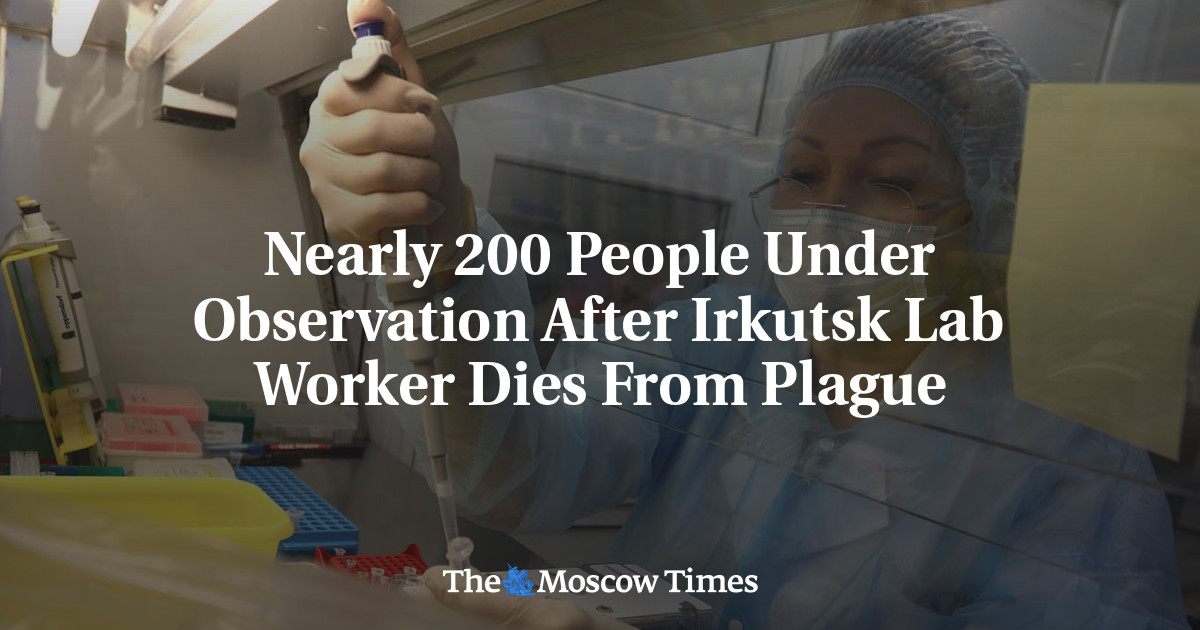
Nearly 200 People Under Observation After Irkutsk Lab Worker Dies From Plague
17 hours ago
Kirill Zykov / Moskva News Agency

Health authorities in Siberia’s Irkutsk region have placed nearly 200 people under medical observation after a laboratory worker died from plague, according to media reports and a statement by a regional leader Friday.

Alexei Tsydenov, head of the neighboring republic of Buryatia, confirmed that the woman had died from an unspecified form of plague. Irkutsk officials had previously described the illness only as a “particularly dangerous infection.”

Citing information from Russia’s consumer safety watchdog Rospotrebnadzor and Buryatia’s government, Tsydenov said the woman had not visited his republic and that her infection was unrelated to the region.

“There are no plague outbreaks in the republic, including in areas bordering Mongolia,” he wrote on social media.

The woman was identified as Daria Sh., a 27- or 28-year-old employee of the Irkutsk anti-plague institute, by the exiled news outlet Lyudi Baikala (People of Baikal) and pro-Kremlin broadcaster REN TV.

She reportedly told medical staff that she had accidentally broken a test tube containing live bacteria while collecting samples for testing.

She was hospitalized Tuesday with symptoms of severe pneumonia in Shelekhov, a town near the regional capital of Irkutsk. She was placed on a ventilator and died Thursday, according to the reports.

The Shelekhov district hospital was placed under quarantine pending an assessment by a special commission.

At least 197 people who may have had contact with her were reportedly placed under medical isolation, including more than 100 in hospital wards.

Authorities canceled planned public events in Irkutsk, while law enforcement reportedly opened a criminal investigation into potential health safety violations resulting in death.

Irkutsk region Governor Igor Kobzev urged the public to remain calm after meeting with Rospotrebnadzor chief Anna Popova to coordinate emergency containment measures.

“All identified contact persons have been placed under medical observation. As of today, the contacts show no signs of illness, and their laboratory test results are negative,” Kobzev wrote on Telegram on Friday. He did not mention the reports of the laboratory worker’s death.

Media reports have described the suspected infection as pneumonic plague, which affects the lungs and can spread between humans through respiratory droplets. Tsydenov’s statement did not specify the form of plague.
 
Get them now before you can't import drugs, anymore.

Both levofloxacin and ciprofloxacin are first-line, FDA-approved fluoroquinolone antibiotics for treating pneumonic plague, and they show similar high effectiveness

Efficacy: Both drugs are highly effective (over 90% in animal models) when treatment begins very early, ideally within hours of symptom or fever onset (Ragnarok: In other words, don't wait for the lab results before starting the antibiotics)

Levofloxacin. 8 mg/kg/dose every 12 hours. (maximum 250 mg/dose).

Ciprofloxacin. 15 mg/kg/dose every 12 hours. (maximum 400 mg/dose)
Aren’t these;

FDA-approved fluoroquinolone antibiotics for treating pneumonic plague, and they show similar high effectiveness

The drugs that trigger tendon damage?
 
One person (so far) does not an "outbreak" make. Yep; it was an accident. Yep; she died - despite PPE.

But they haven't reported any other cases, now have they?
As far as they're willing to say. You can't completely trust government or "official trustworthy mainstream" sources that get their information from government. You might, but I don't.

I do hope that it's is just one victim and nothing else.
 
If I remember correctly the US agreed to stop offensive biological warfare research, but the Russians never agreed and have kept doing research and development. The US also agreed to destroy our stockpiles of biological weapons, and the Russians said no thanks we are keeping ours.
If the Russians or anyone develops a drug resistant strain of pneumonic plague and it gets out into the wild it will probably kill everyone who gets infected.
 

Putin regime accused of Russian black plague cover-up after scientist dies amid possible spread​

By
Jeanne Erickson
Published Oct. 3, 2026, 11:59 a.m. ET


A suspected plague outbreak has erupted in Russia — killing a young lab worker, forcing nearly 200 people into isolation and triggering accusations that Vladimir Putin’s regime is trying to keep the infection’s possible spread under wraps.

The alarm was raised in Siberia after a worker at an anti-plague laboratory died of the disease, which killed tens of millions in the medieval Black Death, according to a report from The Moscow Times.

Anna Popova, who heads Russia’s public-health watchdog, then rushed 2,600 miles from Moscow to the Irkutsk region as authorities quarantined a hospital and placed scores of people who had come into contact with the victim under medical observation.
medical observation.


A worker in a white biohazard suit walks in the town of Shelekhov in Russia. There are trees and a building with a red roof5
Workers in protective gear descended on the town of Shelekhov in Russia’s Irkutsk Region.east2west news


“The situation in Shelekhov, Irkutsk region, where a plague quarantine has been declared, resembles the Wuhan case,” the Russian political insider channel Nezygar warned.

COVID-19 emerged in Wuhan, China, before spreading worldwide and killing more than 7 million people, according to global health estimates.

So far, however, officials say none of the identified contacts has shown symptoms, and their test results have come back negative.

Daria Shipilova, a 28-year-old laboratory assistant at the Irkutsk Anti-Plague Institute, was the first reported fatality.

She reportedly told medical staff that she had accidentally broken a test tube containing live bacteria while collecting samples for testing, according to news outlet Lyudi Baikala, or People of Baikal.

She first fell ill while on an expedition with other workers near Russia’s eastern border with Mongolia.

Shipilova sits with her colleagues at the anti-plague Institute where she worked5
Shipilova sits with her colleagues at the anti-plague Institute where she workedIrkutsk Anti-Plague Institute/e2w

She was hospitalized in Shelekhov on Tuesday with symptoms of severe pneumonia, placed on a ventilator and died Thursday, according to reports.

Meanwhile, the regional Gov. Igor Kobzev declined to identify the illness, referring to it only as “a dangerous infectious disease” — and canceled all public events in the region.

Kobzev urged the public to remain calm after meeting with Popova to coordinate emergency containment measures.

Putin and his Chief Sanitary doctor Anna Popova at a table5
Putin meets with Russia’s Chief Sanitary doctor Anna Popova.Kremlin.ru/e2w
“All identified contact persons have been placed under medical observation. As of today, the contacts show no signs of illness, and their laboratory test results are negative,” Kobzev wrote on the Telegram message app Friday.

Reports also claimed that antibiotics had run out in the Irkutsk region, prompting frightened residents to seek medical help from pharmacies and other medical facilities.

Popova has not publicly commented on the reported outbreak. But senior Russian epidemiologist Mikhal Favorov disputed the account that a broken test tube caused the infection, calling it evidence of a possible cover-up, according to The Moscow Times.

A health worker in a white biohazard outfit enters a room with medical supplies5
Workers have been conducting a series of tests of people and places in the town of Shelekhov.Irkutsk Anti-Plague Institute/e2w

“It’s laughable,” said Favorov. “Someone working at the anti-plague Institute in Irkutsk wears a protective anti-plague suit. If you break a test tub, the likelihood of infection is actually very low. In short, It doesn’t matter to the general public — they’ll believe the ‘dropped test tube story.'”

Favorov said Popova’s involvement suggested the situation was serious.

“It’s absolutely hair-raising,” he said, adding, “We will not be told what really happened.”

Plague is caused by the Yersinia pestis bacterium.

The three main forms are bubonic, pneumonic and septicemic plague. Symptoms can include fever, headache, chills, weakness, shortness of breath and coughing. All forms can be treated with antibiotics, particularly when treatment begins early.

(More photos at the link.)

 
Top