INTL Sub-Saharan Africa


'Out Of Africa': Beijing Slashes Investment Up To 85%​

by Tyler Durden
Tuesday, Feb 24, 2026 - 05:00 AM
Authored by James Gorrie via The Epoch Times,
For more than a decade, China’s footprint across Africa has expanded at a phenomenal pace.

Railways in Kenya, ports in Tanzania, energy projects across sub-Saharan Africa, and militarized infrastructure in various places have meant billions in state-backed loans. For decades, Beijing has positioned itself as Africa’s largest trading partner and its most aggressive infrastructure financier.

But something has changed.

In some sectors, such as energy lending by Chinese development finance institutions, investment levels have fallen by as much as 85 percent from their peak years. That’s not a rounding error, that’s a strategic retreat.

What’s really going on? Is China walking away from Africa? Or is Africa revealing something deeper about China’s own economic stress?

It’s all of the above and more.

The Pullback Is Real—and Sharp​

According to research cited by the Clean Air Task Force, Chinese development finance for African energy projects has declined roughly 85 percent since 2015. That’s a dramatic contraction in capital deployment.

Separate reporting based on data from Boston University’s Global Development Policy Center shows that Chinese lending to Africa has fallen sharply in recent years. In some reports, China’s investment fell nearly 46 percent year over year in 2024.

This isn’t just a pause. It’s a reset.

For years, Beijing fueled infrastructure growth across the continent through state-backed loans tied to its Belt and Road Initiative expansion. Now, the tap isn’t fully off, but it’s not flowing as freely as it used to.

China Isn’t Leaving Africa, but It’s Changing How It Engages​

Before jumping to the “China is out of Africa” conclusion, it’s important to note a few critical facts.

For one, China remains Africa’s largest trading partner. Trade volumes remain substantial and have even grown in recent years.

But lending and investment are different from trade.

Instead of large sovereign infrastructure loans, Beijing appears to be shifting toward more commercially viable projects and private sector–led foreign direct investment. Beijing is also favoring trade expansion over debt expansion.

That’s a broad policy shift. An analysis of broader outbound Chinese investment patterns in 2025 shows a more cautious and selective capital strategy globally—not just in Africa.

In other words, China isn’t abandoning Africa—Beijing is abandoning risk.

The Real Story May Be Domestic​

But the context may be less about Africa and more about China. It’s no state secret that China’s economy is under real pressure, including a prolonged property sector downturn, persistent and high local government debt, slowing GDP growth, and weak domestic consumption.

Those challenges have led Beijing to ramp up capital controls and financial risk management, both of which are indicators of a markedly different economy than the one for which China became world-renowned.

In short, China’s days of double-digit expansion are long gone. A new malaise has set in that isn’t easily overcome. Chinese authorities are increasingly focused on stabilizing employment, preventing financial contagion, and managing demographic decline.

When capital gets tight at home, overseas mega-projects become harder to justify—especially in politically complex or financially risky environments. Thus, Africa isn’t being punished—it’s being reprioritized.

Even some critics of the “debt trap diplomacy” narrative note that China has become far more cautious as a creditor in recent years.

Strategic Reassessment, Not Strategic Retreat​

China’s Africa policy framework still operates through the Forum on China–Africa Cooperation, which continues to promote trade, tariff elimination for least-developed African countries, and development cooperation.

Trade between China and Africa reached nearly $300 billion in recent reporting, underscoring that economic ties remain strong. But there’s a difference between facilitating trade and underwriting sovereign debt.

China’s earlier model, which provided large, state-backed loans for infrastructure, carried political and financial risks. Some projects underperformed, and other countries struggled with repayment, becoming vassals of Beijing amid intensifying global scrutiny.

Beijing appears to have decided to scale back exposure to such risks, tightening standards and investing where returns are clearer. That’s not ideological behavior but balance-sheet management.

What This Says About China’s Economy​

An 85 percent reduction in certain categories of overseas investment doesn’t just reflect changing foreign policy. It signals that large-scale overseas lending no longer aligns with domestic priorities and that conserving capital is a necessity, as liquidity and risk appetite have tightened.

Beijing recognizes that as economic conditions decline, domestic stability declines as well. Therefore, the Chinese Communist Party (CCP) is prioritizing internal stability by managing debt, stabilizing property markets, and preserving employment. At this point, it’s clear that these rising domestic problems matter more to the CCP than expanding geopolitical infrastructure influence.

It’s not necessarily that the era of unlimited Belt and Road expansion is over, but China is entering a phase of selective, return-driven engagement over broad strategic underwriting.

This is what economic maturation—or economic strain—looks like.

Global Ambitions Meet Financial Reality​

The CCP’s global ambitions are now bound by domestic economic reality. Overextension abroad while managing economic fragility at home is a dangerous combination.

Pulling back could signal discipline, economic stress, or both. Economic stress demands financial discipline, and when the world’s second-largest economy tightens its checkbook by 85 percent in key sectors, the story isn’t just about Africa’s financial future—it’s about China’s.
 

Supporters of jailed Ugandan opposition figure pray for him after president tries to stop it​


By RODNEY MUHUMUZA
Updated 11:25 AM EST, February 23, 2026

​
KAMPALA, Uganda (AP) — Hundreds of supporters of detained Ugandan opposition figure Kizza Besigye held a defiant prayer service inside a Catholic cathedral on Monday to press authorities to free him after more than a year without trial on treason charges, saying he is in failing health.

The archbishop of Kampala, Paul Ssemogerere, had been expected to preside but attendees were told the event had been postponed. The chancellor of the archdiocese, Pius Male, told The Associated Press the archbishop sought a postponement “because there were issues which were still being discussed so that may have harmony.” He gave no details.

Instead of heading out, those inside Lubaga Cathedral sang hymns and prayed, led by Winnie Byanyima, the UNAIDS director who married Besigye in the church years ago.

The event was the first of its kind in support of Besigye, who has sometimes appeared in court in a wheelchair. He has been repeatedly denied bail, even as many Ugandans urge compassion.
His trial is yet to formally start.

Byanyima told the crowd that the archbishop had informed her of President Yoweri Museveni’s request to postpone the event pending an investigation into whether it was political.

"So we are here and unable to have the Mass that we wanted because of the order of our president,” she said. “I would like that we still pray because we came to pray.”

Sandor Walusimbi, a spokesperson for the presidency, didn’t respond to a request for comment.

Uganda’s president has said Besigye must answer for “the very serious offenses he is alleged to have been planning,” and has called for “a quick trial so that facts come out.”

Besigye, once Uganda’s most prominent opposition figure and four-time presidential candidate, is accused of plotting to remove Museveni by force.

Besigye went missing in the Kenyan capital of Nairobi in November 2024. Days later, he was presented before a military tribunal in Kampala to face charges related to threatening national security. The case later was transferred to civilian court and amended as treason, which carries the death penalty.
Museveni’s son, Gen. Muhoozi Kainerugaba, has alleged that Besigye plotted to kill his father. Kainerugaba, Uganda’s top military commander, last week called Besigye “a dead man walking.”
Those urging Besigye’s release on compassionate grounds point out his age, 69, and say he needs to consult with a doctor of his choice and not the government-appointed medics available at the maximum-security facility where he is held.
Besigye once was a trusted ally of Museveni in the guerrilla war that propelled the president to power in 1986, and served as Museveni’s personal doctor and military assistant.
He later became a fierce critic of the president, condemning what he saw as a descent into authoritarianism that betrayed the democratic promise of Museveni’s early years. Term and age limits on the presidency have since been scrapped.

Museveni was declared the winner of last month’s election, with more than 71% of the vote, and will now serve a seventh term. His main opponent, the opposition figure known as Bobi Wine, has since gone into hiding, fearing for his safety.
 

171 bodies found in mass graves in eastern Congo, an official says​


By JEAN-YVES KAMALE and MARK BANCHEREAU
Updated 4:54 PM EST, February 26, 2026
Leer en español

​
KINSHASA, Congo (AP) — Congolese authorities and a civil society group said Thursday that mass graves were found in part of eastern Congo that the M23 rebel group has recently withdrawn from, as fighting in the region escalates despite a U.S.-mediated peace deal.

The governor of South-Kivu province, Jean-Jacques Purusi, said authorities found two mass graves with at least 171 dead bodies in the Kiromoni and Kavimvira neighborhoods on the outskirts of the eastern city of Uvira.

“At this stage, we have identified two sites: one mass grave containing approximately 30 bodies in Kiromoni, not far from the Burundian border on the Congolese side, and another in Kavimvira where 141 bodies were found,” Purusi told The Associated Press over the phone.

The Associated Press could not independently verify the claim. M23’s spokesperson did not immediately respond to a request for comment.

The Executive Secretariat of the Local Network for the Protection of Civilians, a civil society group in the region, said Thursday it wanted to visit the mass graves but was prevented from doing so by the Congolese military.

Information gathered so far indicates that the victims were killed by M23 rebels, said Yves Ramadhani, the group’s vice president.

The governor and the civil society group alleged that the rebels killed the individuals because they suspected them of belonging to the Congolese army or a pro-government militia.


Both the Congolese military and M23 have been accused of extrajudicial killings and abuses by rights groups.

M23 had taken control of Uvira in December following a rapid offensive. More than 1,500 people were killed and about 300,000 displaced, according to regional authorities.

The rebel group later announced it would withdraw from the city, in what it said was a “unilateral trust-building measure” requested by the U.S. to facilitate the peace process.

Congo, the U.S. and U.N. experts accuse Rwanda of backing M23, which has grown from hundreds of members in 2021 to around 6,500 fighters, according to the U.N.

More than 100 armed groups are vying for a foothold in mineral-rich eastern Congo, near the border with Rwanda, most prominently M23. The conflict has created one of the world’s most significant humanitarian crises, with more than 7 million people displaced, according to the U.N. agency for refugees.

Despite the signing of a deal between the Congolese and Rwandan governments brokered by the U.S. and ongoing negotiations between rebels and Congo, fighting continues on several fronts in eastern Congo, claiming numerous civilian and military casualties.
 

Botswana, South Africa and DRC on standby as reports show US has only two months’ worth of rare earths left​


Olamilekan Okebiorun
12 March 2026 07:40 AM


Africa is emerging as a potential source of rare earth minerals for the United States, which reportedly has only about two months’ worth of the critical materials left in its defence stockpile as the war with Iran intensifies, making access to new supply sources increasingly urgent.

  • The U.S. has a critically low reserve of rare earth elements essential for modern military systems, highlighting the need for new supply sources.
  • China dominates global processing and export of rare earths and other strategic minerals, giving it significant control over U.S. and Western defence supply chains.
  • China has imposed export restrictions on several dual-use minerals, raising concerns about the resilience of U.S. military inventories during conflicts.
  • Africa is emerging as a key alternative supplier, with countries like the Democratic Republic of the Congo, Zimbabwe, Namibia, Tanzania, South Africa, and Botswana holding vast reserves of strategic minerals.
Reporting by the South China Morning Post indicates that U.S. defence reserves of rare earth elements may be dangerously limited, according to sources familiar with the matter.

The minerals are essential components in advanced weapons technologies, including missile guidance systems, fighter aircraft, radar platforms and secure communications infrastructure.

The vulnerability has become more pronounced as military tensions between Washington and Iran have escalated. U.S. strikes that began on February 28 reportedly consumed about $5.6 billion worth of munitions within days, according to Pentagon estimates.

Replenishing those inventories requires steady access to rare earth elements and other strategic minerals, many of which are currently processed or supplied through China-dominated supply chains.

China’s dominance in global mineral supply​

China currently dominates the global processing and export of many rare earth elements and other strategic minerals used in defence manufacturing.

Materials such as dysprosium, terbium, gallium and germanium are key inputs in advanced military technologies.


Industry estimates suggest that minerals under Chinese supply or processing chains appear in more than three quarters of U.S. defence platforms, underscoring the strategic leverage Beijing holds over global defence manufacturing.

China has already imposed restrictions on the export of several dual-use materials, minerals with both civilian and military applications, to U.S. military contractors.

Such controls have raised concerns about the resilience of Western defence supply chains and the ability to replenish weapons inventories during prolonged military operations.

Beyond rare earth elements, China also maintains significant influence over other defence-critical minerals.

The country produces roughly 48% of global antimony, a metalloid used to strengthen ammunition alloys, manufacture armour-piercing projectiles and support technologies such as night-vision equipment, infrared sensors and military communications systems.

Africa’s strategic mineral reserves​

As Washington seeks to reduce reliance on China-dominated supply chains, attention is increasingly shifting toward Africa, which holds some of the world’s largest untapped reserves of strategic minerals.

Countries including the Democratic Republic of the Congo, Zimbabwe, Namibia, Tanzania and South Africa are emerging as key players in the global critical minerals market.

The Democratic Republic of the Congo accounts for more than 70% of global cobalt production, a key component used in batteries and defence technologies.

Zimbabwe holds some of Africa’s largest lithium reserves, while Namibia and Tanzania are advancing rare earth mining projects aimed at supplying global markets.

South Africa also possesses significant reserves of manganese, platinum group metals and antimony used in advanced industrial and defence technologies.

More recently, Botswana has attracted attention after announcing the discovery of a significant rare earth deposit believed to contain all 15 rare earth elements.

Early assessments suggest the high-grade deposit may also include other strategic minerals such as copper, cobalt, nickel and vanadium, potentially positioning Botswana as a new player in global critical mineral supply chains.

Rising global competition for African minerals​

China has spent more than two decades building a strong presence in Africa’s mining sector through infrastructure financing, state-backed companies and long-term mineral extraction agreements across the continent.

The United States is now increasing its engagement with African governments and international partners to secure alternative sources of critical minerals and expand supply chains outside China.

As global demand for rare earth elements intensifies, Africa’s vast mineral resources are becoming increasingly central to global industrial, technological and defence supply networks.
 

Republic of Congo votes in an election that’s expected to extend incumbent president’s 42-year rule​


By LOUIS OKAMBA
Updated 1:40 AM EDT, March 16, 2026
Leer en español

​
BRAZZAVILLE, Republic of Congo (AP) — Ballot counting began Sunday after polls closed in The Republic of Congo, where President Denis Sassou N’Guesso is seeking a fifth consecutive term. Results are expected within two weeks.

The elections were marked by a low turnout, as locals said they did not believe the election would result in a change in leadership from Sassou N’Guesso, who has ruled for 42 years. Opposition parties called for a boycott of the election.

Six other candidates challenged the 82-year-old for the top job in the Central African country that boasts one of the largest oil reserves in sub-Saharan Africa. But analysts say none of them can mount a significant challenge against the incumbent.

The internet was shut down across the country as usual during the presidential election and traffic was restricted across the capital.

“Everyone knows that, faced with his six inexperienced opponents, President Denis Sassou-Nguesso will be reelected with a high score as usual. Since the election is not a big issue, we shouldn’t cut off communication,” Clarisse Massamba, a teacher who voted at the Lycée Javoueh in Brazzaville, told The Associated Press.

The campaign period showed a vast mismatch between Sassou N’Guesso and his opponents, with the incumbent being the only candidate to travel around the country to canvass for votes. Roads in the capital city, Brazzaville, were paved with Sassou N’Guesso’s effigies.

Two other major parties boycotted the elections over allegations of unfair electoral practices.

Sassou N’Guesso, running for the Congolese Party of Labor, first came to power in 1979 and ruled until 1992 when he organized the country’s first multi-party elections. He returned to power as a militia leader following a four-month civil war in 1997.

A constitutional referendum in 2015 removed presidential age and term limits, allowing him to run again.

The country is struggling with high international debt, which stands at 94.5% of its gross domestic product, according to the World Bank, and skyrocketing unemployment rates for young people. More than half the country’s 5.7 million population lives in poverty and 47% of the country’s population is under 18.

The election is the latest in a trend of octogenarian African leaders clinging to power. Sassou N’Guesso is the third-longest-serving African president, only behind Cameroon ’s Paul Biya and Equatorial Guinea ’s Teodoro Obiang Nguema Mbasogo.

___

This story has been corrected to spell Sassou N’Guesso’s first name as Denis, not Dennis.
 

Opposition leader Bobi Wine says he left Uganda after going into hiding after disputed election​


By RODNEY MUHUMUZA
Updated 8:23 AM EDT, March 14, 2026
Leer en español

​
KAMPALA, Uganda (AP) — Ugandan opposition leader Bobi Wine said on Saturday he fled the country to escape a military search for him in the aftermath of a disputed presidential election.

Wine, whose real name is Kyagulanyi Ssentamu, went into hiding shortly after the Jan. 15 presidential election. Ugandan President Yoweri Museveni won the election with 71.6% of the vote, according to official results that Wine rejects as fake.

Wine’s location has been unknown to the general public for weeks, with growing concern for his safety after the army chief, Gen. Muhoozi Kainerugaba, repeatedly posted threats against him on social platform X.

Kainerugaba, the president’s son and presumptive heir, has suggested Wine is wanted for unspecified crimes. Ugandan police say they are not looking for him.

In a video message posted on X on Saturday, an unshaven Wine said he managed to leave Uganda but did not reveal where he went.

“Fellow Ugandans and friends of Uganda all over the world, by the time you see this video I will have left the country for some critical engagements outside Uganda,” he said. “And at the right time I will come back and continue with the cause. I thank all of you fellow Ugandans who have concealed and protected me for all this time when the regime was looking for me.”

He said it was impossible for Ugandan security operatives to find him “because the people have protected me.”

Ugandan soldiers raided Wine’s house the day after the Jan. 15 vote, but the opposition leader had already gone into hiding, fearing for his life after campaigning for weeks in helmet and flak jacket at rallies where security forces were a constant presence.

The hunt for Wine is being led by Kainerugaba, who has called Wine a “baboon” and a “terrorist.” Kainerugaba has a yearslong habit of posting offensive tweets, which he often deletes later.

Wine, the most prominent of seven candidates who ran against Museveni, has a large following among young people in urban areas, many of them unemployed or angry with the government over official corruption and the lack of economic opportunities. Many want to see political change after four decades of the same leader.

In May, the 81-year-old Museveni will be sworn in for a seventh term that would bring him closer to five decades in power.

His supporters credit him for the relative peace and stability that has made Uganda home to hundreds of thousands fleeing violence elsewhere in this part of Africa. But opposition figures, including some who previously were his close allies, condemn what they see as a descent into authoritarianism.
 

Cameroon hopes the pope’s visit brings healing after nearly a decade of conflict​


By NALOVA AKUA
Updated 8:41 AM EDT, April 15, 2026
Leer en español

​
BAMENDA, Cameroon (AP) — Caro Bih says she was once kidnapped, chained and held for ransom by the separatist fighters who have clashed for years with government soldiers in parts of Cameroon. Several relatives have been killed, jailed or abducted. Her family home was razed.

Now she says her hopes for peace rest with Pope Leo XIV.
She is among millions in Cameroon anticipating his arrival on Wednesday as part of his four-nation Africa tour. It comes as the Central African nation is still reeling from a disputed presidential election that left dozens dead as the world’s oldest president, 93-year-old Paul Biya, extended his long rule.

The papal visit with its call for peace is expected to highlight the separatist conflict in Cameroon’s two Anglophone regions.

Thousands of people have been killed in what humanitarian groups call one of the world’s most neglected conflicts.

The separatists said Tuesday they will pause fighting for three days to allow safe travel for the pope, civilians and dignitaries.

Officials have framed Leo’s visit as a moment of national unity for the country, which is ruled by Francophone authorities and divided along ethnic lines.

“We have been praying ceaselessly for the conflict to end, to no avail,” said Bih, a 52-year-old mother of six and a nurse by training. She spoke to The Associated Press from Bamenda, the epicenter of the violence. “We want the pope to intercede for us. I strongly believe his coming will help heal my wounds.”


Pope to lead peace meeting in conflict zone​

Cameroon’s western regions have been plagued by fighting since English-speaking separatists launched a rebellion in 2017 with the stated goal of breaking away from the French-speaking majority and establishing an independent state.

The pope will preside over a peace meeting on Thursday in Bamenda with community leaders and celebrate Mass at the local airport.

Critics of the government worry the pope’s visit will be seen as an endorsement of the Biya administration, which has been accused of committing abuses in the conflict and not being open to dialogue.

“I would caution the pope against allowing the regime to exploit his presence to mask the pain of profound historical injustices with empty appeals to peace and unity,” said Benjamin Akih, a U.S.-based Cameroonian activist and member of the Council for the Sovereignty of Cameroon, a civil society group.

Eric Chinje, who leads the Project Cameroon diaspora democracy group, said the pope might steer clear of trying to admonish those determined to stay in power at all costs, referring to Biya’s long rule.

“The visit has more to do with the pope’s global evangelical mission than with the fate and future of Cameroon,” Chinje said.

Priests targeted in the conflict​

The Rev. John Berinyuy Tatah, a Catholic priest, was kidnapped by separatists in November alongside five fellow clergy and held two weeks in the bush, “cut off from the world.”

He said he believes the pope will sow a seed that could heal Cameroon if nurtured.

“The cry of every Cameroonian is for the pope to help us to mediate for dialogue in the ongoing crisis,” said Tatah, who plans to attend a pope-led Mass.

Cameroon also battles Boko Haram extremists who carry out attacks from across the border with Nigeria, often targeting military posts and villages.

More than 3.3 million people affected by conflict in Cameroon are struggling to find enough food, with families skipping meals, selling livestock or taking on debt to survive, according to the U.N.'s World Food Program.

“My hope is that the pope touches the soft spot of our collective wounds,” said Yeeika Desmond Nangsinyuy, a spoken-word artist who uses his art to speak out against violence.

Nangsinyuy said he was abducted by separatists in 2024 and told to stop his performances. But he never did.

“I want him to speak directly to the pain of families torn apart by conflict, and to inspire renewed hope that peace is possible,” he said of Leo.

‘Future is uncertain’​

The separatist fighting has upended communities.

Bih said only two of her children remain in school. One lives with a friend to reduce the burden of taking care of them all. Others work on the farm or at construction sites, or wash people’s clothes to help support the family.

Including money from the vegetables she cultivates and sells, the family’s monthly income is the equivalent of about $53, barely enough to feed them.

Bih in 2024 abandoned physiotherapy and medicines for a stroke she suffered as she fled conflict multiple times. She relies on herbal remedies.

“I had dreamt of seeing my children become doctors, magistrates and so on,” she said quietly. “Now their future is uncertain.”

The children’s father, 60-year-old Ngwa Manases, is separated from her and also affected by the fighting. He was forced to quit his job as a Catholic missionary teacher because of the insecurity.

Their 9-year-old daughter, Lydiane, had to drop out of school to help take care of the other children.

“I miss school,” the girl said. She had wanted to become an accountant.

Bih said she hopes the pope’s visit will change all their lives.

“We believe he will be a turning point,” she said.
 

Is Ethiopia bracing for war?​

Martina Schwikowski
16 hours ago16 hours ago
Analysts say the war in Iran has temporarily delayed an escalation in smoldering tensions between Ethiopia and Eritrea. But renewed armed conflict cannot be ruled out.

The political situation in the Horn of Africa continues to be dominated by tensions between Ethiopia and Eritrea. Ethiopian Prime Minister Abiy Ahmed has left little doubt: During a television appearance earlier this week, he emphasized that it is "not feasible at any time" to continue viewing Ethiopia as a landlocked country.

The country lost its access to the Red Sea when Eritrea gained independence in 1993 after decades of war. Initially, an agreement allowed Ethiopia to import goods duty-free through the Eritrean port of Assab.

But a renewed border conflict in the late 1990s ended this arrangement. Today, a large portion of Ethiopia's trade passes through Djibouti — a costly undertaking for the landlocked nation.

Resistance to Ethiopian expansion​

Abiy Ahmed wants to reduce this dependence, according to political analyst Abdurahman Sayed.

"The reason he is pushing for this right now is not because there is no access to the Red Sea or to ports near Ethiopia," he told DW.

While access is already possible via neighboring Djibouti and Somalia, Abiy Ahmed wants direct, Ethiopian control, which coastal states are resisting, Sayed said.

The 2018 peace agreement between Ethiopia and Eritrea would have offered a good opportunity. On this basis, Sayed said, Ethiopia could have secured easy access to the sea with some guarantees for sustainability and security.

The peace efforts earned Abiy the Nobel Peace Prize in 2019. Now, however, signs point once again toward confrontation with the neighboring country.

Sayed suspects Ethiopia's push for access to the sea "is heavily driven by external interests outside the Horn of Africa region, and that the Ethiopian government is merely implementing these interests as part of its own agenda. Otherwise, access would have been secured back then."

Ethiopia's partners under pressure​

Sayed was referring to Ethiopia's geostrategic partners, primarily the United Arab Emirates.

But the UAE is currently under pressure, said Sayed. "Due to the conflicts in the Persian Gulf, the UAE will sooner or later be forced to reduce their presence and involvement in the Horn of Africa to focus on the problems in their own country."

This means Ethiopia can expect less support in the event of a potential war against Eritrea.

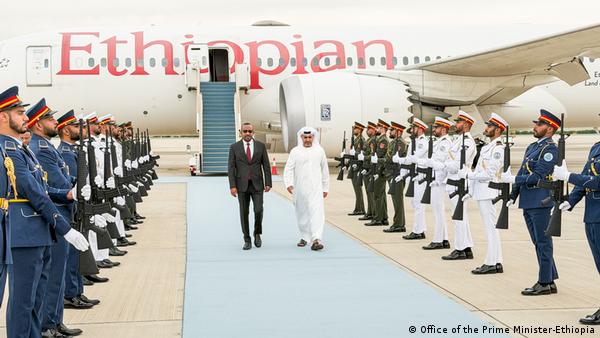
The United Arab Emirates is considered an ally of Ethiopia. Here, Ethiopian Prime Minister Abiy Ahmed is welcomed during a visit to Abu Dhabi in March

The United Arab Emirates is considered an ally of Ethiopia, with Prime Minister Abiy Ahmed visiting Abu Dhabi in MarchImage: Office of the Prime Minister-Ethiopia

Prime Minister Abiy has been demanding separate access to a seaport for Ethiopia since 2023. His rhetoric on the matter has intensified over the years, said Guido Lanfranchi, a researcher at the Netherlands Institute of International Relations Clingendael.

https://www.dw.com/en/live-tv/channel-english
Earlier this year, several news agencies reported Ethiopian government soldiers and fighters from Tigray were stationed along the region's 1,000-kilometer (620-mile) border with Eritrea.

Yet the situation has not broken out into war so far.

Tensions between Ethiopia and Eritrea have been escalating for over a year and have remained at a fairly high level, said Lanfranchi.
"Now it seems as though the danger has passed and war has been averted — which is due, among other things, to problems such as fuel shortages in the region linked to the crisis in Iran," he told DW.

Threat of civil war in Ethiopia lingers​

"However, this does not mean that the international community should reduce its focus on this crisis, as the underlying causes of the rivalry between the two parties still exist," said Lanfranchi.

According to Lanfranchi's Clingendael colleague Amanuel Dessalegn Gedebo, Eritrea itself has never had much interest in a direct conflict, given its weaker economic and military position.

Instead, there have been indirect maneuvers such as strengthening ties with the Tigray People's Liberation Front (TPLF) and providing some support to armed groups like the Amhara ethnic militia Fano. Eritrea has also strengthened its ties with Ethiopia's regional adversaries, particularly Egypt.

The Iran war affecting oil-producing regions has caused transportation and food prices in Ethiopia to rise. It has made an already fragile economic situation worse, and a new military operation currently unfeasible.

However, the current "pause" is only a postponement, Amanuel Dessalegn Gedebo told DW.

According to analysts, the central conflict in Ethiopia is the ongoing fragile situation in Tigray. This has persisted, even though the two-year civil war in the northern Ethiopian region was officially settled with an agreement in November 2022.

Since then, Tigray has been governed by an interim administration appointed by Addis Ababa, whose mandate was extended for another year in April — despite criticism from the TPLF.

In response, the TPLF recently announced the reinstatement of a regional parliament. An election for this body was one of the triggers for the Tigray war in 2020.

Observers fear armed conflict between the Ethiopian government and regional forces could flare up again.

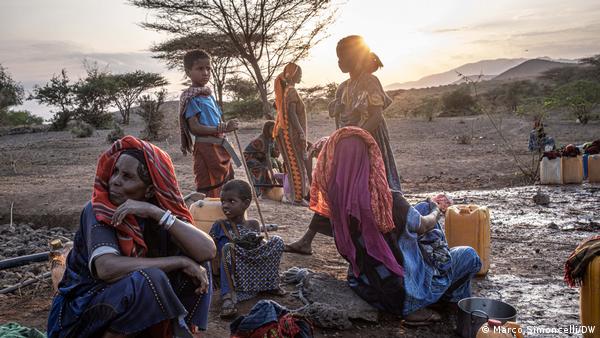
Displaced women and children sit on the ground in Ethiopia's Afar region, with trees visible in the background

During the Tigray war, more than 300,000 people were displaced in Ethiopia's Afar region. Many fled to southern areas and to neighboring AmharaImage: Marco Simoncelli/DW

War not inevitable in Ethiopia​

Gerrit Kurtz of the German Institute for International and Security Affairs (SWP) told DW that while external and geopolitical factors have exacerbated the conflict in Ethiopia, the multiethnic state cannot be reduced to the interests of partners.

Kurtz said it would be an escalation if Tigray were to establish a rival government. He added that while war is not inevitable, it is a matter of both sides maneuvering for dominance.

While the TPLF may view Eritrea as a partner, the extent of that support in the event of a war with Ethiopia remains uncertain, he said.

Upcoming parliamentary elections on June 1 in Ethiopia are important for Abiy Ahmed's ruling Prosperity Party to secure legitimacy. According to analyst Lanfranchi, the Prosperity Party inherited the political dominance and economic network of its predecessor, the Ethiopian People's Revolutionary Democratic Front.

He believes the opposition has little chance in the election. "From Abiy's perspective, it makes little sense to postpone the elections ahead of a military operation," said Lanfranchi.
 

Ghana becomes the latest African country to reject a US health deal, citing data sharing concerns​


By EDWARD ACQUAH
Updated 10:31 PM EDT, May 1, 2026
Leer en español
6
​
ACCRA, Ghana (AP) — Ghana has rejected a proposed health deal with the United States over concerns about data privacy and is now seeking a new agreement, an official said Friday. It was the latest African country to walk away from the deal over similar concerns.

The deal included provisions that would have allowed U.S. entities access to Ghana’s sensitive health data without necessary safeguards, according to Arnold Kavaarpuo, executive director of Ghana’s Data Protection Commission.

The scope of the data access that was requested under the deal “went far beyond what would typically be required,” Kavaarpuo told The Associated Press.

A U.S. State Department spokesperson said the department does not disclose details of bilateral negotiations. “We continue to look for ways to strengthen the bilateral partnership between our two countries,” the spokesperson added, speaking on condition of anonymity to discuss the matter.

Under the Trump administration’s “America First” approach to global health funding, the U.S. has struck such health deals with more than 30 countries, most of them in Africa. The new approach that kicked off late last year replaces previous health agreements under the now-dismantled United States Agency for International Development.

The deals offer hundreds of millions of dollars in U.S. funding to some of the African countries worst hit by the U.S. aid cuts to support their public health systems and help fight disease outbreaks.


The agreements, however, have raised questions about data privacy concerns. In February, authorities in Zimbabwe said they rejected the proposed deal over issues around health data, fairness and sovereignty. Zambia is also reported to have pushed back on a section of its deal, although no decision has been made there.

Activists in Africa say the agreements often lack adequate safeguards for the use of the data and are sometimes limiting in who is being helped — such as in Nigeria, where the U.S. committed to supporting mainly Christian faith-based healthcare providers.

The Africa Centers for Disease Control and Prevention Director General Jean Kaseya had also cited “huge concerns” regarding data sharing in comments to reporters about the deals.

“We did not get a sense that Ghana had any real governance oversight when it came to how the data was going to be utilized. It was more or less if they undertook an exercise, they will notify the country. So it was not a prior approval arrangement,” he said.

Kavaarpuo added that Ghana has communicated its decision to reject the proposal to the U.S. and sought improved conditions for a better deal.
 

France’s Macron opens Africa summit in Kenya with push for new partnership​

Africa
French President Emmanuel Macron began a visit to Kenya on Sunday ahead of the Africa Forward Summit, where he will promote France’s new approach to Africa based on partnership rather than influence. The gathering comes amid France’s military withdrawal from West Africa and renewed debate over its post-colonial role on the continent.
Issued on: 11/05/2026 - 04:10Modified: 11/05/2026 - 07:23
2 minReading time
Share
By:
FRANCE 24

French President Emmanuel Macron kicked off a visit to Kenya on Sunday ahead of the Africa Forward Summit, a gathering meant to showcase France’s new policy for the continent – a shift from a former colonial power seen as dominating to what Paris describes as a partnership of equals.


Held for the first time in an Anglophone country, the summit is expected to draw reactions to the withdrawal of French troops from West Africa that was completed last year amid France's waning regional influence in recent years.

Since the independence of France's former African colonies, France had maintained a policy of economic, political and military sway dubbed Françafrique, which included keeping thousands of troops in the region. But leaders in those countries – and opposition figures – have often criticised France over what they described as a demeaning and heavy-handed approach to the continent.

Macron’s host, Kenyan President William Ruto, said both leaders expect the summit to be a “turning point” towards a better partnership.

Macron commented on the changing geopolitical landscape, saying France can “disagree” with West African governments but “never disagrees with the people”.

The two-day summit, which starts on Monday, is expected to welcome 30 heads of state. Ten have arrived so far.

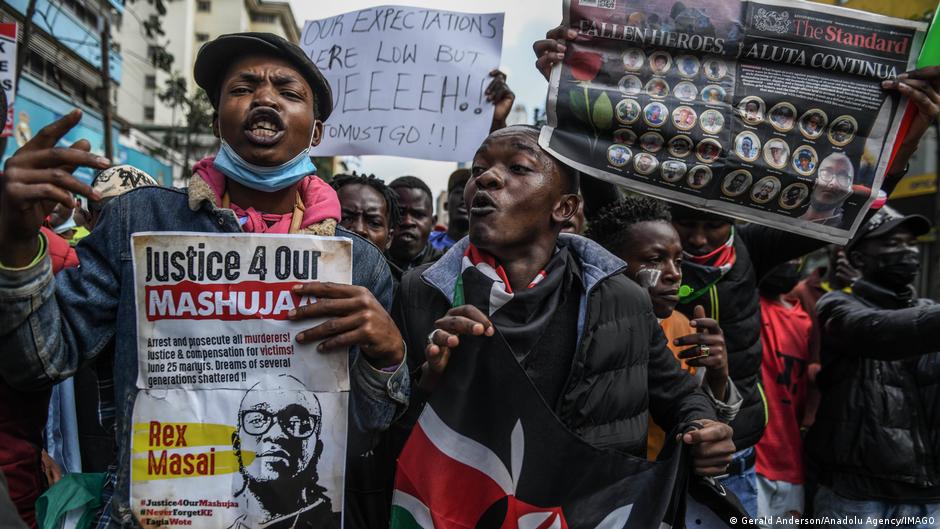
Kenya’s opposition leader Kalonzo Musyoka slammed the choice of Kenya as a venue, describing it as a country where democracy remains under threat, the opposition is under attack and human rights are being violated even as it prepares for the 2027 general election.

“There will be an air of pretence that we are a cohesive nation," Musyoka said. "We know that is far from the truth.”

Ruto on Sunday said Nairobi seeks to nurture a wide array of relationships and was “neither looking East nor West” but “looking forward”.

Also Sunday, Kenya and France signed 11 agreements involving investments in various sectors, including an ambitious nuclear energy plant, modernised transport and sustainable agriculture.


Macron said the investments were aimed at strengthening “human capital”, in line with the summit’s focus on innovation and Africa’s growing young population.

(FRANCE 24 with AP)
 

France turns to Africa for strategic partnerships​

Martina Schwikowski
22 hours ago22 hours ago
Following a withdrawal from the Sahel region, France is seeking to expand its geostrategic influence in Africa by seeking new allies. The first Africa Summit in Kenya is intended to mark a fresh start.


When the foreign ministers of France and Kenya open the "Africa Forward Summit: Africa-France Partnerships for Innovation and Growth" at the University of Nairobi on May 11, the focus will be on trying to find common ground.

The two-day meeting in Kenya is the first summit of its kind that France is hosting in an English-speaking African country that is not among its traditional partners.

There is a reason for this: According to analysts, President Emmanuel Macron wants to send a signal and initiate a shift away from France's previous Africa policy in West Africa.

Why France is making a geopolitical shift​

"France has lost a great deal of prestige and influence in Francophone African countries, especially in the Sahel region," Ulf Laessing, head of the Konrad Adenauer Foundation's Sahel regional program in Mali, told DW. "It is now making a strong effort to expand into other Anglophone countries — South Africa, Kenya, Nigeria — in order to reposition itself and present itself as Africa's supposedly most important partner."


Macron and Kenyan President William Ruto will showcase their new partnership as co-chairs of the summit. The focus will be on enhanced security, economic investment, and green energy.

Ruto also intends to discuss ways to make the global financial system more equitable for indebted African nations. France has pledged to support this campaign. Around 30 heads of state and government, as well as international guests, are expected to attend.

The summit is intended to signal a shift in Paris' Africa strategy. "There is a clear connection," Laessing said. "The aim is to offset the loss of influence in Francophone Africa by gaining more influence in Anglophone countries."

Though France may also want to expand into its former colonies later on, should the military regimes in the Sahel eventually fall, Laessing added, noting that criticism and prejudice toward France are strong in Francophone countries.

Though France may also want to expand into its former colonies later on, should the military regimes in the Sahel eventually fall, Laessing added, noting that criticism and prejudice toward France are strong in Francophone countries.

"Africa has a very young population; in Mali, for example, the average age is 15 — they no longer have a connection to France," the analyst said. "The Malians have been deeply disappointed and manipulated, including by the elites who were tied to France."

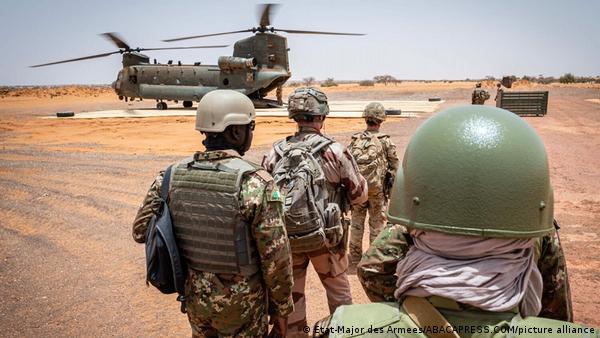
Mali 2022 | French soldiers walking towards a helicopter in the Malian desert

French troops pulled out of Mali in 2022 and handed over the French anti-jihadist military force Barkane to the Malian army.
Image: Etat-Major des Armees/ABACAPRESS.COM/picture alliance

France unwelcome in the Sahel​

Since 2022/2023, there have been massive protests against French influence in West Africa, particularly in the Sahel region, with demonstrators accusing France of neocolonial policies and interference in internal affairs. Mali, Burkina Faso, and Niger have ended military cooperation with Franceand forced the withdrawal of French troops.

These new military junta leaders in the region are capitalizing on anti-French sentiment to assert their sovereignty.

The CFA franc— a relic of the colonial past — has also long been a source of irritation for many West Africans.

As early as 2020, some West African countries had initiated a currency reform with France's approval to abolish the CFA franc. But the transition process is proving difficult.

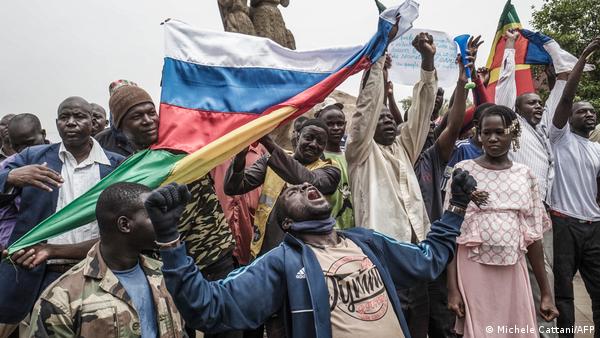
Weltspiegel | Bamako, Mali | Protesters in Mali

Anti-French sentiment has been growing in Mali and other former French colonies. Image: Michele Cattani/AFP

Given this loss of influence in West Africa, the Africa Summit in East Africa offers an opportunity to highlight the commitment of France, Kenya, and other African countries, according to experts.

"Following its withdrawal from the Sahel, France is seeking to realign its partnerships toward more diversified, economically oriented relationships, primarily in fast-growing regions such as East Africa," Yves Ekoué Amaïzo told DW.

The Togolese analyst is the director of the Afrocentricity Think Tank based in Vienna. Instead of focusing on raw material extraction, he added, France is seeking stable investment opportunities in the areas of infrastructure, energy —particularly renewable energy— the digital economy, and logistics.

"And also projects involving the private sector that ensure a long-term impact without relying on security considerations," he said.

Fierce competition in East Africa​

Competition with existing business partners in the region is likely to be fierce, as France will have to compete with alternative financing offers from China, India, the United Arab Emirates, Qatar, and Saudi Arabia.

France is already doing successful business in Kenya: According to the French ambassador to Kenya, France is the fifth-largest foreign direct investor in the country, supporting 46,000 jobs. Trade, which the Kenyan Trade Ministry of estimates at around $300 million (€255 million), is growing too.

Kenya exports fruit, coffee, tea, flowers, and spices to France and imports pharmaceutical and cosmetic products, chemicals, and machinery.

However, ahead of Monday's summit, President Ruto made clear Kenya was also aspiring to a role as a global player: "Every item on the agenda, every conversation, and every commitment is aimed at one thing: An Africa that is at the forefront of global affairs, shaping its own destiny, determining its own future, and influencing the global discourse," he said, according to the Kenyan media outlet The Star.

East Africa is gaining increasing geopolitical influence, according to Amaizo. "Paris is signing new defense and investment partnerships with countries such as Kenya, Rwanda, and Tanzania. Such agreements reinforce their status as strategic hubs between Europe, the Indian Ocean, and the entire African continent," he said.

For Kenyan economist James Shikwati, the decision to hold the France-Africa Summit in Nairobi therefore comes as no surprise. Kenya wants to forge stronger alliances with major global powers. "The French government may have felt that this Kenyan policy offers it a better entry point back into Africa," he told DW.

“In this case, into anglophone Africa, where France isn't necessarily viewed with hostility," he added.

Furthermore, Kenya is attempting to position itself as a gateway to other African countries.

After all, with the Democratic Republic of the Congo, Rwanda, and Burundi within the East African Community (EAC), there are at least three countries that are largely Francophone— another advantage for France.

According to Shikwati, France's new approach also shows how the tense global situation, with its crises in the Middle East and Ukraine, is putting pressure on traditional markets.

"Established players are finding themselves in a new, difficult situation in which they must realign their global business strategy," he said. That is why attention is turning to emerging economies that also want to operate on a global scale.

This article was translated from German.
 

Uganda’s longtime president sworn in for another term as his son emerges as de facto ruler​

By RODNEY MUHUMUZA
Updated 5:09 AM EDT, May 12, 2026

​
KAMPALA, Uganda (AP) — Forty years. That’s how long Ugandan President Yoweri Museveni has been in power.

The 81-year-old was sworn in Tuesday to extend his presidency over a further five-year term that may well be his last — although not necessarily the last for the Museveni family.

The president’s son and presumptive heir, army chief Gen. Muhoozi Kainerugaba, oversaw dayslong rehearsals of the military parade that will animate the eighth inauguration of Museveni, with Russian-made Sukhoi fighter jets flying noisily over official ceremonial grounds in Kampala, the Ugandan capital.

Museveni took the oath of office and received the ceremonial instruments of power while being cheered by thousands attending the event in the Kampala suburb of Kololo.

Many Ugandans now accept that Museveni’s presidency — the only one that millions of people have known — is nearing its end. What remains uncertain is the nature of the transition and how orderly things would be in the time he has left in office.

Two possible routes to the top​

Kainerugaba looks poised to take over. He has declared his wish to succeed his father and said recently that the mission is unstoppable.

Still, his path is narrow and could follow one of two ways: either a bloodless but unconstitutional takeover by Kainerugaba or a constitutional amendment that allows lawmakers with the ruling party — who have an overwhelming majority — to pick him as Museveni’s successor. An electoral win is seen as a hurdle too high for Kainerugaba, whose challengers would include opposition leader Bobi Wine, the popular entertainer who has twice run for president and rejected the outcome of the January election that gave Museveni his next term.

Anita Among, the parliamentary speaker, said last month that legislators would do everything possible to assist Kainerugaba in his pursuit of the presidency.


“For the sake of MK, just assure MK that we will do whatever it takes,” Among told a group of lawmakers celebrating the general’s birthday, mentioning Kainerugaba’s initials. “In the 11th parliament, the opposition got swallowed. In the 12th parliament, it is going to be walloped.”

In addition to the speaker, many other leaders have been scampering to show allegiance to Kainerugaba. While their moves display a quest for political survival, they also underscore Kainerugaba’s rise as Uganda’s de facto leader as his father ages and relies more on the army chief to exercise authority.

“Many Ugandans close to power have learned this lesson. That the president is old and exhausted, both intellectually and physically,” Andrew Mwenda, a close ally and friend of Kainerugaba, wrote last month in The Independent online newspaper. “He has a limited ability to monitor many things across a large spectrum of sectors.”

Kainerugaba, 52, joined the army in the late 1990s, and his rise to the top of the armed forces has been controversial, with critics dubbing it the “Muhoozi Project” to prepare him for the presidency.

Museveni and Kainerugaba often denied the existence of such a scheme, but it has become apparent in the last two years that hereditary rule is possibly what the president prefers.

Museveni, who has not said when he will retire, has no rivals within the ruling party – the reason many believe the military will have a say in choosing his successor.

“While people are waiting for the legal transition from Museveni, the de facto transition has already happened,” said Angelo Izama, an analyst who runs the Uganda-based Fanaka Kwawote think tank. “Kainerugaba, more than the president, is the final voice on defense and security matters.”

A more confrontational style than his father’s​

Kainerugaba’s associates describe him as a dedicated military officer who often eschews ostentatious displays of wealth. He attended military schools in the U.S. and Britain before taking charge of a presidential guard unit that has since been expanded into an elite group of special forces.

In addition to his military duties, he is the founder of a political activist group known as the Patriotic League of Uganda. Its members and well-wishers range from government ministers to businesspeople.

But Kainerugaba lacks the public charisma and folksy style of Museveni, who has kept power in part by striking deals with his political rivals and even convincing some to serve in his government. Kainerugaba’s style is more confrontational, expressed often in harsh online posts that can give offense. He has ordered the arrest over alleged corruption of multiple generals, including some known to have once been his friends.

Museveni first took power by force in 1986 as the leader of a guerrilla force whose goal was to democratize Uganda after years of chaos and civil war. He said at the time that Africa’s problem was leaders who overstayed their welcome. Much later, he changed his stance to say his criticism was of leaders who prolonged their rule without an electoral mandate.

Museveni, a U.S. ally on regional security, is often credited with presiding over relative peace and stability. But many others see an increasingly authoritarian streak at odds with his early promise of democracy. Term and age limits have been scrapped and some rivals jailed or sidelined.

Lawmakers recently passed a punitive bill whose stated purpose is to deter foreign interference, but which drew widespread concern over its potential to hurt the work of non-governmental organizations and opposition groups.

The legislation forbids an “agent of a foreigner” from obtaining grants or other monetary support from external sources exceeding 400 million Ugandan shillings — roughly $110,000 today — within a 12-month period without the approval of the interior minister.


Wine’s party, the National Unity Platform, condemned the legislation as “unconstitutional, irrelevant and brought in bad faith to further persecute those with divergent views.”
 
Posted for fair use......

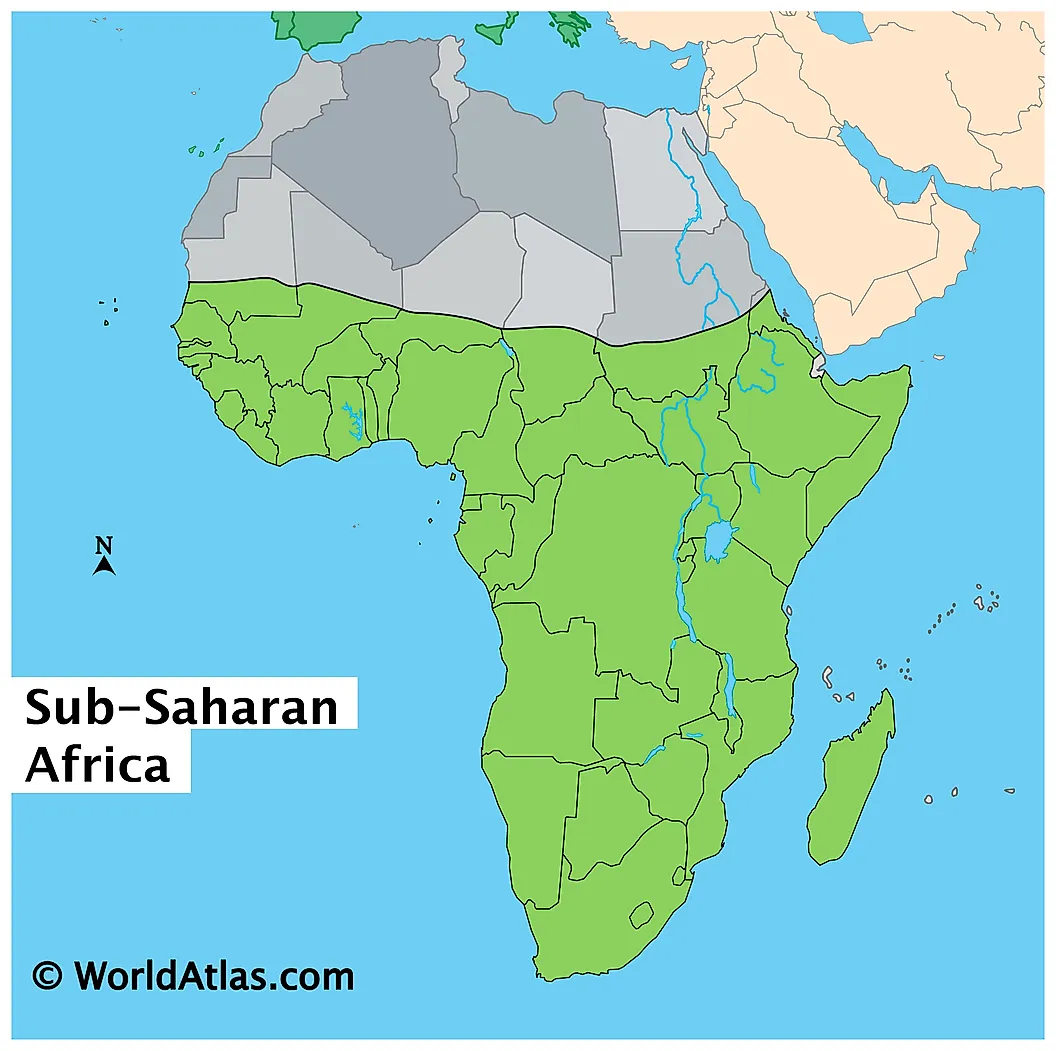
The total population of the countries in Sub-Saharan Africa is 1.119 billion. East Africa is the most populous subregion of Sub-Saharan Africa, with a population of 455 million. Southern Africa has the smallest population in Sub-Saharan Africa, with just 68 million people. The most populous country in Sub-Saharan Africa is West Africa’s Nigeria, which has a population of more than 206 million. The East African country of Ethiopia is the second most populous, as it is home to more than 114 million people. It is followed by the DRC in Middle Africa (est. 89 million), Tanzania in East Africa (est. 59.7 million), and South Africa in Southern Africa (est. 59.3 million).

The largest city in Sub-Saharan Africa is Lagos, located in Nigeria. It has a population of about 9 million. Kinshasa, the capital of the DRC, is the second largest, with an estimated population of 7.78 million. Abidjan, the capital of Cote D’Ivoire is third, with about 3.67 million. The fourth and fifth largest cities, Kano and Ibadan, are both located in Nigeria, and have populations of 3.62 million and 3.56 million respectively. Cape Town, with a population of about 3.43 million, is the largest city in Southern Africa, while Addis Ababa, the capital of Ethiopia, is the largest city in East Africa, hosting about 2.75 million people. There are a multitude of ethnic and linguistic groups in Sub-Saharan Africa. Most countries in Sub-Saharan Africa, however, have official languages taken from the European powers that colonized them. Thus, English is the official language in former British colonies, French is official in former French colonies, and so forth. Sub-Saharan Africa’s indigenous languages number in the thousands, but the most widely-spoken are Swahili, Amharic, Yoruba, Oromo, Hausa, Igbo, Zulu, and Shona. Swahili is widely spoken in East Africa, including countries like Kenya, Tanzania, Uganda, Rwanda, and Burundi. Amharic is the official language of Ethiopia, and is the native language of the country’s Amhara ethnic group. Oromo is another important language in Ethiopia, spoken by the ethnic group of the same name. Yoruba is a major language in West Africa, and is spoken in Nigeria, Benin, and Togo. The Hausa language is also widely understood and spoken in several countries in West and Middle Africa, though most of its speakers live in northern Nigeria. Igbo is widely spoken in southwestern Nigeria. Zulu is the language of the Zulu people, one of the foremost ethnic groups in South Africa, and Shona is the language of the most prevalent ethnic group of the same name in the East African country of Zimbabwe.
 
Macron cannot resist being a jerk.


Macron faces backlash after interrupting Africa summit panel in Kenya​


By MARK BANCHEREAU
Updated 1:00 AM EDT, May 13, 2026
5
​
DAKAR, Senegal (AP) — French President Emmanuel Macron is facing backlash after he interrupted a panel at the Africa Forward Summit in Kenya to demand silence from the audience.

Macron stormed the stage to rebuke audience members for what he called a “total lack of respect,” accusing them of disrupting speakers during a presentation by artists and young entrepreneurs. He had earlier described himself as a “Pan-Africanist” during a news conference.

The summit is meant to showcase France’s new policy for the continent — a shift from a former colonial power seen as dominating to what Paris describes as a partnership of equals. On Tuesday, Macron announced a $27 billion investment into various sectors in Africa, including energy, artificial intelligence and agriculture.

Videos of Macron’s heated intervention on Monday quickly spread across social media, drawing a mix of mockery, praise and criticism.

Appearing visibly frustrated by the noise in the room, Macron abruptly walked onto the stage and asked the speaker to hand him the microphone, saying he would “restore order.”

Addressing the audience in English, he criticized attendees for talking over the speakers and creating disruptions during the session.

Some audience members applauded the intervention, but Macron also drew criticism over his response.

“Just imagine what would happen if an African leader did the same thing in America or Europe,” said Thierno Mbaye, a history student at a university in Senegal’s capital, Dakar.


“He acted like a schoolteacher scolding children,” Mbaye told The Associated Press.

The intervention also drew criticism in France.

“It’s stronger than him: as soon as he sets foot on the African continent, he can’t help but behave like a colonizer,” Danièle Obono, a lawmaker for the hard-left party France Unbowed, said in a post on X.

Diplomatic and military setbacks in West Africa​

The Africa Forward Summit, which is set to close on Tuesday with a declaration that is expected to be signed by all 30 heads of state, comes amid a fallout between France and its former colonies, mostly in West Africa.

France has long maintained a colonial policy of economic, political and military sway dubbed Françafrique, which included keeping thousands of troops in the region it controlled.

After years of criticism from leaders and opposition parties in many West African countries over what they described as a demeaning and heavy-handed approach, France has withdrawn most of its troops from the region. It completed the withdrawal of troops from Senegal in July.

Macron had already faced a backlash ahead of the summit for claiming Sunday at news conference alongside Kenyan President William Ruto that “we are the true Pan-Africanists.”

“We believe that Africa is a continent, and that this continent has an enormous amount to build,” Macron said.

Pan-Africanism refers to an ideology seeking the unity of Africans and the elimination of colonialism. Given France’s colonial history across the continent, the remark went viral on social media and drew swift backlash.

“Pan Africanism is not a brand, Mr. Macron, neither is it a diplomatic posture,” Farida Nabourema, a Togolese human rights activist, said in an open letter on Monday.

“It is a political philosophy that said no to everything France spent three centuries saying yes to: slavery, colonialism and neocolonialism,” she added.

Beverly Ochieng, a senior analyst at geopolitical risk consultancy Control Risks, said Macron is trying to distance France from its diplomatic and military setbacks in West Africa by turning to the east of the continent, signaling that its strategic priorities now follow where it finds goodwill.

She said Macron’s remarks were raising questions about whether France’s renewed engagement with Africa represented a genuine equal partnership or merely convenient rhetoric.

The French presidency and Foreign Ministry did not immediately respond to a request for comment.

Paris will be respectful of each African country’s independence, Macron said on Tuesday, adding that “sovereignty and autonomy is shared, and your success is our success.”
 

Ebola outbreak confirmed in DR Congo: Africa CDC​

Natalie Muller with Reuters, AFP, AP
41 minutes ago41 minutes ago
A new outbreak of the highly contagious Ebola virus has killed dozens of people in a remote part of Congo, according to health authorities. It comes as the country battles several armed groups.


Africa's top public health agency has confirmed a new Ebola outbreak in eastern Democratic Republic of Congo.

The Africa Centres for Disease Control and Prevention said in a statement on Friday that 65 deaths and 246 suspected cases had been recorded so far in the remote Ituri province.

The health body said it was convening an urgent meeting with Congo, Uganda, South Sudan and global partners to reinforce cross-border surveillance, preparedness and response efforts.

It said the cases had mainly been reported in the Mongwalu and Rwampara health zones, with four deaths among laboratory-confirmed cases.

"Africa CDC ⁠is concerned about the risk of further spread due to the urban context of Bunia and Rwampara, intense population movement, mining-related mobility in Mongwalu," the agency added.

How does Ebola spread?​

The Ebola virus is highly contagious and the disease it causes is often fatal for humans.

It is transmitted through direct contact with blood and other bodily fluids and causes symptoms such as fever, vomiting, body aches and diarrhoea.

The virus is endemic to Congo's tropical forests, where it was first detected in 1976.

This is the African country's 17th outbreak since then. The last outbreak, which caused 43 deaths, was declared over around five months ago.

Congo is the continent's second-largest country by land area, and limited road networks in some areas make it immensely challenging for local health authorities to respond to outbreaks.

At the same time, the country is battling various armed groups in the east, including the M23 rebel group, which has occupied key cities, and the Islamic State-linked Allied Democratic Force militant group.

Congo's deadliest Ebola outbreak between 2018 and 2020 killed more than 2,000 people.

Edited by: Dmytro Hubenko​

 
Thank goodness that many rich countries have helped the poor African countries by supplying weapons to them. Now many more people can be killed to keep the population numbers in check.
 

South African Farming Crisis May Trigger Food Shortages Across The Continent​

by Tyler Durden
Wednesday, May 20, 2026 - 04:15 AM
For decades South Africa has operated as the breadbasket for half of the African continent, and the vast majority of that food was grown by white farmers (Boers and Afrikaners). In other words, the very survival of Africans has long been dependent on the hard labor of the white people they are taught to despise.

South Africa has around 142 race-based laws which largely discriminate against white citizens, especially when property, business and government office is involved. The Expropriation Act of 2024 allows the socialist government to confiscate any land of their choosing to "redress past discriminatory laws or practices" (land owned by white citizens). This is part of a project to "fulfill land reform goals" (transfer wealth and farming operations to black citizens).

The problem is, when land is seized or forced into sale to black owners, farming production reportedly collapses. That is to say, once the white farmers are gone, crop yields fail and the black owners often resell the land and leave. In other cases, the new owners allow the land to languish, using the homes for living but never cultivating the surrounding property.

Black South Africans own more farmland per capita than French, German and Spanish farmers combined, yet, starvation persists in the region. Excuses as to why this is happening persist, but the fact remains that if Africa wants steady food production, they will have to rely on experienced white Afrikaners to make it happen because no one else is going to do it.

Furthermore, the government's failure to maintain basic infrastructure has forced local farmers to take on the costs in order to keep food production on track and the roads ready for freight.

The pressure from government projects for "reparations" as well as the constant threat of violence from militant race communists targeting white farmers has made the job difficult. Now, shortages of diesel and fertilizers caused by the Iran War are creating a perfect storm of circumstances which may cause a food crisis going into 2027. If the shortages are not rectified, half of the African continent will be throttled by a lack domestic food supplies.

The war is, apparently, the straw that's breaking the camel's back. After years of the South African government sabotaging its most productive citizens and replacing them with less useful farmers, it was only a matter of time before a Black Swan event would lead to collapse.


Iran's refusal to allow safe passage of tankers from countries like Saudi Arabia and Kuwait is, interestingly, hurting BRICS nations far more than it is hurting the US or the west. Around 25% of South Africa's oil supplies pass through the Strait of Hormuz. South Africa also imports around 80% of its fertilizer supplies.

Iran's refusal to allow safe passage of tankers from countries like Saudi Arabia and Kuwait is, interestingly, hurting BRICS nations far more than it is hurting the US or the west. Around 25% of South Africa's oil supplies pass through the Strait of Hormuz. South Africa also imports around 80% of its fertilizer supplies.

R/T 6:23

View: https://youtu.be/scV-QYzaKO8?si=47eyoVfhWMYl6ob3


The US blockade is only targeted at ships coming from Iranian ports with Iranian oil. All other ships are allowed to pass.

For now, the region is relatively safe from food shortages due to an unusually solid harvest in 2025, but 2027 looms and predictions are up in the air as to what will happen. Once a planting season has passed, there is no way to make up the loss. Foreign imports of food would be the obvious solution, but it's a costly one. Meaning, price inflation is likely for most of Africa in 2027 and government rationing is a possibility.

The end result will undoubtedly be blamed on the closure of the Hormuz, but South Africa's progressive policies set the stage and created the house of cards that is Africa's food supply chain. They are completely unprepared for any significant supply shocks, and the result could be disastrous.
Easy answer - the farms were given to lazy low IQ commie blacks. Supporters of the commie so called blavk "leaders"!
 

‘It’s organised intimidation’: New wave of anti-migrant violence sweeps South Africa​

Africa
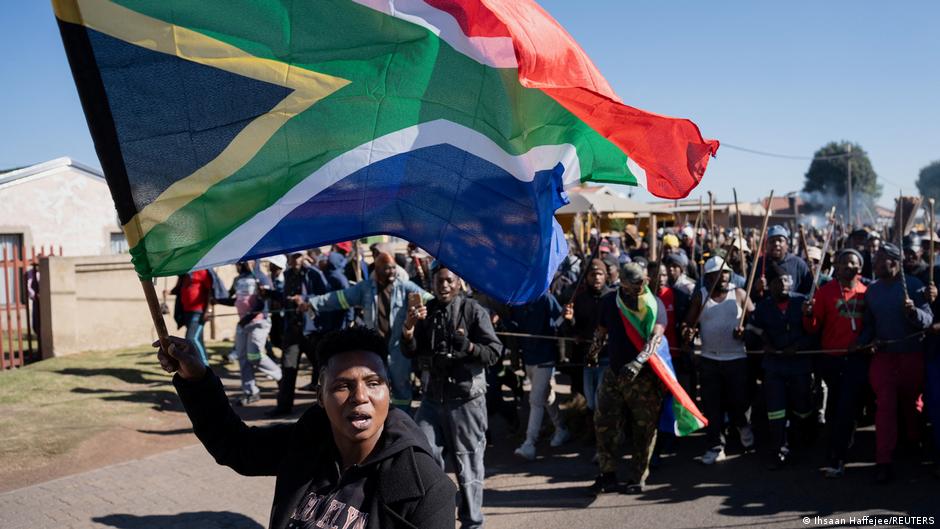
Videos posted online document the new wave of deadly anti-migrant violence that has been sweeping South Africa since late March 2026, killing at least seven people. Organised anti-migrant movements are inflaming tensions, which are exacerbated by widespread unemployment and persistent inequality.
Issued on: 11/05/2026 - 14:26
5 minReading time
Share
By:
The FRANCE 24 Observers
/
Nora LITOUSSI
These are screengrabs of videos posted to X showing attacks on men accused of being undocumented immigrants in Durban and in Johannesburg
These are screengrabs of videos posted to X showing attacks on men accused of being undocumented immigrants in Durban and in Johannesburg. © X / bAnthonYsr / OurFavOnlineDoc / Cornbread Mafioso

Videos posted online – many of them disturbing and violent – document a new wave of violence against African migrants in South Africa that began in late March. In one disturbing video, vigilantes pummel a man accused of being undocumented with sticks, while other videos show armed groups patrolling the streets.
This footage, much of it filmed in Durban, shows a worrying escalation in tensions and violence. Increasing numbers of anti-migrant protests are being held in cities across the so-called rainbow nation.

One of the populist, xenophobic groups behind these protests is called Operation Dudula. It was founded in Soweto by anti-migrant activist Nhlanhla "Lux" Dlamini. In 2023, it became a political party, led by Zandile Dabula, one of the most prominent anti-immigrant figures in the country.

The other organisation behind many of the protests is called March and March. It was founded in 2025 by Jacinta Ngobese-Zuma, a former radio presenter considered the other major champion of the country’s growing xenophobia. March and March self-describes as a popular movement, not a political party.

The two organisations are united in the belief that undocumented immigration is leading to unemployment and insecurity in South Africa, and, ahead of the 2026 local elections, they have garnered the support of a number of conservative political parties. This has set the scene for the latest wave of deadly xenophobic violence, like similar waves in 2008 and 2015.

‘The hostility is based on both nationality and race’​

Mpho Makhubela, who works with Lawyers for Human Rights and is a member of the association Kopanang Africa Against Xenophobia, is in regular contact with the people targeted by this violence:

"There wasn’t just one trigger. The tensions we are seeing now have been growing for years, but become more visible and intense at certain moments, like ahead of the elections when anti-migrant rhetoric tends to intensify.
The victims don’t describe isolated instances of violence, but organised intimidation. People are threatened, ordered to leave their communities and their businesses are looted. There is a strong racial element: the vast majority of those targeted are black African migrants. South African courts use the term ‘xeno-racism’, a hostility based on both nationality and race. Fear is widespread, and many victims don’t report what is happening to them because they don’t think they’ll be protected."

Illegal checkpoints run by civilians ​

The anti-immigration movements have gone well beyond protests and now have militias made up of vigilantes. One video, picked up by South African media outlets, shows some of these vigilantes beating a man up in front of what looks like a shuttered store.

Militia groups have been checking the documents of migrants living in the townships, says Makhubela:

"The groups of vigilantes sometimes present themselves as civic movements while all the while carrying out illegal activities: checking documents and searching people, deporting people and carrying out acts of intimidation.
In some communities, they are acting like immigration enforcement agents. They will stop people in the streets and ask to see their documents. If the people aren’t able to provide the documents, then they will be threatened, assaulted or forced to leave the community. So migrants are faced with illegal document checks being carried out by civilians, harassment and violence. Their shops are being looted, and many are living in fear and no longer move around freely in towns like Durban, Pretoria or Johannesburg."


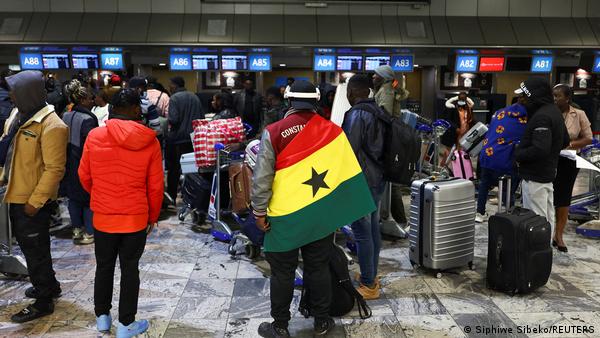
Videos of these illegal interactions have been widely circulated on social media. One video shows Victoria Africa, known as "Queen Vee", an activist with the political party Patriotic Alliance, which is known for its anti-immigrant stance, stopping a Ghanaian man and ranting at him in front of the camera.

"We don’t want this [sic] African people anymore,” she lectures. “We are tired of seeing African migrants moving all over the world, refusing to fix your own countries … We don’t want you here ... You know very well that what you’ve done is wrong.” Then, she asks to see his papers.

News agencies Reuters and African Press Agency have reported that at least seven people – five Ethiopians and two Nigerians – have been killed since the start of the violence in late March.

Human Rights Watch has reported that members of Operation Dudula, as well as March and March, have physically blocked migrants from entering public health facilities and schools: a practice that the African Commission on Human and Peoples’ Rights, which is linked to the African Union, has explicitly condemned, calling on the South African government to dismantle vigilante groups and put a stop to their illegal activities.

A man, identified by social media users as a member of the “Operation Dudula” movement, was filmed ordering non-South African nationals to leave a hospital waiting room.
Makhubela continues:

"We are still receiving reports from migrants who are prevented from accessing health centres even though they have valid immigration or asylum documents. Pregnant women and mothers struggle to access health services, even though they have the right. And children face obstacles when it comes to access to education.
The police have intervened in certain cases, but these interventions are sporadic. In many cases, we see either delayed responses, inaction or an inability to prevent escalation.”

‘Frustration is growing and migrants are an easy group to blame’​

There are a number of factors that could, in part, explain this wave of xenophobia. South Africa is experiencing a high unemployment rate, above 30 percent, which is affecting young people in particular. It’s also a country with one of the highest inequality rates in the world.

"Many people are struggling. Businesses are closing and people feel like there aren’t any real opportunities. There isn’t equal access to basic services and, in some areas, people feel abandoned by the government. In this context, frustration is growing and migrants are an easy group to blame, especially because they are visible in informal commerce and small businesses.

In a society where the majority – Black Africans – remain extremely poor, a well-off minority that is mostly white continues to largely control land and means of production.

Communities, especially Black communities, aren’t going after the profound causes of these problems and, instead, are influenced by lying narratives that migrants are stealing jobs, committing crimes, are making the economy tank and are taking over land, which doesn’t correspond at all with reality. But the legacy of apartheid, like divisions within the Black community, continues to play a role: Black people find themselves pitted against one another in a context of poverty and, in some ways, fighting over access to limited resources.”

Very few people responsible for xenophobic violence have been arrested in the years since 2008, and there have been even fewer convictions. In the rare cases where perpetrators are arrested, they are often released without charges.


Xenowatch, a database based at the University of Witwatersrand that monitors xenophobic violence and discrimination, has documented nearly 700 deaths due to xenophobic discrimination since 1994, as well as more than 128,000 people who have been displaced and 5,600 businesses that have been looted.

This article has been translated from the original in French by Brenna Daldorph.

(Several videos at the link.)
 
Sub-Saharan Africa. Hmmmm. Violence, famine, corruption, disease and the heartbreak of psoriasis, oh my. See my surprised face.

The Negroid race is terminally cursed. Anywhere and at any time, as a group, they can eff up a wet dream. Of course I'm speaking in generalities. There are many capable and intelligent Blacks, but unfortunately, they are always a small minority. Usually, they are a very small minority.

As a race, Blacks have benefited more than any other race from the achievements of other peoples, yet they have invented virtually nothing on their own. They are a people who, before the inroads made by Europeans and Arabs, had not seen or used the wheel or had a written language. Laughably, many Blacks and terminally self-loathing leftist Whites complain about the "cultural appropriation" which Whites are supposedly guilty of. The greatest cultural and technical appropriators on the planet are the Africans, who in the main, use and appropriate the developments of other races as they are incapable of creating their own. Africans are by far the most violent and criminal people on the planet. They are also the most emotionally unstable.

As has been proven many, many times through (often suppressed) studies, the Africans as a group have the lowest IQ's of any of the major races. When individual Blacks are intelligent, high achievers, they often obviously have mixtures of other race's genetics. Note that I said "often" and not always. Any study of racial traits is invariably a numbers game and the exceptions do not invalidate the rule.

Anyone reading the above may come away thinking that I hate Blacks/Africans. Nothing could be further from the truth. I have Black friends and I supervised and worked with hundreds of Africans when I actually lived in Sub-Saharan Africa. I think I have a better understanding of Africans than any western academic teaching "African Studies" or other similar twaddle.

I'm also extremely fond of my five African wives.

Gotcha, didn't I ;-)

Best
Doc
 

Nigeria, Ghana offer to help citizens leave South Africa​

Zac Crellin with Reuters, AFP
11 hours ago11 hours ago
The governments of Nigeria and Ghana are offering to fly citizens home from South Africa after a spate of anti-migrant attacks.


More than 1,000 Nigerians in South Africa have registered for a program to voluntarily return home after a spate of attacks targeting migrants, Nigeria's Foreign Ministry announced on Friday.

Screening is currently underway by the Nigerian Foreign Ministry and South African immigration officials to determine who is eligible for the program.

South African authorities have agreed to waive penalties for visa violations such as overstays. However, individuals facing criminal charges will not be eligible to ⁠leave the country.

"Total figure not out yet," said Kimiebi Ebienfa, a spokesperson for Nigeria's Foreign Ministry. "We are expecting over a thousand persons."

Why are African migrants fleeing South Africa?​

South Africa has seen a new surge in protests against undocumented migrants this year. Some of those protests have turned violent.

Victims have described aggressive mobs walking door-to-door and demanding that African migrants leave the country.

Protesters accuse African migrants of committing crimes and taking jobs — claims that are exacerbated by high unemployment, poverty and ineffective policing. Analysts and rights groups argue this is scapegoating.

One group has even issued an ultimatum calling for undocumented migrants to be expelled by June 30, prompting fears of further violence.

In one incident in May, five Ethiopian migrants were reportedly killed in Johannesburg. In June, Mozambique said five of its nationals were killed amid anti-immigrant violence in Western Cape.

South African officials have condemned the violence and promised to crack down on "xenophobic acts."

African countries take action to protect citizens​

Ghana repatriated around 300 people on a flight to Accra last month.

Hundreds more Ghanaians are set to follow suit.

A man draped in a Ghana flag stands among other Ghanaians as Ghana repatriates hundreds of its citizens from South Africa on May 27, 2026

Ghana chartered the first repatriation flight for its citizens after recent xenophobic violence in South AfricaImage: Siphiwe Sibeko/REUTERS

Ethiopia is also preparing to repatriate its citizens, Ebienfa said.

Other countries including Kenya, Lesotho and Zimbabwe have also urged their citizens to exercise caution in South Africa.

South Africa is home to over three million foreigners, making up some 5.1% of the population, according to the statistics agency. Over 63% hail from countries in the 16-member Southern African Development Community (SADC) bloc.

The country has grappled with waves of xenophobic violence, the most significant being in May 2008, when at least 62 people were killed, more than 670 injured and over 100,000 displaced in violence that erupted in the Alexandra township near Johannesburg before spreading across the country.

Many of the victims were migrants from Zimbabwe, Mozambique, Malawi and Somalia.

Edited by: Rana Taha
 

Migrants clash with police at a deportation site in South Africa where thousands have gathered​


Updated 2:14 PM EDT, June 17, 2026

​
JOHANNESBURG (AP) — Police fired rubber bullets and used stun grenades against migrants protesting Wednesday near a community hall in South Africa where thousands are being processed for deportation by authorities.

The clashes came as tensions over immigration surge in Africa’s richest country following a series of anti-migrant marches and reports of attacks on some foreign nationals.

The migrants who gathered near the hall in the eastern city of Durban are mainly Malawians who initially turned up there more than a week ago to be voluntarily repatriated to their home country on buses provided by their government, authorities said.

The premier of KwaZulu-Natal Province, where Durban is, has said nearly 10,000 Malawians have been camping in a park near the hall waiting to go home.

But delays in that process have led South African authorities to establish an immigration court at the hall and implement “formal deportation processes,” according to the Ministry of Home Affairs.

Video broadcast by South African television stations showed groups of protesters throwing rocks, sticks and logs at police in the streets near the hall, and police officers responding with stun grenades and rubber bullets.

Local media reported the clashes involving small groups of migrants erupted because of frustrations at the delays in them returning home.


The Home Affairs Ministry said at least 1,876 people among those gathered have been identified as being in South Africa without proper documents and would be deported. Efforts to verify the immigration status of others were ongoing, and the mayor of Durban said more than 6,000 Malawians could ultimately be deported.


Malawi is one of at least five African countries to repatriate some of their citizens from South Africa, citing threats and violent attacks on them. Malawi has already repatriated hundreds of people on buses.

Nigeria, Ghana, Mozambique and Zimbabwe have also provided flights or buses for some of their citizens to leave South Africa.

South Africa’s government has condemned a spate of attacks on foreigners sparked by a recent rise in anti-migrant sentiment from some groups.

South Africa, the most developed economy in Africa, is in the midst of a crackdown on immigration and has in the last two years deported more than 100,000 people who were living in the country illegally, according to the Home Affairs Ministry.


During that time, more than 500,000 others were sent back to their countries of origin after being stopped at a border trying to enter South Africa illegally, according to the ministry.
 

Why immigrants are leaving South Africa and the country is on edge ahead of a June 30 ‘deadline’​


By GERALD IMRAY
Updated 10:14 AM EDT, June 24, 2026
2
​
CAPE TOWN, South Africa (AP) — Thousands of African immigrants are leaving South Africa because of a rise in anti-migration anger that sparked attacks against foreigners.

The attacks have coincided with a series of protests and marches in recent months by anti-immigration groups, who have set what they are calling a June 30 deadline for people in the country illegally to leave and the government to take action against what they say is a growing problem of illegal immigration in Africa’s biggest economy.

The groups threatened a “national shutdown” if that doesn’t happen.

South African authorities are on high alert, the police minister said, with the anti-immigration groups planning more major protests on the deadline day.

Meanwhile, thousands of immigrants have gathered in temporary shelters, near embassies and elsewhere citing fear of attacks. Some countries have begun repatriating citizens while criticizing South Africa for what they call a climate of xenophobia.

There have been a series of anti-immigration protests​

Anti-immigration protests in several major cities have put the issue at the top of national politics since March. The protest groups have blamed immigrants without evidence for South Africa’s high unemployment, public service failures and crime.

South Africans protest against illegal migration, in Johannesburg, South Africa, Wednesday, April 29, 2026. (AP Photo/Themba Hadebe)

South Africans protest against illegal migration in Johannesburg, South Africa, Wednesday, April 29, 2026. (AP Photo/Themba Hadebe)
South African President Cyril Ramaphosa gave a speech on national television earlier this month in an attempt to defuse tensions. He has said some of the protest groups are exploiting the issue to advance their own political agendas and “illegal immigration is not the cause of our social and economic difficulties.”

But Ramaphosa also conceded that there had been failures in South Africa’s border control.

As one of Africa’s richer countries, South Africa has long attracted migrants from elsewhere in Africa seeking a better life. The latest census figures from 2022 show there were 2.4 million foreign nationals who had immigrated in South Africa’s population of 62 million — less than 4% of the population.


Malawian migrants stand in a queue for their deportation at a temporary centre, in South Africa, Thursday, June 18, 2026. (AP Photo/Themba Hadebe)

Malawian migrants stand in a queue at a temporary centre in Durban, South Africa, Thursday, June 18, 2026. (AP Photo/Themba Hadebe)
Critics of the government say those figures do not count many others in South Africa without proper documents.

South Africa is already cracking down on immigration​

While immigration becomes increasingly polarizing in the United States and Europe, Africa’s leading economy is also confronting the issue.

In the last two years, South Africa has deported more than 100,000 people the home affairs ministry says were in the country illegally, while also stopping around 500,000 others at borders trying to enter without documents.

Those figures have strengthened the claims by anti-immigration groups of a larger problem.

Police are investigating attacks​

Police are investigating recent attacks as anti-immigrant sentiment surges, including the killing of two Mozambicans in a small coastal town this month during unrest that also saw more than 50 homes set alight in an immigrant neighborhood, according to local authorities.

A Malawian man was allegedly stoned to death in another part of the country during anti-immigration protests last week, prompting another police investigation. Other attacks have been reported.

South Africa has a history of xenophobic violence as migrants from poor nations like Zimbabwe, Mozambique and Malawi generally end up settling in impoverished communities in South Africa where unemployment and frustrations are high.

A spokesperson for United Nations Secretary-General Antonio Gutteres has said that Gutteres was “deeply concerned by reports of xenophobic attacks and acts of harassment and intimidation against migrants and foreign nationals in parts of South Africa.”

There is a history of anti-immigrant violence in South Africa​

In 2008, more than 60 people — both South Africans and foreign nationals — were killed in a wave of anti-immigrant violence that spread from the biggest city of Johannesburg. There have been intermittent outbursts of violence against immigrants since then.

The latest tensions have led to strong criticism of South Africa by several African countries, including Nigeria, Ghana and Mozambique, who say their citizens are being targeted.

Migrants say they are leaving out of fear​

Thousands of migrants have also left South Africa as tensions rise ahead of the June 30 deadline set by protesters.

Nigeria and Ghana have repatriated nearly 2,000 people on government-sponsored flights, citing concerns over their safety, and say there will be more evacuations. Zimbabwe and Mozambique have also repatriated smaller numbers of people.

Around 10,000 Malawians had gathered at a temporary shelter in the eastern city of Durban last week trying to return home. More than 8,000 of them have since left the country on buses provided by the Malawian government or private sponsors, but others continue to gather.


South African authorities said they helped facilitate the repatriation of Malawian citizens, but they also formally deported many of them for not having documents to live in South Africa.
 

Kenya's Gen Z protests still echo two years on​

Andrew Wasike in Nairobi
06/25/2026June 25, 2026
Two years after youth-led protests shook Kenya, activists say the issues remain unresolved. As Gen Z marks the anniversary, the decentralized movement continues to shape politics, demand justice and challenge power.


Kenya's anti-riot police were out in full force in the capital, Nairobi, on Thursday, two years after Gen Z protesters breached the grounds of Kenya's parliament during demonstrations against a 2024 finance bill.

For many young Kenyans, June 25 is no longer just a protest date; it has become a symbol of resistance against police brutality, economic hardship and what activists see as a growing gap between leaders and citizens.

Many young Kenyans say little has fundamentally changed. Youth unemployment, rising cost of living and concerns over governance continue to resonate across the same generation that first mobilized online and poured into the streets.

"June 25th is a reminder of what this regime is all about," Faith Njeri, a university student in Nairobi, told DW. "It is a reminder of when you guys lost legitimacy to the people of Kenya… because of just simply saying no to the finance bill."

Others emphasized the importance of commemoration."Thursday is our greatest day that is about to happen," said youth activist Brian Otieno. "Celebrate the life of the comrades who died… We are coming with flowers. So your government should prepare to give us security."

People walk past a graffiti mural marking the first anniversary of anti-government demonstrations seen on a wall.

June 25 has become synonymous with the Gen Z protests that led to the withdrawal of Kenya's unpopular finance bill in 2024Image: James Wakibia/SOPA Images/ZUMA/picture alliance
Digital activism continues to play a crucial role in the Gen Z-led protests. "Kenyans, we have decided we are all changing our profile pictures to Rex and the other heroes we lost… Everyone we've lost to police brutality," said Mercy Wanjiru, another university student. "You cannot kill us and lead us."

For some, remembrance is also about restoring names that risk being forgotten. "We are in that dark month… Rex Masai, Denzel Omondi, Eric Shieni, David Chege, Erickson Mutisya… and the many who disappeared," businessman Kevin Mwangi told DW. At least 60 deaths were recorded during the protests, according to the government-mandated Kenya National Commission on Human Rights. Rex Masai, a 29-year-old activist, was the first fatality of the anti-finance bill protests in June 2024.

Beyond personalities and political affiliations​

Unlike earlier protest waves in Kenya, which often revolved around political parties or established civil society actors, the anti-finance bill demonstrations were markedly decentralized. Organizing largely unfolded online, through social media platforms and loosely connected local networks.

Beatrice Waithera, national leader of the Red Vest Movement, told DW this approach was partly a response to increasing scrutiny of public gatherings. "We had to mobilize ourselves discreetly in ways that [President William] Ruto had to come into one of the spaces on X, formerly Twitter, to try and speak to us," she said.

Digital spaces became coordination hubs, linking young people across the entire country. The protests drew students, young professionals, gig workers and first-time demonstrators — forming one of the most spontaneous youth mobilizations in Kenya's recent history.

"That's where the first faction of the Gen Z and youth movement started," said Waithera.

Questions about the movement's leadership persist, with some political figures attempting to link the protests to opposition actors or well-known activists. But participants often reject those narratives. "What happened in 2024, what happened in 2025, was larger than life, was larger than Boniface Mwangi, was larger than me," Waithera said.

Boniface Mwangi is one of Kenya's outspoken human rights and anti-corruption campaigners. He has declared his intention to run for president and attended the just-concluded DW Global Media Forum (GMF) in Bonn, Germany.

While acknowledging that veteran activists laid the groundwork for civic engagement, Waithera stressed that the protests quickly outgrew any single individual. "We were brave enough to occupy parliament and we did it without Boniface Mwangi being present," she said.

The absence of centralized leadership became a defining feature — and, for many, a strategic advantage. Without a single figurehead, the movement proved harder to co-opt or suppress, even as authorities sought to rein it in.

A member (C) of the Kenya Police Service gestures while interacting with demonstrators marching in downtown Nairobi.

Kenyan youth are still demanding justice for those killed, injured or disappeared during the June 2024 protests that swept the nationImage: Luis Tato/AFP/Getty Images
Activists agree that June 2024 altered how young Kenyans relate to authority. Even as arrests, intimidation and alleged abductions were reported, participation did not collapse.

"The fear is gone," said Waithera, acknowledging that the risks forced constant adaptation. "But we've had to go back and reinvent ways." Today, the movement operates both online and offline, mobilizing quickly on issues beyond taxation, including governance, police accountability and economic reforms.
 

Nigeria, Ghana offer to help citizens leave South Africa​

Zac Crellin with Reuters, AFP
11 hours ago11 hours ago
The governments of Nigeria and Ghana are offering to fly citizens home from South Africa after a spate of anti-migrant attacks.


More than 1,000 Nigerians in South Africa have registered for a program to voluntarily return home after a spate of attacks targeting migrants, Nigeria's Foreign Ministry announced on Friday.

Screening is currently underway by the Nigerian Foreign Ministry and South African immigration officials to determine who is eligible for the program.

South African authorities have agreed to waive penalties for visa violations such as overstays. However, individuals facing criminal charges will not be eligible to ⁠leave the country.

"Total figure not out yet," said Kimiebi Ebienfa, a spokesperson for Nigeria's Foreign Ministry. "We are expecting over a thousand persons."

Why are African migrants fleeing South Africa?​

South Africa has seen a new surge in protests against undocumented migrants this year. Some of those protests have turned violent.

Victims have described aggressive mobs walking door-to-door and demanding that African migrants leave the country.

Protesters accuse African migrants of committing crimes and taking jobs — claims that are exacerbated by high unemployment, poverty and ineffective policing. Analysts and rights groups argue this is scapegoating.

One group has even issued an ultimatum calling for undocumented migrants to be expelled by June 30, prompting fears of further violence.

In one incident in May, five Ethiopian migrants were reportedly killed in Johannesburg. In June, Mozambique said five of its nationals were killed amid anti-immigrant violence in Western Cape.

South African officials have condemned the violence and promised to crack down on "xenophobic acts."

African countries take action to protect citizens​

Ghana repatriated around 300 people on a flight to Accra last month.

Hundreds more Ghanaians are set to follow suit.

A man draped in a Ghana flag stands among other Ghanaians as Ghana repatriates hundreds of its citizens from South Africa on May 27, 2026

Ghana chartered the first repatriation flight for its citizens after recent xenophobic violence in South AfricaImage: Siphiwe Sibeko/REUTERS

Ethiopia is also preparing to repatriate its citizens, Ebienfa said.

Other countries including Kenya, Lesotho and Zimbabwe have also urged their citizens to exercise caution in South Africa.

South Africa is home to over three million foreigners, making up some 5.1% of the population, according to the statistics agency. Over 63% hail from countries in the 16-member Southern African Development Community (SADC) bloc.

The country has grappled with waves of xenophobic violence, the most significant being in May 2008, when at least 62 people were killed, more than 670 injured and over 100,000 displaced in violence that erupted in the Alexandra township near Johannesburg before spreading across the country.

Many of the victims were migrants from Zimbabwe, Mozambique, Malawi and Somalia.

Edited by: Rana Taha

This is nothing new. I'm getting long in the tooth, but 40 years ago when I lived in South Africa, illegal immigration was a scourge then. South Africa was much richer back then and the African illegals all came looking for a better life. Additionally, the authorities were much better at combating illegal immigration.

As bad as things are in South Africa today, Africans from other countries still want to get in. This is an indication of just how bad things are in the illegal immigrants countries of origin.

When I was there, White progressives and Black "nationalists" frequently railed against the government's anti-illegal immigrant crackdowns. It's hilarious that now the Black government is doing the same thing, though they are less effective at it.

Best
Doc
 
When I was there, White progressives and Black "nationalists" frequently railed against the government's anti-illegal immigrant crackdowns. It's hilarious that now the Black government is doing the same thing, though they are less effective at it.
What do you make of the June 30 deadline? Should it be taken seriously? Should I start a separate thread?
 
From the article you posted:

"One group has even issued an ultimatum calling for undocumented migrants to be expelled by June 30, prompting fears of further violence."

You will note that the story didn't identify which group they were referring to, so at this point I have no idea how effective it will be.

Best
Doc
 

Tanzanian authorities arrest dozens ahead of anti-government protests​


Updated 8:02 AM EDT, July 6, 2026
Leer en español

​
DAR ES SALAAM, Tanzania (AP) — Tanzanian authorities arrested dozens of people ahead of planned anti-government protests, part of a crackdown on calls demanding democratic reforms and the release of a key opposition figure.

Sylvester Mangure, the army spokesperson, warned Sunday against any demonstrations, following last week’s government ban on political rallies. He also accused “some people,” whom he didn’t identify, of “recruiting youth” to join the protests as they claimed the country’s army supported the planned demonstrations.

Young people have called for protests on Tuesday, coinciding with the 72nd anniversary of the ruling party’s establishment, to demand democratic changes and the release of opposition leader Tundu Lissu, who was arrested on treason charges after calling for electoral reforms ahead of last year’s general election.

President Samia Suluhu Hassan won the disputed October election with 97% of the vote despite a widespread boycott and the absence of contestants from the two main opposition parties, Chadema, headed by Lissu, and ACT Wazalendo. More than 500 people were killed during three days of violent demonstrations challenging the electoral process, according to a government-appointed committee. Human rights groups and opposition leaders say the death toll was much higher.

On Sunday, Mangure asked the public to report anyone recruiting or organizing protesters, while promising that the army would safeguard the country’s peace.

“The army encourages citizens to continue engaging in nation-building activities without fear, and it will not hesitate to take action against those disrupting peace as provided for under the constitution,” he said.

Security has been significantly tightened in the commercial capital, Dar es Salaam, with soldiers and police officers patrolling major roads and public spaces. Critics say the heightened security presence is intended to deter demonstrators. However, authorities have not stated it was connected to the planned protests.

The city will also host on Tuesday its 50th Dar es Salaam International Trade Fair, locally known as SabaSaba, one of the country’s largest annual commercial events.

Police spokesperson David Misime said on Saturday that law enforcement agencies had intensified operations and cracked down on groups allegedly mobilizing people to participate in what authorities describe as illegal demonstrations.

“Strong action will be taken against anyone who participates in the unlawful riots being mobilized through social media,” Misime said.

Last week, Prime Minister Mwigulu Nchemba said people had been arrested for recruiting youth to take part in Tuesday’s protests. He did not reveal the exact number of those arrested.
 

Violence escalates in South Sudan as a government commissioner is killed​


By DENG MACHOL
Updated 8:40 AM EDT, July 7, 2026

​
JUBA, South Sudan (AP) — A government-appointed county commissioner in an opposition stronghold in South Sudan’s oil-rich Jonglei State was “assassinated” by opposition forces in renewed violence, the government confirmed late Monday.

Fighting in Jonglei has intensified in recent days, with an unknown number of casualties. The strategic county of Akobo has seen the appointment of both government-backed and opposition-backed county commissioners.

James Kueth Makuach, the government-appointed commissioner, was killed on Sunday when opposition fighters launched an assault on Walgak, a remote area in Akobo West, according to officials from both sides.

Makuach defected to President Salva Kiir’s ruling party in April after being removed by the opposition’s acting leadership earlier this year.

The government then appointed him as county commissioner, ignoring a 2018 peace agreement that assigns that Akobo County position to Riek Machar’s opposition party. Machar remains in prison and faces treason charges.

The ruling party in a statement said it “strongly condemns the brutal killing” of the commissioner and would hold an emergency session to discuss it.

The opposition-appointed governor, John Wiyual Lul, said opposition fighters briefly seized the area before withdrawing after government reinforcements arrived. He said senior army officers were among those killed.


Jonglei State government spokesperson Nyamar Lony Thichiot told The Associated Press late Monday that casualty figures remained unclear.

The Reconstituted Joint Monitoring and Evaluation Commission, formed to monitor South Sudan’s peace process, on Monday said the renewed violence undermines the implementation of the 2018 peace deal ending civil war and threatens the safety of civilians.

Fighting in Akobo County broke out in March when opposition forces targeted a government base. The United Nations in June withdrew its peacekeepers from a base established to help protect civilians.

Civil society leaders warned that political tensions are increasingly spilling onto the battlefield again.


“This is an unfortunate relapse into violence and a clear threat to civilians, their property and humanitarian operations,” Juba-based civil society activist Bol Deng Bol said. Another activist, Edmond Yakani, urged the opposition and the government to fully respect the permanent ceasefire.

South Sudan is scheduled to hold long-delayed elections on Dec. 22, its first since independence from Sudan in 2011.
 

Oprah Winfrey says she will close her school for girls in South Africa next year​

Oprah Winfrey talks to students at her Leadership Academy for Girls at Henley-On-Klip South Africa, Friday, Jan. 13, 2012 on the eve of the first graduation at her school. (AP Photo/Denis Farrell, file)

Oprah Winfrey talks to students at her Leadership Academy for Girls at Henley-On-Klip South Africa, Friday, Jan. 13, 2012 on the eve of the first graduation at her school. (AP Photo/Denis Farrell, file)

By MICHELLE GUMEDE
Updated 8:07 AM EDT, July 31, 2026
Leer en español

JOHANNESBURG (AP) — Oprah Winfrey says she will close the school for underprivileged girls she set up in South Africa two decades ago at the end of next year.

Winfrey opened the Oprah Winfrey Leadership Academy for Girls in 2007 after being inspired by conversations with former South African President Nelson Mandela about the transformative power of educating girls. He was among the guests at the school’s opening ceremony.

Winfrey’s charitable foundation ran and funded the school, but it was always part of the agreement that the academy campus near Johannesburg be ultimately handed over to the provincial education department, the academy said.

“The dream was never simply to build a school,” Winfrey said in a statement issued by the academy on Wednesday. “It was to invest in the limitless potential of young women. That mission doesn’t end with one campus. It continues in every girl whose future can be transformed through education.”

The academy said Winfrey’s commitment to educating South African girls would continue through an expanded national scholarship program supporting academically talented girls at leading schools across the country.

More than 500 girls have graduated from the academy and some have attended top universities in South Africa, the United States and Europe, according to the Oprah Winfrey Charitable Foundation.

The Gauteng provincial government will take over the 52-acre academy campus, which has 21 classrooms, six science and computer laboratories, a 10,000-volume library and a 600-seat theater. It did not immediately say what the plans for the property were.

Gauteng Provincial Minister for Education Lebogang Maile said those currently enrolled in the school will be able to complete their education with uninterrupted financial support.

The academy drew international attention shortly after opening in 2007 when several students accused a dormitory matron of physically and sexually abusing them.

Winfrey traveled to South Africa to meet with students and parents, publicly apologized, and commissioned an independent investigation.

The matron was acquitted of criminal charges in 2010.

___

This report has been corrected to show Oprah Winfrey’s statement as issued on Wednesday and not Thursday.
 

US Expands Strategic Foothold On Somalia's Coast As Yemen Conflict Simmers​

by Tyler Durden
Wednesday, Aug 05, 2026 - 03:30 AM
Authored by Dave DeCamp via AntiWar.com,
A US military delegation visited the local government in Somalia's northeastern Puntland region on Sunday and signed a deal to expand the US military presence in Bosaso, a port city on the Gulf of Aden, according to the Puntland government.

Saeed Abdullahi Deni, the president of Puntland State, held talks with a delegation led by Maj. Gen. Claude Tudor, the commander of US Special Operations Command Africa.
Maj. Gen. Tudor and President Deni. Source: Puntland government image
"Puntland and the United States also signed a new agreement to expand their cooperation. Under the agreement, the United States will expand its military base in Bosaso to improve operations against terrorism and to help protect maritime security," the Puntland government said in a statement on the meeting.

The US has been operating from a UAE-built airbase in Bosaso, which the UAE has reportedly used to arm the RSF in Sudan.

An expanded US military presence in Bosaso could be used as a launchpad for operations against Yemen's Ansar Allah, also known as the Houthis, and the deal comes as Ansar Allah is enforcing a new maritime blockade on Saudi Arabia’s Red Sea ports, which began after Saudi strikes on Yemen’s Sanaa International Airpoirt, attacks that reignited the conflict that was in a state of ceasefire since 2022.

Tudor visited Puntland a day after meeting with officials in Somaliland, a de facto independent state within Somalia’s internationally recognized borders.


It’s unclear if any deals were signed in that meeting, but Israel recently became the first country to recognize Somaliland as an independent country and is seeking to establish a military and intelligence presence for operations against Yemen.

According to the Somali Guardian, the US-Puntland deal bypassed the US-backed federal government in Mogadishu, which has been at odds with Puntland amid a political crisis sparked by changes to the constitution made by Somali President Hassan Sheik Mohamud. Puntland withdrew from the federal system in 2024, and this year clashes have occurred between forces loyal to the federal government and Puntland security forces.

The US has continued to back the federal government with airstrikes against al-Shabaab, and it has also been engaged in an air campaign against an ISIS affiliate in Puntland, where it backs local Puntland forces.
via BBC
President Trump has overseen a major escalation in Somalia, launching at least 124 airstrikes in 2025, a record number. The US has launched at least 77 airstrikes in Somalia this year, though the war receives virtually no media coverage in the US.
 

Zambia awaits presidential election results. Here’s why China and the US may be interested​


By JACOB ZIMBA
Updated 5:44 AM EDT, August 14, 2026
1
​
LUSAKA, Zambia (AP) — Zambia awaits the results of an election that will decide whether President Hakainde Hichilema wins a second five-year term as a reward for his economic recovery plan.

The southern African nation is one of the world’s top copper producers but has recently been mired in a debt crisis.

China and the US have interests in Zambia​

China is heavily invested in Zambia’s copper sector, while the United States has shown new interest in the country as part of President Donald Trump’s focus on critical minerals to ease China’s dominance in that area.

Zambia defaulted on sovereign debt repayments to China and other nations in 2020, drawing attention to the unsustainable burdens faced by some developing countries.

Hichilema was elected a year later, and Zambia has restructured more than $12 billion in debts under his leadership while reining in inflation. His long-term economic plan involves a pledge to more than triple Zambia’s copper output to 3 million metric tons a year by 2031, a staggering rise in production of the in-demand critical mineral.

China is the top foreign investor in Zambia, especially in its copper and cobalt — critical minerals used in electronics, electric vehicles and other new technologies.


Those minerals have also drawn interest from the Trump administration, though Zambia has accused the U.S. of tying critical minerals access to a proposed $2 billion health deal between the countries. The U.S. has rejected the allegation.

Zambian President Hakainde Hichilema arrives at the Elysee Palace in Paris, Wednesday, May 10, 2023, to meet French President Emmanuel Macron. Zambian President Hakainde Hichilema will discuss with French President Emmanuel Macron on economic issues. (AP Photo/Michel Euler, file)

Zambian President Hakainde Hichilema arrives at the Elysee Palace in Paris, France, Wednesday, May 10, 2023. (AP Photo/Michel Euler)

The one-day election was held on Thursday and final results are expected on Monday, according to the electoral commission.

An opposition alliance poses Hichilema’s strongest threat​

Hichilema won the presidential election in 2021, having lost five previous votes. The 64-year-old is a former financial services executive with a background in farming and is one of the nation’s biggest cattle ranchers.

He has led the United Party for National Development since 2006.

There are 14 presidential candidates in total, but analysts say Hichilema’s strongest challenger will likely be 55-year-old Brian Mundubile, a law graduate and the leader of an opposition group of parties called the Tonse Alliance.

Economics and free elections are the biggest issues​

While inflation has dropped and the value of Zambia’s currency, the Kwacha, has improved under Hichilema, ordinary Zambians bemoan high food and energy costs. Some critics say the macroeconomic stability hasn’t benefited most people in the landlocked country of some 22 million.

Hichilema promised this week to build more schools, health facilities and roads, and to address electricity shortages and the cost of living.

Another criticism of Hichilema is that he has squeezed dissent in a country where elections have been largely peaceful.

The Tonse Alliance accused Hichilema’s government of being behind a law enforcement agency raid on its offices days before the election, during which vehicles, communication equipment and other items were seized. The alliance alleged it was politically motivated to disrupt its campaigning.

A fight over a former president’s body shows how fierce Zambian politics can get​

Zambia gained independence from Britain in 1964 and was a one-party state from 1973 to 1991. Since then, several parties and political alliances have won and lost power.

Hichilema’s rivalry with his predecessor, the late former President Edgar Lungu, was especially bitter and continued even after Lungu’s death last year. When Lungu was president, then-opposition leader Hichilema was imprisoned for four months in 2017 on charges of treason after Lungu alleged Hichilema’s motorcade didn’t give way to his on a road.

Lungu claimed he was effectively put under house arrest during Hichilema’s first term.

Lungu died in South Africa in June 2025, prompting a macabre yearlong battle between Hichilema’s government and Lungu’s family over where the body should be buried. The government insisted it be repatriated for a state funeral, while the family said one of Lungu’s last wishes was that he not have a state funeral presided over by Hichilema.

The dispute went to South Africa’s Supreme Court of Appeal, which ruled in favor of the family, though burial plans have still not been announced.

How the election works​

Voters also chose lawmakers in Parliament and local government councilors. Around 8 million people were registered to vote.


Zambia’s presidential election uses the 50% plus one system, in which a candidate must secure an outright majority to win. That raises the possibility of a second round of voting if no candidate gets more than 50% of the vote the first time around.
 

DR Congo, AFC/M23 group agree on roadmap for peace negotiations after Swiss talks​

Africa
Mediators representing the Rwanda-backed AFC/M23 armed group and the Democratic Republic of Congo in a joint statement published Sunday said they have agreed on a roadmap for peace talks. The two sides said they had "agreed on the importance of a standardised method for reporting allegations of ceasefire violations".
Issued on: 23/08/2026 - 14:15

1 minReading time
Share
By:
FRANCE 24
People displaced by the fighting with M23 rebels make their way to the center of Goma, Democratic Republic of the Congo, Sunday, Jan. 26, 2025
People displaced by the fighting with M23 rebels make their way to the center of Goma, Democratic Republic of the Congo, Sunday, Jan. 26, 2025. © Moses Sawasawa, AP

The Democratic Republic of Congo and the Rwanda-backed AFC/M23 armed group have agreed on a roadmap for peace talks, according to a joint statement published Sunday by Switzerland after hosting negotiations.


The eastern DRC has been riven by decades of conflict, with multiple armed groups fighting over its mineral-rich territory, including the AFC/M23, which seized swathes of the region last year.

The two sides signed a US-brokered peace agreement late last year in the Qatari capital Doha, but fighting has continued.

Following a new round of talks held in Switzerland last week, the two sides and their mediators said they had staked out a path forward.

"The Parties developed a roadmap setting out sequenced steps and timelines for negotiations under the Doha Framework Agreement, and committed to flexibility and creativity within the existing structure" of that agreement, the statement said.

"They reaffirmed their commitment to pursue negotiations towards comprehensive peace and conflict resolution through the implementation of the Framework Agreement," it added.

The talks, held behind closed doors from August 17 to August 21, also included representatives from the United States, Qatar, Switzerland, the African Union Commission and Togo, serving as African Union mediator.

The two sides said they had "agreed on the importance of a standardised method for reporting allegations of ceasefire violations".

A first ceasefire verification mission is due in Minembwe, in DRC's South Kivu province, on Monday, according to the statement.


The sides had also agreed to establish a "mechanism tasked with reviewing progress and addressing challenges in implementation of obligations and commitments under the Doha Framework Agreement", it said.

(FRANCE 24 with AFP)
 

Nigeria says 2 of its nationals killed in South Africa as anti-migrant tensions flare​

Protesters march against illegal immigration, in Johannesburg, South Africa, on June 30, 2026. (AP Photo/Themba Hadebe, file)

Protesters march against illegal immigration, in Johannesburg, South Africa, on June 30, 2026. (AP Photo/Themba Hadebe, file)

License this photo
By DYEPKAZAH SHIBAYAN
Updated 6:37 AM EDT, September 12, 2026

ABUJA, Nigeria (AP) — Two Nigerian nationals have been killed in South Africa, Nigeria’s Foreign Ministry said, as tensions run high between the two countries over anti-immigrant protests.

The ministry said one of the victims, James Uchechukwu Nwankwo, was killed after “gruesome interrogation techniques” by South African police officers in Cape Town, on Sept. 5.

The statement did not identify any suspects or provide a possible motive in the death of Taiwo Michael Fakunle, a bishop, who was killed at his residence in Kensington, Johannesburg, on Sep. 4.

South African police did not immediately respond to a request for comment.

The killings “raise questions about the safety of foreigners in the country and the commitment of the South African authorities to curbing targeted attacks against foreigners,” Foreign Ministry spokesman Oluwafemi Adeniyi said in the statement.

He accused South African police of “exacerbating an already fragile situation.”

South Africa has for years attracted foreign nationals from across the continent, including many from Nigeria, because of its relative wealth and opportunity. But foreigners have also experienced sporadic outbursts of xenophobic violence. Protesters in the southern African country blame foreigners for high levels of unemployment, crime and pressure on public services.

The violent protests have forced thousands of migrants to leave and caused diplomatic tensions with other African nations.

On Friday, Nigeria’s parliament indefinitely suspended official visits and engagements with South Africa.

In June, two Nigerians were killed during anti-migrant violence, just two days before an unofficial deadline set by protesters for foreigners to leave. Nigeria said one was allegedly killed by police officers and the other by unidentified attackers.

Nigeria’s minister of state for foreign affairs, Ambassador Sola Enikanolaiye said in July that at least 98 Nigerians have been killed since 2022 in mob attacks, hate-related violence and extrajudicial killings.
 
This is not good at all.


Police fire tear gas to break up Congo protests against constitutional changes​


By JEAN-YVES KAMALE
Updated 4:21 PM EDT, September 15, 2026

​
KINSHASA, Congo (AP) — Police in Congo fired tear gas Tuesday to disperse hundreds of people demonstrating against constitutional changes they said could allow President Felix Tshisekedi to seek a third term in office.

The opposition coalition C64 organized demonstrations in the capital, Kinshasa, and several other cities, including Lubumbashi and Kindu in eastern Congo, despite restrictions on mass gatherings imposed due to the fast-spreading Ebola outbreak.

The protest in Kinshasa drew hundreds of people and began peacefully, but was dispersed by police with tear gas and warning shots after protesters clashed with pro-government supporters.

“The Congolese state is working with a political party militia,” said opposition leader Martin Fayulu. “God is great; I made it out alive. There was a massacre, and the police were firing at us.”


Congolese government spokesperson Patrick Muyaya condemned the opposition for disrupting activities by falsely claiming schools would be closed on Tuesday. “The right to protest is recognized in the Constitution, but it must be exercised properly,” he said.

Police also dispersed a June rally in Kinshasa that C64 organized against the constitutional changes. Several people, including Fayulu, were injured.

Congo is plagued by multiple crises, including an Ebola outbreak and an escalation of the decades-long conflict with the Rwanda-backed M23 rebels, one of more than 100 armed groups vying for control in the eastern provinces.

Tshisekedi, 62, has been in office since 2019 and is due to complete his second five-year term in 2028. He has said he would be willing to seek a third term if approved by voters in a referendum.

The Congolese Constitution bars any revision of presidential term limits. However, a bill under consideration in the National Assembly, a lower chamber, would allow the president to amend those provisions in the event of a “major dysfunction” that paralyzes state institutions, potentially following a referendum.


The country’s main opposition parties, which have been divided in recent years, joined forces in May under the banner of C64, or Coalition Article 64, to oppose what they describe as an attempt by Tshisekedi to remain in power. The coalition has called the proposed changes a “serious threat” to the country’s stability.
 
This is not good at all.


Police fire tear gas to break up Congo protests against constitu​


This is not good at all.


Police fire tear gas to break up Congo protests against constitutional changes​


By JEAN-YVES KAMALE
Updated 4:21 PM EDT, September 15, 2026

​
KINSHASA, Congo (AP) — Police in Congo fired tear gas Tuesday to disperse hundreds of people demonstrating against constitutional changes they said could allow President Felix Tshisekedi to seek a third term in office.

The opposition coalition C64 organized demonstrations in the capital, Kinshasa, and several other cities, including Lubumbashi and Kindu in eastern Congo, despite restrictions on mass gatherings imposed due to the fast-spreading Ebola outbreak.

The protest in Kinshasa drew hundreds of people and began peacefully, but was dispersed by police with tear gas and warning shots after protesters clashed with pro-government supporters.

“The Congolese state is working with a political party militia,” said opposition leader Martin Fayulu. “God is great; I made it out alive. There was a massacre, and the police were firing at us.”


Congolese government spokesperson Patrick Muyaya condemned the opposition for disrupting activities by falsely claiming schools would be closed on Tuesday. “The right to protest is recognized in the Constitution, but it must be exercised properly,” he said.

Police also dispersed a June rally in Kinshasa that C64 organized against the constitutional changes. Several people, including Fayulu, were injured.

Congo is plagued by multiple crises, including an Ebola outbreak and an escalation of the decades-long conflict with the Rwanda-backed M23 rebels, one of more than 100 armed groups vying for control in the eastern provinces.

Tshisekedi, 62, has been in office since 2019 and is due to complete his second five-year term in 2028. He has said he would be willing to seek a third term if approved by voters in a referendum.

The Congolese Constitution bars any revision of presidential term limits. However, a bill under consideration in the National Assembly, a lower chamber, would allow the president to amend those provisions in the event of a “major dysfunction” that paralyzes state institutions, potentially following a referendum.


The country’s main opposition parties, which have been divided in recent years, joined forces in May under the banner of C64, or Coalition Article 64, to oppose what they describe as an attempt by Tshisekedi to remain in power. The coalition has called the proposed changes a “serious threat” to the country’s stability.
We be Kangs an sheeeiiit. :p
 
Last edited:

South African police find a ninth woman’s body, with possible links to series of killings​


Updated 5:20 AM EDT, September 17, 2026
Leer en español
​
JOHANNESBURG (AP) — South African police said Thursday a ninth woman’s body has been discovered in an area east of Johannesburg, and said it could be linked to a series of killings they are investigating.

All nine bodies were found in the Ekurhuleni municipality over the last two months, raising concerns that they were carried out by the same person or people. Police previously said that some similarities in the killings of the first eight victims were “sufficiently concerning for the police to issue a public warning.”

The discoveries have sent shock waves around the country, sparked a high-level investigation and highlighted the scourge of femicide and high levels of violent crime.

Police said the discovery of the latest body early Thursday “will be added to the investigations into the deaths of women in Ekurhuleni.”

Provincial police commissioner Fred Kekana said a passerby found the woman’s body near a construction site and alerted police.

The unidentified woman appeared to be about 30 and had an apparent stab wound to her side, while her throat appeared to have been cut, he said. Forensic investigators had not yet determined the official cause of death.

Kekana said police had not established whether her death was linked to the other cases and appealed for information from the public.

He also urged people not to circulate photographs of the bodies or unverified reports on social media, warning that they were spreading fear and could encourage copycat crimes.

A multidisciplinary team of experts has been assigned to investigate the cases and identify those responsible. Police appealed to the public for information.


So far, the bodies had been found across several Ekurhuleni communities, including Kempton Park, Pomona, Clayville, Olifantsfontein, Rhodesfield, KwaThema and Dawn Park.

Gauteng Premier Panyaza Lesufi said police were pursuing leads and making progress in two or three cases, although he did not provide details. He urged the public to give investigators time to gather sufficient evidence.

“They’ve declared war against the state. We’ll respond,” Lesufi told reporters at the scene. “We’re not going to surrender.”

Missing In Southern Africa, which supports missing people and their families, urged communities and families to report immediately when they suspected.


The organization said the discoveries had deepened the anguish of families searching for loved ones and urged people to report disappearances immediately.


“There is no waiting period to report a missing person,” it said. “The moment you suspect that someone is missing, report it immediately to the South African Police Service.”
 

At least 700 dead in Tanzania's post-election protests, opposition says​

Africa
Hundreds of people have reportedly been killed in Tanzania after taking to the streets to protest this week’s presidential election, which saw the increasingly authoritarian incumbent, President Samia Suluhu Hassan, run unopposed for another term after her main challengers were jailed or barred from standing.
Issued on: 31/10/2025 - 13:53Modified: 31/10/2025 - 13:57
3 minReading time

By:
FRANCE 24
Riot police walk by a vandalised campaign poster of President Samia Suluhu Hassan, following a post-election protest in Tanzania, on October 30, 2025.
Riot police walk by a vandalised campaign poster of President Samia Suluhu Hassan, following a post-election protest at the Namanga One-Post Border crossing point between Kenya and Tanzania, October 30, 2025. © Thomas Mukoya, Reuters

Some 700 people have been killed in three days of election protests in Tanzania, the main opposition party said Friday, with protesters still on the streets in the midst of an internet blackout.

Advertising

“As we speak the figure for deaths in Dar (es Salaam) is around 350 and for Mwanza it is 200-plus. Added to figures from other places around the country, the overall figure is around 700,” John Kitoka, spokesman from the main opposition party Chadema, said.

“The death toll could be much higher,” he warned, saying killings could be happening during the nighttime curfew.

President Samia Suluhu Hassan, whose government is accused of a campaign of repression, had sought to cement her position and silence critics in her party in the virtually uncontested polls, with the main challengers either jailed or barred from standing.

Wednesday’s election descended into chaos as huge crowds took to the streets of Dar es Salaam and other cities, tearing down her posters and attacking police and polling stations, leading to an internet shutdown and curfew.

With foreign journalists largely banned from covering the election and a communications block entering its third day, information from the ground has been scarce.

Chadema, which was barred from the election, said protesters were marching on the city centre in Dar es Salaam on Friday, met by a heavy police and army presence.

A security source told AFP they were hearing reports of more than 500 dead, “maybe 700-800 in the whole country”, while Amnesty said it had received information of at least 100.

Multiple hospitals and health clinics were too afraid to talk directly to reporters.

Local news sites had not been updated since Wednesday, and Hassan has not commented on the unrest.

The only official statement came from army chief Jacob Mkunda late Thursday who called the protesters “criminals”.

Zanzibar ‘robbed’​

In Zanzibar, a tourist hotspot, Hassan’s ruling party had already been declared winner of the local vote on Thursday.

The opposition party, ACT-Wazalendo, rejected the result, saying: “They have robbed the people of Zanzibar of their voice... The only solution to deliver justice is through a fresh election.”

A senior party official said ballot boxes had been stuffed, people had been allowed to vote multiple times without ID and that their election observers had been kicked out of counting rooms.

The ruling party (Chama Cha Mapinduzi: CCM) was due to give a press conference later in the day.

At a meeting place for opposition supporters on Zanzibar, there was dismay and fear.

“There has never been a credible election since 1995,” said a 70-year-old man, referring to Tanzania’s first multi-party vote.

None of those interviewed gave their names.

“We are afraid of speaking because they might come to our houses and pick us up,” said one.

Crackdown​

Hassan has faced opposition from parts of the army and allies of her iron-fisted predecessor, John Magufuli, since she took over upon his death in 2021, analysts say.

They said she wanted an emphatic victory to cement her position, and the authorities banned the main opposition party, Chadema, and put its leader on trial for treason.

In the run-up to the vote, rights groups condemned a “wave of terror” in the east African nation, including a string of high-profile abductions that escalated in the final days.

Much public anger has been directed at Hassan’s son, Abdul Halim Hafidh Ameir, accused of overseeing the crackdown.


ACT-Wazalendo was allowed to contest the local election in Zanzibar, but its candidate was barred from competing against Hassan on the mainland.

(FRANCE 24 with AFP)
Africa will always be a dumpster file. For many various reasons.
 
Top