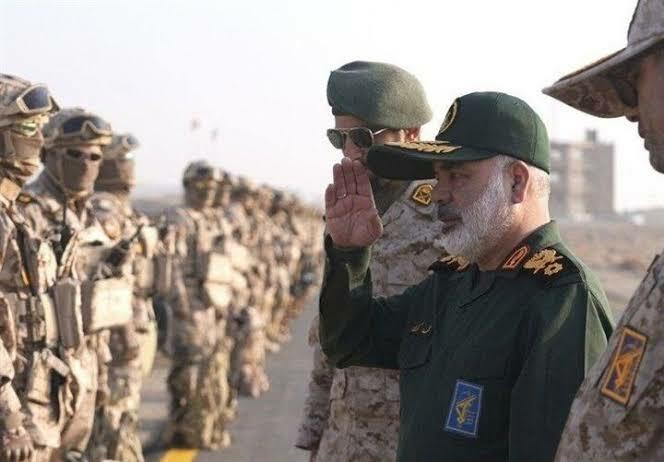
WAR Iran/ US/mideast war thread - 2/28/26 Open Hostilities (Thread for Off Topic discussion started, see post #13,751, page 344)

Again, not a lot said, until you read between the lines.

Now that school is back in session, the regime is taking advantage of it. Videos were shown of masked, camouflaged women preformed a sort of kada for kids as young as first grade. About twenty of them are formed up in a square, moving in concert, pointing pistols at imaginary enemies. Kinda like a karate workout. In another, judging by what I could see, first graders firing a paintball gun at pictures of DJT. Guess they have lowered the enlistment age. Schools continue to double as barracks, mosques as ammo dumps. Knowing the U.S. won’t knowingly hit either.

In the SE you have to understand there are a number of small resistance groups and with some about the only thing they have in common is wanting the regime gone. Alliance’s are being formed. Some want the Shah back. Some don’t. Either way the IRGC continues to lose ground to them.

Saudi Arabia has been doing more of the work in Yemen and it seems to be helping. The Houthi’s either held or somewhat controlled most of the western half of Yemen. They are losing ground on their eastern flank to Saudi air strikes. This has enabled the Yemen army to retake one of the cities near the straits the Houthi’s are trying to control.
 
Last edited:
"... Israeli Channel 14 ran a segment this week saying the economic crash has reached the IRGC. Not the top, not yet. But mid-level officers, looking for a second job so they can close the month. The reporter said people at the top of the IRGC are already telling each other the economy is not on the way to collapse, it has already collapsed.

That matches what I have been hearing from inside Iran: Basij and IRGC men who are not getting paid, or getting paid so late it does not cover anything. Side jobs. Driving. Whatever they can pick up. Some are sending their wives out to work. For the men who spent years policing how a woman dresses, that is the part they cannot say out loud. They are seething.

Scott Bessent’s pressure is the reason. Iran loaded no crude in September and the rial has roughly halved since the start of the year. Food has more than doubled. The oil minister quit. Rezaei, Secretary of the Supreme National Security, admitted the country is in one of the worst stretches it has had, and yet Islamic Republic still found money for Hezbollah, because it's draining IRGC incomes.

When the mid-level officer has to go find a second job, the uniform is just a uniform, and it will not defend an Islamic Regime that thrives on end-times religious propaganda.
 
Last edited:
I think either the Brits have a really screwed up system or they are trying to drive Tousi nuts. It seems that in the UK a foreign embassy can call the local PD and for “the protection” of the embassy have people they deem a threat removed from the area. There have been peaceful protestors across the street from the Iranian embassy since the start of the war. They even put up a makeshift memorial to the people the regime has butchered. Until yesterday or today there was no problem. Now the IRGC has requested their removal and the Met. Police went in, tore down the memorial, and started arresting or running off the protestors.

There were multiple videos tonight from members of the Iranian Army One with an guy who is either very brave or very stupid. He’s showing his face while driving and he is complaining. He joined up to secure his future. Now he wonders ‘what future’? The money is no good, everything is going in the toilet. What was it for?

Another was an officer with his face blurred. He’s requesting higher come and have a look at the men they expect to fight. Under supplied, under supported, and largely unpaid for months. These guys are not in the mood or the necessary condition for a fight. Morale is at an all time low.

Saudi air strikes continue to reduce Houthi effectiveness. Yemen forces are now in the beginning stages of retaking the city of Sana.
 

Iranian troops and police targeted in deadly attacks: Armed groups intensify assaults in southeast
Story by Matias Civita

At least five Iranian military and police personnel were killed and several others wounded in four attacks across southeastern Iran within 24 hours, sparking a renewed wave of violence in a region where armed groups have repeatedly targeted government forces.

The attacks, reported between Wednesday evening and Thursday evening, took place in Nikshahr, Nosratabad, Faryab and Jaleq in the Sistan and Baluchestan provinces, according to Haalvsh, a local human rights organization that monitors developments in the predominantly Sunni Baluch region.

Haalvsh reported that more than 12 security personnel were killed or wounded, warning that the final casualty count could rise as authorities identify additional victims and determine the condition of those transported to hospitals.

The People's Fighters Front, an alliance of Baluch armed organizations established in late 2025, claimed responsibility for three of the attacks. The coalition includes Jaish al-Adl, an armed Sunni Baluch group that has carried out attacks against Iranian security forces.

Iranian authorities confirmed some fatalities but disputed the number of casualties reported by independent monitors.

In Nikshahr, gunmen opened fire on two vehicles carrying military personnel, killing Mohammadreza Okati and wounding at least five others, according to Haalvsh. The organization identified the wounded as Ali Najafi, Mohammadreza Hosseini, Mojtaba Mir and two other personnel identified by the surnames Keikha and Iranmanesh.

Iran's army confirmed Okati's death Thursday, saying personnel from its 88th Armored Division came under fire while traveling for a shift change. However, the military reported three wounded, rather than the five identified by Haalvsh.

Another deadly confrontation unfolded near Zahedan, the provincial capital, when gunmen ambushed a police commando patrol along the Lakhshak road in Nosratabad. Haalvsh reported at least three officers killed and two wounded, identifying two of the dead as Vahid Enayat and Abbas Aghaei.

Iranian police confirmed Enayat's death but did not acknowledge the higher casualty figure. Authorities said officers returned fire, wounding several attackers who subsequently fled.

A third incident occurred in Faryab, where police Major Mehdi Jamshidi was shot dead while traveling in a private vehicle through the county center.

No organization had claimed responsibility for his killing as of Thursday. The fourth attack targeted police command headquarters in Jaleq, the administrative center of Golshan County, on Wednesday evening.

The People's Fighters Front claimed its members used a mine, rocket-propelled grenades, and other weapons against the facility, asserting that six police personnel were hit. Videos obtained by Haalvsh reportedly captured sustained gunfire near the headquarters and an attack on at least one support vehicle.

Explosions and gunfire were also reportedly heard around the police compound. The latest violence follows several weeks of attacks in southeastern Iran, including an assault on military vehicles in Bampur earlier this week and deadly confrontations near Zahedan and Rask.

Sistan and Baluchestan, which borders Pakistan and Afghanistan, has long experienced tensions involving Iranian authorities, armed separatist and militant organizations, and members of the Baluch minority who have raised grievances over discrimination and economic marginalization.

The region has also witnessed repeated security crackdowns and protests against Tehran. The full death toll remains unverified, particularly in Jaleq, where the number and identities of personnel reportedly hit have not been independently established.
 

‘We’re Right There Now’: Mike Johnson Declares Major Turning Point In Iran War​


Speaker Mike Johnson says the United States has “turned a corner” in the Iran war, declaring that the country is now “right there” and arguing that the U.S. “did the heavy lifting.” Johnson’s comments offer a strong assessment of the current state of the conflict and the role of American military action. His remarks come as attention remains focused on the war’s trajectory, U.S. strategy and what could come next. Watch the full clip as the House speaker explains why he believes the conflict has reached a critical stage.

1 Iranian Rial equals 0.00 United States Dollar

Rt 1:37

View: https://www.youtube.com/shorts/VoZWl5cAsDM
 

Dramatic Videos Show Several Tankers On Fire In Strait Of Hormuz This Weekend​

by Tyler Durden
Sunday, Oct 11, 2026 - 04:00 PM
Yet another tanker has been struck in the Strait of Hormuz on Sunday, which brings the total number to at least two or possibly as many as three suffering damage in the last 24 hours, chiefly from sea mines.

A slew of videos showing tankers striking mines have emerged on social media over the weekend, at a moment attacks on international vessels by Iranian forces are surging to wartime highs...

Iran’s IRGC Navy said a second supertanker struck a naval mine in the Strait of Hormuz, causing an explosion and engine-room fire. Clash Report (@clashreport) on X

— Clash Report (@clashreport) October 11, 2026
Prior to this, Iran's Islamic Revolutionary Guard Corps (IRGC) had announced in a statement late Saturday that supertanker carrying crude oil suffered an explosion after colliding with a naval mine while "attempting to leave via the unauthorized route in the Strait of Hormuz" - also as reported in Bloomberg.

But one of the instances appears to have been a US attack on an 'unauthorized' vessel from an Iranian port, given the US military's Central Command said overnight into Sunday that a Panama-flagged cargo ship travelling from an Iranian port had been struck in the Gulf of Oman.

IRGC footage of 'violating supertanker BURNING in massive fire' after hitting 'naval MINE' Tanker carrying crude oil attempted to 'exit Strait of Hormuz through unauthorized route' 'Horrific fire is fate of any violating tanker that wants to ignore security and laws of Strait' RTVisual (@RT_Visual_on_X) on X

— RTVisual (@RT_Visual_on_X) October 10, 2026
The strike was said to be aimed at the ship's engine room after it ignored warnings, with the Pentagon claiming to have taken steps at protecting crew members. And then, additionally:

On Sunday, a tanker leaving the Strait of Hormuz was hit by an “unidentified” projectile and damaged, the maritime organisation UKMTO said. The incident took place at 12:00 GMT (14:00 Prague time).
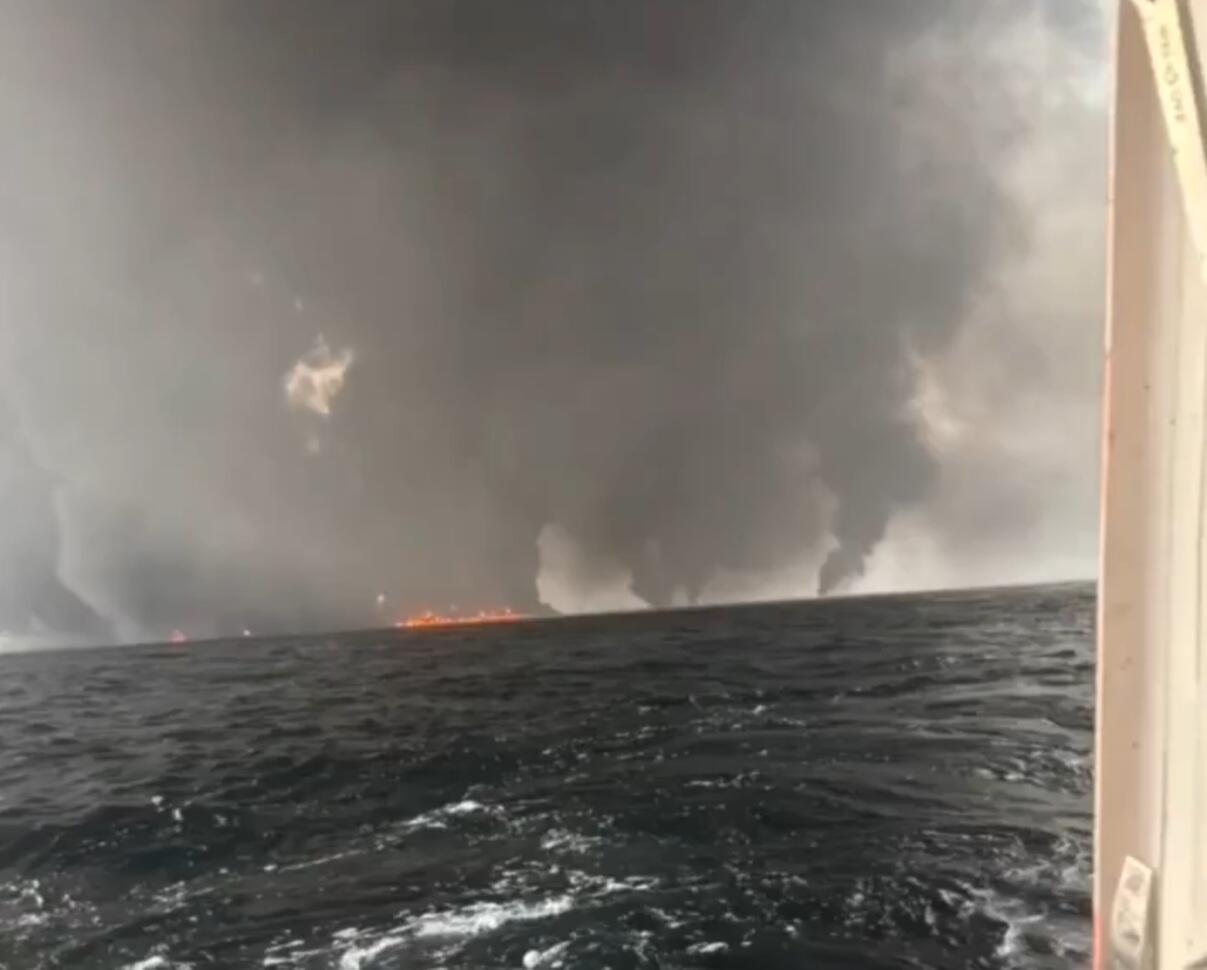
CNBC has noted amid this new surge in tanker incidents, "Since the Iran war began in late February, at least 24 sailors have died in attacks on 100 commercial ships in Hormuz, the Persian Gulf and Gulf of Oman, according to the IMO."

Stillframe from aftermath of crew members of a stricken tanker getting rescued (video below).

Just before this weekend, on Friday: "Gem No. 2, was hit by a projectile Friday off the coast of the UAE resulting in a fire onboard. The ship departed Ras Tanura, Saudi Arabia, in March and has remained in the Persian Gulf since the war began," according to Marisks.

Below: another dramatic video which emerged Saturday...

Footage shows the aftermath of a strike on a supertanker reportedly carrying 2 million barrels of Saudi crude off the UAE coast The Panama-flagged GEM NO.2 was reportedly hit by a projectile off the UAE coast, well outside the Strait of Hormuz, in waters tankers use to stay clear of Iran. Nobody has claimed it yet, though suspicion points squarely at Tehran. Running dark didn’t save it either. So if switching off the tracker and avoiding the strait can’t protect a tanker, what can? Iran keeps proving it can reach ships wherever they sail, and with one US carrier covering the whole region, escorts can’t be everywhere, so expect fewer tankers willing to make the run and higher prices for every barrel that does. Source: Al Jazeera, CIG on TG / Writer: Daniel

— Mario Nawfal (@MarioNawfal) October 10, 2026
October alone has witnessed over a dozen tanker attack incidents, and it seems the Iranians are trying to impose a higher cost on the US particularly in the run-up to the November midterm elections.
 
A puzzling thing or two tonight. And the attack in Saudi came up. Tousi is reporting that the Houthi’s have indeed hit the airport as we know. 309 injured and 12 dead, with a number still missing. However they did intercept at least one incoming missile. At the same time Saudi air strikes continue to reduce their number of both men and machines. Without Iranian resupply it sounds like an attempted blitz, firing a lot of their remaining supplies to try to bluff their way to victory.

The IRGC has had some bad news. Qatar is now saying Iran is their greatest enemy. Also Pakistan has now thrown in with those against Iran, if not ‘in’ with Israel and the U.S. That leaves just the border with Afghanistan and Turkmenistan the only land border open to Iran. In thanks the regime has thanked the Taliban for their support and offered to back them to the best of their ability.

One of the odd things is what Iran is doing with their armed forces. Trouble in the SE keeps going on and now that Pakistan has turned on the regime it seems likely the people in the south will be getting outside help. So what does the regime do to counter this? First of all they have been preparing for an American ground invasion for some time. We just pulled out of Iraq, but Iran is sending the bulk of its armor to the Iraqi and Turkish border area.
 
Tousi has an early report, watching now but have to go out soon.

The regime has opened fire on protestors in Isfahan and a couple of other towns. Local hospitals are being overwhelmed and Basij are entering said hospitals and arresting the injured. Victims include men, women, children, old folks, they don’t freaking care. In the street, involved or not you may be shot, killed, injured and arrested.

EDIT TO ADD: Iran is threatening to cut the outside internet again. Mrs. late has access to a camera put in her sister’s home by her kids to keep an eye on their elderly mother. That camera has been cut off. All she gets is a black screen.

ADDTIONAL: The people in Isfahan weren’t protesting against the regime Per se, they were protesting, peacefully, in favor of local autonomy. They don’t want Tehran trying to run Isfahan. Much like the Congress critters in D.C. trying to control every local issue we may have. That doesn’t work as we all know from our dealings with government in the U.S.

The U.K. has admitted that the attempted attack on the air base at Fairfield WAS connected the the IRGC.

Iran has announced they are creating an ‘economic war council’ and have stated that if the U.S. wants to wage an economic war with Iran, they are going to show us what economic war is really all about. HOW they intend to do that is unclear.
 
Last edited:
Open Source Intel @Osint613
Saudi-led coalition:

“We will soon issue a warning to civilians to evacuate a site in Sanaa for the purpose of carrying out a qualitative operation.”
 
Open Source Intel @Osint613
Lebanese source to Al-Hadath:

About 1,000 tons of explosives crossing from the Syrian border were seized by the Lebanese Army last month.

The shipments were hidden in warehouses in the Bekaa region before being moved into the Lebanese interior.

All entry points used by Iranian Revolutionary Guard members to reach Lebanon have been completely closed.
 
The Islamic Republic has abandoned armed IRGC loyalists in remote areas without salaries, while pretending they could stop the United States or Israel.

The video shows one of these men sitting alone at night with an AK-style rifle and military equipment. He says he has been stationed there for an extended period to confront a possible American or Israeli ground operation and has received no pay.

An unpaid gunman with an assault rifle is not a credible answer to precision airpower, drones, surveillance systems or special operations forces.

He is valuable to the regime for other reasons.

The “Janfadayān-e Iran” campaign was created during the 2026 war as an IRGC and Basij mobilization project. The regime has claimed hundreds of thousands of registrations, a rally involving 313,000 people and the creation of approximately 1,000 “resistance battalions.”

Those figures are impossible to verify independently and appear heavily inflated. In some cases, registration reportedly required little more than submitting a telephone number.

The campaign’s declared mission combines military readiness with “hope-building,” revolutionary morale and social mobilization. Volunteers receive training in weapons handling, surveillance, first aid, logistics and neighborhood organization.

That combination reveals the actual purpose.

The Basij has never been capable of defeating an advanced foreign military in conventional combat. Its enduring value is internal control. It monitors neighborhoods, identifies dissidents, breaks protests and supplies the Islamic Republic with loyal street-level manpower when professional forces cannot be everywhere.

The regime’s conventional and technological forces absorbed serious losses during the 40-day war. The Janfada campaign gives its loyalist base a sense of participation after that humiliation while expanding the pool of people who can be mobilized against future unrest.

The abandoned man in the desert is therefore more useful as propaganda and potential street muscle than as a defender against foreign troops.

War damage, unemployment, industrial contraction and economic collapse increase the danger of renewed protests. The regime is preparing for that possibility by deepening the Basij’s presence in local communities under the cover of national defence.

The Islamic Republic constantly claims that its greatest danger comes from foreign enemies. Its investments tell a different story.

The professional military confronts external threats. These unpaid loyalists are being armed, organized and psychologically prepared for the threat the regime has always feared most: the Iranian people. View: https://twitter.com/DejReports/status/2110001989279006765/video/1
 
With regard’s to something mentioned above, Tousi touched on something tonight. Many of the “volunteers” sitting out there in the middle of nowhere are actually suicide squads. They are expected to do a kamakaz on American and/or Israeli ground forces. THIS is where things get a bit odd.

Most of these squads are spread out everywhere including in the SE. This same area now has multiple cities that aren’t exactly under IRGC control anymore. The Pakistani’s have broken off relations with Iran so they won’t be helping to put down the rebellion. Other reports which catch my eye say the regime is starting to lose ground south of the original areas. This places areas outside the straits, out of gov. control. Nice little spot for resupply, I would think. Also in the ongoing fighting the gov. brought in forces from Afghanistan to help pacify the SE. It seems that they have suddenly found themselves dead. The IRGC waiting for re-enforcement are going to be waiting a bit longer. There are a few reports of infantry being sent to the area. Which could be a problem. The infantry are Army. Their loyalty is to Iran, not the IRGC.

Saudi Arabia continues to be effective with air strikes. They have now taken out an oil facility that was under Houthi control. The Houthi’s are now issuing a warning that any and all persons in or near any oil or air facility had best evacuate. Of course they say this as they are losing Sanaa and other areas.

One video shown was of some official speaking with the crowd. He send out a warning that no Iranian should be as easily deceived as this guy into becoming a submissive Israeli slave. Who has sunk so low in their eyes you ask? Glad you did. They are talking about Lionel Messi. The soccer player that just retired from Argentina. Don’t ask me, that’s what the guy said.
 

Two Emirati Ships Sink In Hormuz In Under 24 Hours As IRGC Claims 5-6 Vessels Targeted Nightly​


by Tyler Durden
Wednesday, Oct 14, 2026 - 12:40 PM
Update(1240ET): While dozens of ships have come under attack by Iran in the Hormuz Strait and nearby areas since the war began, resulting in damage and fires aboard vessels, it remains much more rare for a tanker to sink at a total loss.

However, the WSJ has confirmed Wednesday that two have completely sunk in the last 24 hours, the first of which we reported on below. Here are the further details via WSJ:

Two Emirati cargo ships have sunk in the past 24 hours after being struck in the Strait of Hormuz, an escalation with little precedent as Iran ramps up attacks to levels not seen since the war started.

The GFS Pride and the Cape Dao have both gone down, said Pakistan’s National Hydrographic Office, which monitors maritime activities in Middle Eastern waters. Maritime security companies confirmed the two losses Wednesday and said this was the first such incident in months.

The sinkings came as the U.S. military has been successfully shepherding more Gulf oil through the strait while bottling up Iranian oil exports with a naval blockade and sanctions.
One of the ships that sunk had been in distress and apparently abandoned since being first attacked on September 23, according to UN shipping agency data.

Despite many attacks, the WSJ notes that the last ship sinking in the waters occurred back in March. It details, "The vessel was hit by a projectile that sparked a fire in its engine room, forcing the crew to abandon the vessel. A tugboat sent to rescue the ship was also struck. Four seafarers died and three were severely injured, according to the International Maritime Organization."

On Wednesday Iranian state media has been widely circulating fresh footage of one of the sinkings:

Iranian media has released footage of what it says is a container ship sinking in the Strait of Hormuz, after hitting a mine. Read more: Day 229 | Saudi intercepts drone targeting Riyadh Roya News English (@RoyaNewsEnglish) on X

— Roya News English (@RoyaNewsEnglish) October 14, 2026
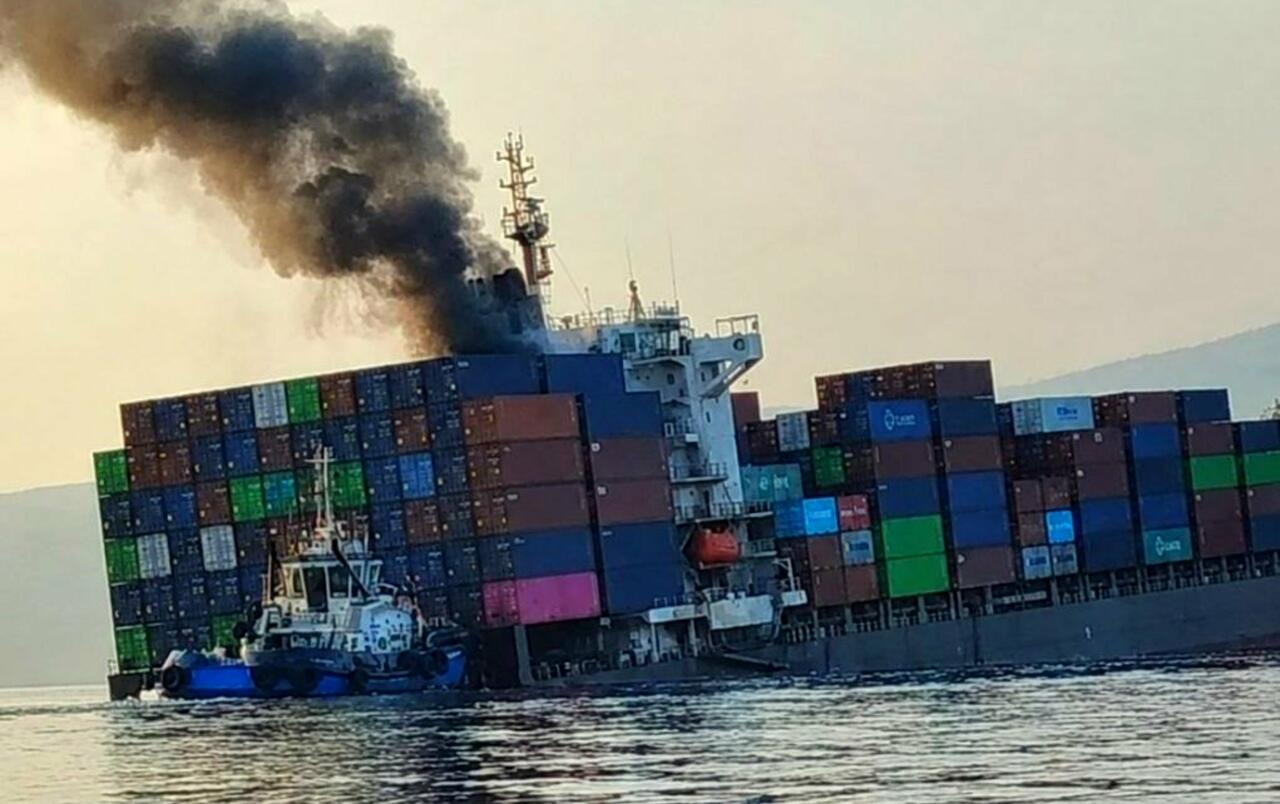
* * *

Iran has quite obviously been surging its attacks on commercial shipping in the Strait of Hormuz in an attempt to wreak uncertainty and economic havoc for the Trump administration ahead of the November midterm elections, undermining a recent recovery in Persian Gulf oil shipments.

The attacks are now coming so frequently it is difficult to deep track. One source tallies of recent days, "Twelve vessels were attacked between October 5 and 11, including six on Sunday alone, and on Tuesday a tanker and a container ship were struck by unknown projectiles, according to UK Maritime Trade Operations (UKMTO), marking one of the most intense periods of attacks since the war began."

Iran state media published images of a container ship sinking Wednesday.
Other outlets also confirmed the single day record of six attacks this past Sunday. It some time for confirmation of all these vessels' status to emerge amid the fog of war in the contested strait.

The prominent and outspoken secretary of Iran’s supreme national security council, Mohsen Rezaei, has meanwhile affirmed that the IRGC was striking vessels nightly, and is likely to keep doing so.

"We target five or six of these every night," he told state TV. "Hormuz is under the control of the Islamic Republic."

While the US has been touting a successful naval escort mission to get unprecedented numbers (for wartime) of tankers through the strait, Rezaei described that the US is merely using small craft to smuggle Iranian oil on to larger tankers out at sea, and then doing ship-to-ship transfer.

Tehran has claimed further that American naval ships don't dare come close to Iran's shores, on fears of being hit.

On Wednesday, Iran's military has announced yet another attack, this time on a container ship. Al Jazeera reports of the notification:

Iran’s Islamic Revolutionary Guard Corps says that a container ship "carrying contraband" and attempting to pass through "an unauthorized and dangerous route" in the Strait of Hormuz exploded and caught fire after striking a naval mine.
Footage published by the IRGC shows a container ship it calls "illegal" sinking south of the Strait of Hormuz with 2,500 containers aboard. Open Source Intel (@Osint613) on X

— Open Source Intel (@Osint613) October 14, 2026
Overall for the month of October we've seen at least 24 foreign vessels targeted and hit by Iranian forces. If this keeps up, oil prices are likely to be soaring by month's end.

"At least 18 ships were hit between Oct. 1 and Oct. 11, according to the UKMTO, with another six attacks recorded by other European security sources, the Financial Times reported," the NY Post comments.
 
According to Israeli journalist Ariel Kahana, citing an American source, the scale of U.S. forces deployed in the Middle East now matches or potentially exceeds the military buildup preceding Operation Epic Fury on February 28.

The reported buildup comes amid escalating tensions with Tehran, renewed Iranian attacks on regional shipping, and discussions in Washington over additional military strikes.

The message to Tehran is unmistakable: Washington is positioning itself for the possibility of another major confrontation.

The question increasingly appears to be not whether the U.S. has the capability to strike, but whether President Trump will give the order — and when.

Source: Ariel Kahana.
 

Iran Threatens Neighbors With Ground Invasions If US Bombs Again, Preps Citizen Insurgency​

by Tyler Durden
Tuesday, Oct 13, 2026 - 11:25 PM
America's Gulf allies have raised the possibility of an Iranian military ground invasion of their territories in the event of a major renewed US bombing campaign, which President Trump has threated to restart against Iran after the November midterm elections.

It's an oddly specific, and perhaps unlikely, threat being communicated by Gulf officials, and was reported on in the pages of The Wall Street Journal on Monday. Tehran is only too happy to signal it's ready to inflict massive counter-pain on US and allied assets across the region.

The publication cites "informed sources" who say Islamic Republic officials have been warning that this is among current options being mulled to escalate and spread the war beyond, into the broader region.

Iranian state media

IRGC operatives could penetrate neighboring countries as part of efforts to both deter a US and assault and 'punish' Washington and its frontline allies, the report indicates.

Such a scenario would take things a big step further, also as the potential for resumption of Iranian ballistic missile and drone attacks on Gulf energy sites remains on the table.

Kuwait has especially been under assault, with even its civilian airports targeted in the last few summer rounds of tit-for-tat between US and Iranian forces.

Amid a heightened state of Iranian alert, the WSJ writes that "Satellite images show Iran is strengthening sensitive locations, including nuclear sites and border areas, to make them more resilient to attacks."

"The government is also preparing Iranians for renewed war, sending paramilitary forces to read war stories to kindergartners, advertising training in firing shoulder-mounted antiaircraft missiles and holding rallies," the report continues.

This also comes amid a well-publicized push of the Islamic Republic to arm and train broader elements of the Iranian citizenry to join paramilitary efforts which work in tandem with the armed forces.

"In an attempt to deter a potential attack, some Iranian officials have hinted that their forces could conduct land incursions into neighboring countries, according to people familiar with the warnings," WSJ observes further. "Iran’s top national-security official, Mohsen Rezaei, said on Sunday that Tehran could target the United Arab Emirates, which has largely escaped being attacked since late spring, as well as data centers and internet cables across the region."
State media sources have been circulating 'warning messages' like the following:

View: https://x.com/RT_com/status/2108303727484641777?ref_


However, so far there's been a pause of sorts since Trump backed off a decision to resume major bombing raids in July. Instead, Iran has steadily ramped up assaults on international vessels seeking to transit the Strait of Hormuz, with October being a record in terms of frequency of these attacks.


Each side is not only 'waiting out' the other, but seeking to impose as much pain on the other as possible, hoping for a defeat, or for the other to give in to serious concessions and make compromise.

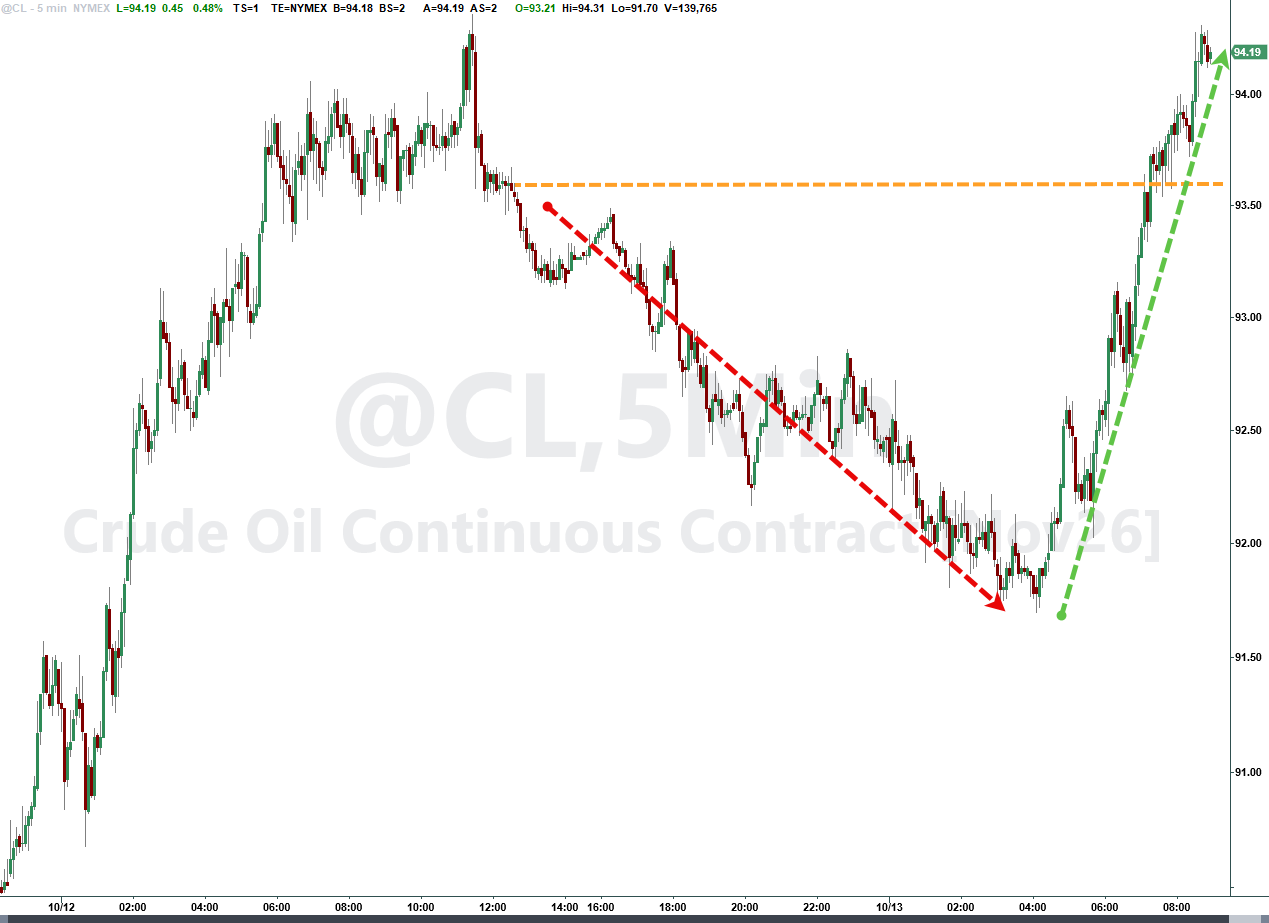
Crude prices have reacted to the likelihood of more serious escalation vibes in the air and potentially around the corner...


Who will blink first remains the big open-ended question, also as Washington is belatedly worried about getting bogged down in an other Mideast 'forever war'.
 
Niho berg @Nihoberg
Iran Update:

There is an absolute IRGC bloodbath happening in the Iranian region of Sistan & Balochestan. Assassinations everywhere and almost daily.

I haven't spoken much about this particular battlefield.

As an Iranian nationalist I will never approve of separatism, nor will I blindly praise the JMM militant group. I don't know this group, and as of writing this I don't trust them either. They claim to fight for all of Iran after merging several militant groups together, but at least one faction among them are historically Baloch separatists. They are also very conservative sunni muslims.

Therefore, I won't boost their videos or statements for the time being. Until I know where the Shah and his team stand regarding this group and where they stand regarding him, I won't give them my attention.

However, I can speak about what the last few weeks of fighting could mean for Iran:

Regardless of what I think of JMM, their targets have Iranian blood on their hands and undoubtedly deserve it.

IRGC thugs, basijis, regime linked clerics and foreign proxy terrorists are all being killed at a growing rate. Police stations, bases and checkpoints are raided. Patrols come under attack as they drive through cities. There's been at least one case of fighting reaching the Kerman region. Today, a female basiji commander was assassinated in front of her house. Yesterday, dozens of Afghan proxy terrorists were wiped out. Last month, a regime linked sunni cleric was shot dead. Many of the assassinations are very high ranking.

I don't know what suddenly changed, but it's gotten very deadly and dangerous to be an islamic regime figure in S&B.

What does all of this mean?

1) The islamic regime is losing control.

2) Regime thugs used to feel safe and protected. Now they don't. Psychologically this will do serious damage, especially to lower ranking demoralised basijis who aren't receiving their blood money salaries anymore due to sanctions.

3) If this keeps up, the islamic regime will have to send large forces from other regions to go fight in S&B. I shouldn't have to explain that this will benefit the rest of Iran when the next uprising happens. Thousands of IRGC terrorists forced to fight in the South East means thousands fewer IRGC to oppress Iranians in other provinces. It means evening out the playing field.

Again, this is an analysis, not an endorsement of JMM. They still need to clarify their stance on Iran's territorial integrity, their stance on the Shah, and their stance on separatism and islamism. We also need to know what their actual goal is once the islamic regime is overthrown.

Until then, as far as I'm concerned, the IRGC is getting killed in big numbers from within Iran and seemingly without any outside assistance, and that's what I will focus on.

What's happening in S&B is going to have huge consequences for Iran in the coming months, and everyone should pay attention.
 

Political infighting in Iran deepens as economic woes mount​

Shabnam von Hein
10/14/2026October 14, 2026
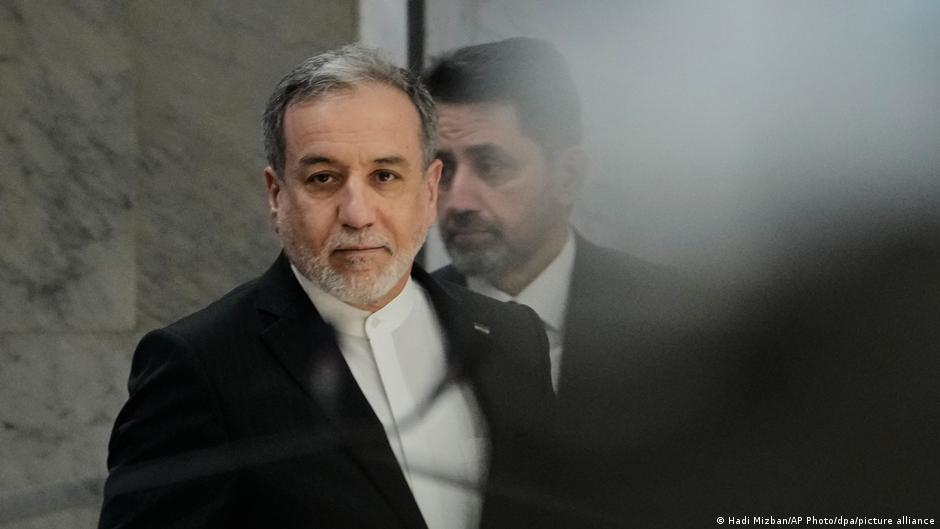
Hardliners are stepping up pressure on Iran's government and calling for Foreign Minister Abbas Araghchi's removal. The oil minister resigned, but that's doing little to ease the pressure on President Masoud Pezeshkian.

Hardliners are piling the pressure on Iran’s government and calling for the removal of Foreign Minister Abbas Araghchi. Oil Minister Mohsen Paknejad’s resignation is also failing to ease the pressure on President Masoud Pezeshkian.

As the war continues and diplomatic efforts to find a solution make little headway, the internal power struggle is intensifying. President Pezeshkian’s government is the focus of mounting tension.

Hardliners in Iran's parliament are pushing for impeachment proceedings against Araghchi. A trigger for the discontent was Araghchi's meeting with US negotiators on the sidelines of the United Nations General Assembly in New York. Critics accuse the foreign minister of holding the talks without official authorization.

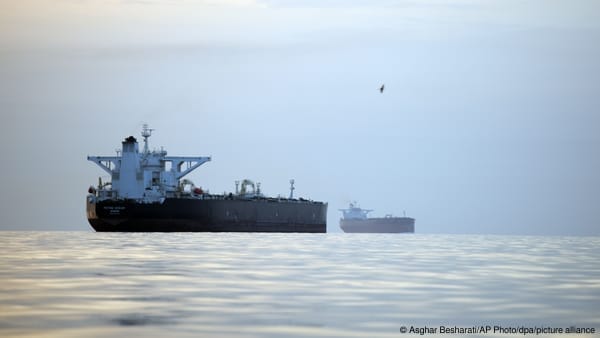
Two large tankers in the Strait of Hormuz

Iran's oil exports have plunged as a result of the US blockade of the Strait of HormuzImage: Asghar Besharati/AP Photo/dpa/picture alliance

In a letter, Tehran lawmaker Amirhossein Sabeti informed parliamentary speaker Mohammad-Bagher Ghalibaf that he had registered a motion to impeach Araghchi on parliament’s online portal. Lawmaker Hossein-Ali Haji-Deligani also said parliament could use its oversight powers, including impeachment proceedings.

A structural problem within Iran’s power system​

"When the regime is forced to negotiate, as it is in the current situation and in talks with the United States, the supreme leader or the hardline core of power avoids taking responsibility and shifts it onto elected institutions and moderate forces within the government," political analyst Ali Afshari, who lives in the United States, told DW.

Hardliners can use this approach to attack moderate factions over decisions that were previously agreed upon within the power apparatus, Afshari said.

He added that hardliners serve an important function within the Islamic Republic.

"The role of hardliners in the Islamic Republic is to influence public opinion, the political system's traditional supporters and the values of the Islamic Republic in both domestic and foreign policy," he said.

Hardliners held a parliamentary majority during the implementation of the Joint Comprehensive Plan of Action (JCPOA), the 2015 nuclear deal, and voiced their political opposition. Their resistance, however, ultimately did not affect the signing of the agreement.

"The Foreign Ministry is not a decision-maker. It implements what the government asks of it — and Araghchi is operating within that framework," Afshari said.

Lawmakers must first collect a set number of signatures to move forward with impeachment proceedings.

The lucrative business of oil​

The timing of the latest move is significant: Iran's government finds itself under enormous economic pressure. Meanwhile, oil exports, which are one of the country's key sources of revenue, have fallen sharply as a result of the US blockade.

The resignation of Oil Minister Paknejad adds to the pressure. Officially, he stepped down for personal reasons.

Umud Shokri, an energy strategist, geopolitical analyst and energy security expert, casts doubt that a change at the helm of the Oil Ministry would alter the situation. Iran relies on networks that enable it to export oil despite sanctions, Shokri said. Opaque structures have become entrenched, making it harder for the government to control key revenue streams.

Circumventing sanctions has become a lucrative business for certain factions within Iran's political system, he said.

"By law, these revenues should be under state control. But we know that has not been the case for years," Shokri said.

Economic opacity has deepened during the sanctions period, he added, under the pretext of national security and protecting the population.

Private actors with close ties to the country's centers of power, particularly the Islamic Revolutionary Guard Corps (IRGC), have developed methods to sell oil to the armed forces through hidden channels. Neither the prices nor the commissions charged or the total sums involved are transparent.

"The government has only limited influence over these transactions. The Revolutionary Guards, in particular, would organize and control such deals," Shokri said.

Analysts have signaled that political and economic situation could likely deteriorate further in the coming days and weeks.

This article was originally published in German.
 
Hezbollah to coordinate with IRCG in wartime mobilization
According to Lebanese security and military sources cited by Erem News, Iran has instructed Hezbollah to raise its military readiness to advanced levels as Tehran believes a major regional confrontation is imminent.

The Iranian-backed terrorist organization is reportedly implementing a new decentralized combat system designed to allow field units to operate independently, even if Israeli strikes eliminate senior Hezbollah commanders or disrupt its central command structure.

Sources also report that Hezbollah has begun recalling full-time, salaried terrorists and issuing secret instructions directing personnel to new operational locations.

The preparations reportedly differ significantly from Hezbollah’s previous wartime mobilizations and include coordination with Iran’s Islamic Revolutionary Guard Corps (IRGC).

The reported mobilization suggests Hezbollah is preparing for the possibility of joining another major confrontation involving Iran, Israel, and the United States.

Source: Erem News / N12, October 15, 2026.
 
According to CNN, U.S. military planners acknowledge that the GBU-43/B MOAB is capable of devastating surface targets but is not designed to penetrate Iran’s deeply buried nuclear facilities.

Nevertheless, President Trump may consider deploying the massive bomb as a psychological pressure tactic against Tehran, as the Iranian regime remains entrenched in its positions and unwilling to meet Washington’s diplomatic demands.

U.S. officials caution that deploying the weapon would not necessarily force Iran to capitulate or achieve a decisive military victory.
 
What about taking out power plants? Well, you don't need a MOAB for that, precision strikes can cripple the facilities. It would be overkill. OK, so then what?

IMO, preparation of landing zones and objectives. This is likely an option if Trump chooses to send in the military to recover the enriched uranium. Prep the OBJ. Land troops. Isolate the OBJ with air support and get the job done.
 
Last edited:
Open Source Intel @Osint613 Israeli Channel 16: Iran currently has at least 400 operational missile launchers, nearly matching the 420 it had before Operation Roaring Lion in February, according to Israeli security officials.

Over the past few months, Iran has restored a significant portion of its missile-launching capabilities, including recovering launchers buried underground during the operation and rebuilding its ballistic missile and drone production infrastructure.
 

Ghalibaf Says US 'Must Be Punished' Into Accepting Iran's Demands​

by Tyler Durden
Thursday, Oct 15, 2026 - 10:40 AM
Authored by Dave DeCamp via AntiWar.com

Iranian Parliament Speaker Mohammed Bagher Ghalibaf said in a televised speech on Wednesday that the US must be "punished" in order for it to accept Iran's demands to end the war.

Ghalibaf made the comments in the context of the latest response Iran received from the US in indirect negotiations, which Mohsen Rezaei, head of Iran’s Supreme National Security Council, has called "inadequate" because Washington didn’t agree to all of Tehran's conditions.

"The United States must be punished, change its behavior, and be made to understand unequivocally that it must accept the legitimate demands of the Iranian nation," Ghalibaf said, according to Iran’s PressTV.

Iranian Parliament Speaker Mohammed Bagher Ghalibaf. Source: PressTV
Iran is essentially asking the US to fulfill its obligations under the Memorandum of Understanding that the two nations signed back in June, which would require the US to end its blockade of Iran, provide some sanctions relief, release frozen Iranian funds, and ensure an end to Israel’s war in Lebanon.

Ghalibaf, who was deeply involved in the MoU negotiations, said he ensured the MoU included two parts because he didn’t trust the US.

The parliament speaker also said that Iran must be prepared for both negotiations and fighting with the aim of establishing deterrence to prevent future attacks. "On the battlefield, before God, we must believe that we should fight courageously against our coercive enemy, while also engaging in negotiations to establish lasting deterrence," he said.

He invoked the Iran-Iraq War, which lasted from 1980 to 1988, suggesting Tehran is preparing for the possibility of a very prolonged conflict with the US. During the Iran-Iraq War, the US backed Saddam Hussein by providing intelligence and other types of support while being aware that he was using chemical weapons against Iran.

Ghalibaf fought for Iran’s Islamic Revolutionary Guard Corps (IRGC) throughout the war and rose through the ranks to become a senior combat commander. In his remarks on Wednesday, Ghalibaf pointed to the conflict as an example of Iran establishing deterrence.

"In the eight years of sacred defense, we fought against Saddam’s Baathist regime. Of course, we paid a price, we suffered hardships, but in the end, for several decades, no one dared or had the desire to attack our beloved country, Iran," he said.
 
Tonight’s report is short. Tousi was on for the usual hour, but most of what was said came down to two things. First everyone is getting ready for all out regional war in the near future. Egypt, Qatar, and the UAE are all advising their people to be ready for the outbreak of full blown hostilities at any moment.

Secondly, the regime is losing its grip a little more each day. The people themselves are starting to say enough is enough in public. As proof of that a clip was shown where the government mouthpiece is proclaiming victory over the U.S. and Israel and I believe it was the mayor of Tehran basicly called him a liar.
 
Important if true
-Continued IRGC-ASF missile readiness drills across Iran.

-Iran reportedly put Hezbollah on high alert.

-It appears that the Houthis have diminished a bit their ballistic missiles barrages on Saudi Arabia.

It’s very likely that hostilities could begin earlier than anticipated, maybe in the next 48-72 hrs, before both the US and Israeli elections.

Previous round-up:

WHAT’S THE CURRENT SITUATION?

Both the United States and Iran are currently holding off from further attacks, with President Trump saying that “The US will not be attacking Iran at any time prior to the Midterm Elections to be held in the United States on November 3rd”.

The Strait of Hormuz remains the main point of contention, with US forces continuing to enforce the naval blockade on Iranian ports.

WHAT IS HAPPENING?

UKMTO reported 16 confirmed attacks on commercial shipping in the first 11 days of October, up sharply from 20 in the whole month of September.

Heavy USAF and IAF aerial activity was recorded over central and northern Israel, Jordan, and Iraq yesterday and this evening. Meanwhile, IRIAF fighter jets were observed scrambling from Mehrabad Airport and heading west yesterday evening.

According to multiple sources, Iranian forces appear to be preparing their missile arsenal, with tests of both anti-ship and conventional ballistic missiles reportedly conducted over the past three weeks.

Launcher movements are also being recorded, with reports of launchers being relocated from underground tunnels.

MY ASSESSMENT

It’s now increasingly likely that the US-Iran war will resume sooner than later.

My assessment is that the likely window for renewed large-scale military action is between Oct 23rd and Nov 5th, 2026.

Although I wouldn’t rule out that hostilities could start earlier.
 
Last edited:
Top