
You are using an out of date browser. It may not display this or other websites correctly.
You should upgrade or use an alternative browser.
You should upgrade or use an alternative browser.
WAR Russia threatens to deploy strategic bombers in Cuba to counter US NMD plans
- Thread starter Perilous Times
- Start date


maric
Short but deadly
Certainly puts an interesting spin on 9-11, doesn't it?
AMEN Sista.
Perilous Times
Inactive
Russia needs bombers in Cuba due to NATO expansion - ex-commander
Original sources:
Russia needs bombers in Cuba due to NATO expansion - ex-commander
14:53 | 21/ 07/ 2008
MOSCOW, July 21 (RIA Novosti) - The possible deployment of Russian strategic bombers in Cuba may be an effective response to the placement of NATO bases near Russia's borders, a former Air Force commander said on Monday.
Russian daily Izvestia earlier on Monday cited a senior Russian military source as saying that Russian strategic bombers could be stationed again in Cuba, only 90 miles from the U.S. coast, in response to the U.S. missile shield in Europe.
"If these plans are being considered, it would be a good response to the attempts to place NATO bases near the Russian borders," Gen. of the Army Pyotr Deinekin told RIA Novosti.
"I do not see anything wrong with it because nobody listens to our objections when they place airbases and electronic monitoring and surveillance stations near our borders," the general said.
However, Deinekin said the possibility of Russian bombers being stationed in Cuba is largely hypothetical, because Russia's Tu-160 Blackjack and Tu-95MS Bear strategic bombers are both capable of reaching the U.S. coast, patrolling the area for about 1.5 hours, and returning to airbases in Russia with mid-air refueling.
Russia resumed strategic bomber patrol flights over the Pacific, Atlantic, and Arctic oceans last August, following an order signed by former president Vladimir Putin. Russian bombers have since carried out over 80 strategic patrol flights and have often been escorted by NATO planes.
Deinekin suggested that Cuba could be used as a refueling stopover for Russian aircraft rather than as a permanent base, because the Russian political and military leadership would be unlikely to take such a drastic step under current global political conditions.
In October 1962, the Cuban Missile Crisis brought U.S. and the U.S.S.R. to the brink of nuclear war when Soviet missiles were stationed in Cuba.
The crisis was resolved after 12 days when the Soviet leader, Nikita Khrushchev, backed down and ordered the missiles removed.
Moscow had a military presence on Cuba for almost four decades after that, maintaining an electronic listening post at Lourdes, about 20 km (12.5 miles) from Havana, to monitor U.S. military moves and communications.
Russia was paying $200 million a year to lease the base, which it closed down in January 2002.
http://en.rian.ru/russia/20080721/114527149.html
Russian combat aircraft could return to Cuba - paper
11:13 | 21/ 07/ 2008
MOSCOW, July 21 (RIA Novosti) - Russian combat aircraft could return to Cuba in a bid to counter U.S. plans to deploy a missile shield in Central Europe, a Russian daily reported on Monday.
Moscow has strongly opposed the possible deployment by the U.S. of 10 interceptor missiles in Poland and an accompanying radar in the Czech Republic as a threat to its national security. Washington says the defenses are needed to deter a possible strike from Iran, or other "rogue" states.
"While they are deploying the missile shield in Poland and the Czech Republic, our strategic bombers will already be landing in Cuba," a high-placed military aviation source told the Izvestia newspaper.
Russia's Tu-160 (Blackjack) and Tu-95 (Bear) strategic bombers are both capable of reaching Cuba.
However, while the source admitted that the possibility of Russian bombers being stationed in Cuba was for now just a hypothetical possibility, he also noted that the rumors had not appeared from out of thin air.
At the same time, Leonid Ivashov, the former head of the Russian Defense Ministry's department for international cooperation, and currently president of the Academy of Geopolitical Problems, told Izvestia that Cuba could be used as a refueling stopover for Russian aircraft rather than as a permanent base.
In October 1962, the Cuban Missile Crisis saw a tense standoff between the U.S. and the U.S.S.R. when Soviet missiles were stationed in Cuba. As the world held its breath, President John F. Kennedy opted to launch a blockade of Cuba rather than invade, as some American military commanders wanted. The crisis was resolved after 12 days when the Soviet leader, Nikita Khrushchev, backed down and ordered the missiles removed.
http://en.rian.ru/russia/20080721/114500746.html
Original sources:
Russia needs bombers in Cuba due to NATO expansion - ex-commander
14:53 | 21/ 07/ 2008
MOSCOW, July 21 (RIA Novosti) - The possible deployment of Russian strategic bombers in Cuba may be an effective response to the placement of NATO bases near Russia's borders, a former Air Force commander said on Monday.
Russian daily Izvestia earlier on Monday cited a senior Russian military source as saying that Russian strategic bombers could be stationed again in Cuba, only 90 miles from the U.S. coast, in response to the U.S. missile shield in Europe.
"If these plans are being considered, it would be a good response to the attempts to place NATO bases near the Russian borders," Gen. of the Army Pyotr Deinekin told RIA Novosti.
"I do not see anything wrong with it because nobody listens to our objections when they place airbases and electronic monitoring and surveillance stations near our borders," the general said.
However, Deinekin said the possibility of Russian bombers being stationed in Cuba is largely hypothetical, because Russia's Tu-160 Blackjack and Tu-95MS Bear strategic bombers are both capable of reaching the U.S. coast, patrolling the area for about 1.5 hours, and returning to airbases in Russia with mid-air refueling.
Russia resumed strategic bomber patrol flights over the Pacific, Atlantic, and Arctic oceans last August, following an order signed by former president Vladimir Putin. Russian bombers have since carried out over 80 strategic patrol flights and have often been escorted by NATO planes.
Deinekin suggested that Cuba could be used as a refueling stopover for Russian aircraft rather than as a permanent base, because the Russian political and military leadership would be unlikely to take such a drastic step under current global political conditions.
In October 1962, the Cuban Missile Crisis brought U.S. and the U.S.S.R. to the brink of nuclear war when Soviet missiles were stationed in Cuba.
The crisis was resolved after 12 days when the Soviet leader, Nikita Khrushchev, backed down and ordered the missiles removed.
Moscow had a military presence on Cuba for almost four decades after that, maintaining an electronic listening post at Lourdes, about 20 km (12.5 miles) from Havana, to monitor U.S. military moves and communications.
Russia was paying $200 million a year to lease the base, which it closed down in January 2002.
http://en.rian.ru/russia/20080721/114527149.html
Russian combat aircraft could return to Cuba - paper
11:13 | 21/ 07/ 2008
MOSCOW, July 21 (RIA Novosti) - Russian combat aircraft could return to Cuba in a bid to counter U.S. plans to deploy a missile shield in Central Europe, a Russian daily reported on Monday.
Moscow has strongly opposed the possible deployment by the U.S. of 10 interceptor missiles in Poland and an accompanying radar in the Czech Republic as a threat to its national security. Washington says the defenses are needed to deter a possible strike from Iran, or other "rogue" states.
"While they are deploying the missile shield in Poland and the Czech Republic, our strategic bombers will already be landing in Cuba," a high-placed military aviation source told the Izvestia newspaper.
Russia's Tu-160 (Blackjack) and Tu-95 (Bear) strategic bombers are both capable of reaching Cuba.
However, while the source admitted that the possibility of Russian bombers being stationed in Cuba was for now just a hypothetical possibility, he also noted that the rumors had not appeared from out of thin air.
At the same time, Leonid Ivashov, the former head of the Russian Defense Ministry's department for international cooperation, and currently president of the Academy of Geopolitical Problems, told Izvestia that Cuba could be used as a refueling stopover for Russian aircraft rather than as a permanent base.
In October 1962, the Cuban Missile Crisis saw a tense standoff between the U.S. and the U.S.S.R. when Soviet missiles were stationed in Cuba. As the world held its breath, President John F. Kennedy opted to launch a blockade of Cuba rather than invade, as some American military commanders wanted. The crisis was resolved after 12 days when the Soviet leader, Nikita Khrushchev, backed down and ordered the missiles removed.
http://en.rian.ru/russia/20080721/114500746.html

The Flying Dutchman
Deceased
Care to post something so the rest of us know what you're talking about?
Here you go Cappy! It is a blogger site - by the way ~ Dutch
Monday, July 21, 2008
DEFCON 1 ALERT: Cuban Missile Crisis 2: Russia threatens to deploy strategic bombers in Cuba to counter US NMD plans in Central Europe
once-upon-a-time-in-the-west.blogspot.com
DEFCON 1 ALERT: Cuban Missile Crisis 2: Russia threatens to deploy strategic bombers in Cuba to counter US NMD plans in Central Europe
once-upon-a-time-in-the-west.blogspot.com
We reserve our DEFCON 1 ALERT for flagrant intrusions by the Communist Bloc militaries into the NATO-NORAD defense command regions. This, in fact, is our second DEFCON 1 ALERT post since starting our blog in January 2006. Below is a top-priority news item, published today in the Kremlin media, that offers some insight into the thought processes of the Moscow Leninists. The neo-Soviet leadership is apparently considering the deployment of strategic bombers to Cuba as a response to US National Missile Defense plans in Central Europe and the proposed membership of former Soviet republics Ukraine and Georgia in NATO.
Novosti quotes General Pyotr Deinekin, former Commander-in-Chief of the Russian Air Force, as saying: "If these plans are being considered, it would be a good response to the attempts to place NATO bases near the Russian borders. I do not see anything wrong with it because nobody listens to our objections when they place airbases and electronic monitoring and surveillance stations near our borders." This is standard operating procedure for both Moscow and Beijing: send ominous warnings to Washington via government-funded think tanks or "retired" politicians and military brass.
Russia needs bombers in Cuba due to NATO expansion - ex-commander
14:5321/ 07/ 2008
MOSCOW, July 21 (RIA Novosti) - The possible deployment of Russian strategic bombers in Cuba may be an effective response to the placement of NATO bases near Russia's borders, a former Air Force commander said on Monday.
Russian daily Izvestia earlier on Monday cited a senior Russian military source as saying that Russian strategic bombers could be stationed again in Cuba, only 90 miles from the U.S. coast, in response to the U.S. missile shield in Europe.
"If these plans are being considered, it would be a good response to the attempts to place NATO bases near the Russian borders," Gen. of the Army Pyotr Deinekin told RIA Novosti.
"I do not see anything wrong with it because nobody listens to our objections when they place airbases and electronic monitoring and surveillance stations near our borders," the general said.
However, Deinekin said the possibility of Russian bombers being stationed in Cuba is largely hypothetical, because Russia's Tu-160 Blackjack and Tu-95MS Bear strategic bombers are both capable of reaching the U.S. coast, patrolling the area for about 1.5 hours, and returning to airbases in Russia with mid-air refueling.
Russia resumed strategic bomber patrol flights over the Pacific, Atlantic, and Arctic oceans last August, following an order signed by former president Vladimir Putin. Russian bombers have since carried out over 80 strategic patrol flights and have often been escorted by NATO planes.
Deinekin suggested that Cuba could be used as a refueling stopover for Russian aircraft rather than as a permanent base, because the Russian political and military leadership would be unlikely to take such a drastic step under current global political conditions.
In October 1962, the Cuban Missile Crisis brought U.S. and the U.S.S.R. to the brink of nuclear war when Soviet missiles were stationed in Cuba.
The crisis was resolved after 12 days when the Soviet leader, Nikita Khrushchev, backed down and ordered the missiles removed.
Moscow had a military presence on Cuba for almost four decades after that, maintaining an electronic listening post at Lourdes, about 20 km (12.5 miles) from Havana, to monitor U.S. military moves and communications.
Russia was paying $200 million a year to lease the base, which it closed down in January 2002.
In January 2008 Andrei Lugovoi, a "former" FSB officer and the alleged murderer of Russian spy Alexander Livtinenko, was quoted by the Los Angeles Times as saying: "I don't agree that the Cold War is back. It has never ended." In view of the latest rumblings from Moscow, Agent Lugovoi's comment has become self-evident.
In a related story Novosti cites Russian daily Izvestia, which quotes a "high-placed military aviation source" in Moscow, who warned: "While they [the Americans] are deploying the missile shield in Poland and the Czech Republic, our strategic bombers will already be landing in Cuba." This article also cites Leonid Ivashov, former chief of the Russian Defense Ministry's Department for International Cooperation and current president of the Academy of Geopolitical Problems, informed Izvestia that Cuba could be used as "a refueling stopover for Russian aircraft rather than as a permanent base."
Russian combat aircraft could return to Cuba - paper
11:1321/ 07/ 2008
MOSCOW, July 21 (RIA Novosti) - Russian combat aircraft could return to Cuba in a bid to counter U.S. plans to deploy a missile shield in Central Europe, a Russian daily reported on Monday.
Moscow has strongly opposed the possible deployment by the U.S. of 10 interceptor missiles in Poland and an accompanying radar in the Czech Republic as a threat to its national security. Washington says the defenses are needed to deter a possible strike from Iran, or other "rogue" states.
"While they are deploying the missile shield in Poland and the Czech Republic, our strategic bombers will already be landing in Cuba," a high-placed military aviation source told the Izvestia newspaper.
Russia's Tu-160 (Blackjack) and Tu-95 (Bear) strategic bombers are both capable of reaching Cuba.
However, while the source admitted that the possibility of Russian bombers being stationed in Cuba was for now just a hypothetical possibility, he also noted that the rumors had not appeared from out of thin air.
At the same time, Leonid Ivashov, the former head of the Russian Defense Ministry's department for international cooperation, and currently president of the Academy of Geopolitical Problems, told Izvestia that Cuba could be used as a refueling stopover for Russian aircraft rather than as a permanent base.
In October 1962, the Cuban Missile Crisis saw a tense standoff between the U.S. and the U.S.S.R. when Soviet missiles were stationed in Cuba. As the world held its breath, President John F. Kennedy opted to launch a blockade of Cuba rather than invade, as some American military commanders wanted. The crisis was resolved after 12 days when the Soviet leader, Nikita Khrushchev, backed down and ordered the missiles removed.
The first article above notes that Russia maintained an electronic spy base near Havana until January 2002. In a December 2001 article Dr. Alexandr Nemets and Dr. Thomas Torda assert that the military and civilian aviation data surreptiously collected by the Kremlin's Lourdes base was used by the September 11 skyjackers to execute their terrorist plot with military precision
American special services have information that terrorist Mohamed Atta, the key figure behind the 9-11 attacks, had connections to the Cuban intelligence services and in spring 1999 met with their high-ranking representative in Miami, Fla. – not far from the site where the future suicide squad got its flight school training.
The Lourdes base, in addition to secret missions, was also tasked with active tracking of air flights of all kinds throughout the U.S. The center had a full set of flight codes for the U.S. Air Force and civilian airlines. Once, in 1999, the center broke into the U.S. air traffic control system and sent – with the help of a powerful, 1,500-kilowatt transmitter – a fake flight signal, which almost caused a serious accident in the air.
In short, the Lourdes center had accumulated a huge database on U.S. civilian airline routes, schedules and procedures. Cuba very likely shared this information with al-Qaeda – which may explain the devilish professionalism behind the 9-11 attacks.
The latest buzz emanating from the Kremlin media proves that the Moscow-Havana Axis is still tight and committed to overthrowing the USA.
Meanwhile, a US Air Force B-52 Stratofortress, the backbone of America's strategic nuclear bomber fleet, crashed near Guam today. Two crew members have been rescued, while four are still missing. In February a B-2 Spirit crashed at Guam's Andersen Air Force Base just after takeoff in the first-ever crash of a stealth bomber.
=
Observer999
Inactive

AzProtector
Veteran Member
What's good for the goose, is good for the gander......

NoPlugsNM
Deceased
I agree - what's good for the goose IS good for the gander.
All this just gives the big boys with the big toys more and more excuses to spend the big bucks on their military and not on their citizens and infrastructure of their peoples needs.
Cuba does not need bombers, they have the latest Russian technology in missle defense. A few years ago they began receiving missiles from Russia that pose the greatest threat yet. Why would they need bombers?? Their new missiles can take out everything in the Gulf of Mexico, they are like flying torpedos, I believe they can even conbtrol them with joysticks. The article I read back then when they were getting them suggested that Cuba could easily reach most of Canada. I think they will be just fine on their own without Russian bombers.
NP
All this just gives the big boys with the big toys more and more excuses to spend the big bucks on their military and not on their citizens and infrastructure of their peoples needs.
Cuba does not need bombers, they have the latest Russian technology in missle defense. A few years ago they began receiving missiles from Russia that pose the greatest threat yet. Why would they need bombers?? Their new missiles can take out everything in the Gulf of Mexico, they are like flying torpedos, I believe they can even conbtrol them with joysticks. The article I read back then when they were getting them suggested that Cuba could easily reach most of Canada. I think they will be just fine on their own without Russian bombers.
NP


Brutus
Inactive
Thanks for that, PT.
I've waited for years for the old Cuba/Russia partnership to rear its ugly head. Not that it ever fully went away, just that it seemed to have been in a period of dormancy. I always figured the reemergence/strengthening of that relationship would be a sign that it was about to get bad in the not-too-distant future.
Hope I'm wrong......

I've waited for years for the old Cuba/Russia partnership to rear its ugly head. Not that it ever fully went away, just that it seemed to have been in a period of dormancy. I always figured the reemergence/strengthening of that relationship would be a sign that it was about to get bad in the not-too-distant future.
Hope I'm wrong......
DuckandCover
Proud Sheeple
Oh goodie. Maybe for their next performance, they can have their PM bang his shoe on the podium at the UN while exclaiming "We will bury you!!"
The good ole days are comin back.
The good ole days are comin back.

kozanne
Inactive
Thanks for that, PT.
I've waited for years for the old Cuba/Russia partnership to rear its ugly head. Not that it ever fully went away, just that it seemed to have been in a period of dormancy. I always figured the reemergence/strengthening of that relationship would be a sign that it was about to get bad in the not-too-distant future.
Hope I'm wrong......
Talk about that partnership, would you? I was just a little girl during the missile crisis and the only thing I remember is that my mom wouldn't let any of us out of the house!
maric
Short but deadly
Talk about that partnership, would you? I was just a little girl during the missile crisis and the only thing I remember is that my mom wouldn't let any of us out of the house!
And the 'duck & cover' thing in school.
kozanne
Inactive
And the 'duck & cover' thing in school.
I forgot about that! And the fallout shelter below the school. And the Civil Defense sign on the door and on the school. Did Civil Defense get retired or something?
maric
Short but deadly
I forgot about that! And the fallout shelter below the school. And the Civil Defense sign on the door and on the school. Did Civil Defense get retired or something?
I dunno. But I remember my Grandpa turning the 'root cellar' into a 'hiding place'. I was in kindergarden at the time.
Brutus
Inactive
Well, you're a few years ahead of me, Kozanne. I wasn't born until '67.Talk about that partnership, would you? I was just a little girl during the missile crisis and the only thing I remember is that my mom wouldn't let any of us out of the house!

However, from my study of history:
When Castro took over Cuba in '59 and ran off Batista and his boys, the Russians saw a golden opportunity to be a thorn in our side and see how Monroe Doctrine-ish we still were, if at all. No European powers had meddled around much at all in Central and South America since the Germans sortied a fleet during TR's presidency and the French sent the Legion to Mexico during our Civil War. Here, the Russians had a chance to insinuate themselves into our immediate sphere of influence at very close range. Some liberal takes of history claim that we (the US) drove Castro into the arms of the Russians by spurning his offer of friendship when he visited the US not longer after coming to power, but I don't buy it. Castro was always a "power to the people"-preaching commie revolutionary. We did, however, cement the relationship with our botched operation at the Bay of Pigs. Legal or not, like it or not, if you're gunning for a guy, do it right. You'll piss off the rest of the world just as bad either way, so at least accomplish the basic part of your mission.
The "official" reason given for the Russians arming Cuba was because we had tried to overthrow Castro. Again, I don't buy the official version. It wouldn't have mattered whether we tried to kill him or not. The Russians had games they wanted to play and Khruschev was very interested in doing something to provoke a response from JFK to get a measure of him as a leader. JFK had already made a pretty poor impression during some meetings held with the Russians in Berlin not long after he took office (about Apr. of '61, I think).
As far as strictly the implacement of the missiles goes, the Russians used as an overt pretext the fact that we had missiles and strategic bombers stationed in Turkey. That wasn't exactly a fair comparison when you consider that it's a hell of a lot further from Turkey to Moscow than it is from Cuba to Washington. Anyhow, JFK turned out to have a hell of a lot more backbone than Khruschev had figured, we blockaded Cuba, they removed their missiles (supposedly), and we removed our missiles from Turkey - which I've read that we had planned to do already (the missiles in Turkey were obsolete since our first true ICBMs were just then starting to come on line), so we weren't really giving up anything that we hadn't already figured to.
Well, ever since, we've been at odds with Cuba and they've been cozy with the Russians. The so-called fall of the Soviet Union supposedly alleviated most of those concerns (not that I really believed it), but now - lo and behold - here the Russians are again talking about stationing nukes 90 miles off of Florida.
The more things change, the more they stay the same.


Firestopr
Inactive
I forgot about that! And the fallout shelter below the school. And the Civil Defense sign on the door and on the school. Did Civil Defense get retired or something?
I have wondered that several times myself
recently on a trip to Russia I asked my Guide how the ending of the cold war had affected Russians civil defense as Americas was basically dead in the water. I will admit i was shocked when he told me there people are very active when it comes to civil defense. He Told me that Communism is all about waiting for when things are right. after a time i gathered from what he was saying that to him the cold war was not so much lost it was more of a tactical retreat.
in the big picture of things that is kinda scary.
Brutus
Inactive
That, and Venezuela. Which is just more of the same. Two major Russian client/satellite states now instead of just one. Maybe even more than that if you count Nicaragua and Brazil (yes, Lula da Silva in Brazil is definitely a fellow traveler).
Could this be the reason the "gummint" has restarted the old
carrier group in the South Atlantic and Carribean?
russ3
Brutus
Inactive
I'm a bit surprised that he admitted it that readily.I have wondered that several times myself
recently on a trip to Russia I asked my Guide how the ending of the cold war had affected Russians civil defense as Americas was basically dead in the water. I will admit i was shocked when he told me there people are very active when it comes to civil defense. He Told me that Communism is all about waiting for when things are right. after a time i gathered from what he was saying that to him the cold war was not so much lost it was more of a tactical retreat.
in the big picture of things that is kinda scary.
I just have to shake my head when I think of all those who believe that Jeff Nyquist and those of us who follow his work are deluded or even a bit nuts.
WE TOLD YA' SO!!!

NoPlugsNM
Deceased
Actually - this is VERY DIFFERENT than the Cuban Missile Crisis I remember.
First - Most all the shelters have been closed, buildings torn down, etc - we no longer have these places in our cities for protection. Most all the sirens are gone as well, virtually NO notification system for the people to even know they need to take shelter, let alone find a shelter.
Second - This time we have a VERY LARGE CUBAN POPULATION right here in the US - How do you suppose THEY will react when the govmt says we're going to obliterate Cuba before they do us?? I think that incoming missiles AND the current Cuban population in the US could do an equal amount of damage, outgoing missiles could have this population doing a lot of damage too.
NP
First - Most all the shelters have been closed, buildings torn down, etc - we no longer have these places in our cities for protection. Most all the sirens are gone as well, virtually NO notification system for the people to even know they need to take shelter, let alone find a shelter.
Second - This time we have a VERY LARGE CUBAN POPULATION right here in the US - How do you suppose THEY will react when the govmt says we're going to obliterate Cuba before they do us?? I think that incoming missiles AND the current Cuban population in the US could do an equal amount of damage, outgoing missiles could have this population doing a lot of damage too.
NP
Well then, rattle, rattle, rattle.

Ok then, since nobody's repealed the Monroe Doctrine (yet), here are the counters...
Stateside THAAD deployment. Fills in a big hole left by the old Nike and BOMARC series. Also good against SLBMs. Add to that PAC 3s and ground based AMRAAMs like DC has now for point and anti-air/cruise missile defense.
And as a counterforce, deploy a couple dozen weaponized (whatever flavors are deemed sufficient) BMD targets (no heavy engineering required, just different payload, already in service) in a hardened launch set-up at Cape Canaveral AFB that can cover Cuba. Heck considering Chavez will make a stink anyways, and has Hezbollah roomees, put in ones that'll cover that potential scenario while you're at it.
Ok then, since nobody's repealed the Monroe Doctrine (yet), here are the counters...
Stateside THAAD deployment. Fills in a big hole left by the old Nike and BOMARC series. Also good against SLBMs. Add to that PAC 3s and ground based AMRAAMs like DC has now for point and anti-air/cruise missile defense.
And as a counterforce, deploy a couple dozen weaponized (whatever flavors are deemed sufficient) BMD targets (no heavy engineering required, just different payload, already in service) in a hardened launch set-up at Cape Canaveral AFB that can cover Cuba. Heck considering Chavez will make a stink anyways, and has Hezbollah roomees, put in ones that'll cover that potential scenario while you're at it.

L.A.B.
CV19 West Coast 1st Battalion “Maverick’s”
Red Dawn revisited? Not so far out now, and maybe why they are doing a remake....
The timing of the Heller case figures in here too. Our keeper's are well aware of what may be around the corner.
I would hope that the generation that was sissified by mommy know best, is up to speed with current events. If they happen upon this thread I would recommend they go out now and purchase a main battle
 rifle, and get real good with it.
Housecarl THAAD would violate our current status "ADD" (America's Assured Destruction)
Last edited:
night driver
ESFP adrift in INTJ sea
Actually - this is VERY DIFFERENT than the Cuban Missile Crisis I remember.
First - Most all the shelters have been closed, buildings torn down, etc - we no longer have these places in our cities for protection. Most all the sirens are gone as well, virtually NO notification system for the people to even know they need to take shelter, let alone find a shelter.
Second - This time we have a VERY LARGE CUBAN POPULATION right here in the US - How do you suppose THEY will react when the govmt says we're going to obliterate Cuba before they do us?? I think that incoming missiles AND the current Cuban population in the US could do an equal amount of damage, outgoing missiles could have this population doing a lot of damage too.
NP
Let's run this one backwards.
Remember Bay of Pigs?? 99 and 44 one hundredths of those combat effectives were Cuban Expatriats, and they were only the TIP of the iceberg in terms of Cubans at the time. That hasn't changed.
Yes, we have none of what you list above. Which means that we don't have a CD program.
So the only REAL difference is that we no longer have a CD program.
Which isn't a real difference in terms of the fact that in 63, the CD program was going to cover less than 2-4% of Americans anyway.

Kalliope
Inactive
I forgot about that! And the fallout shelter below the school. And the Civil Defense sign on the door and on the school. Did Civil Defense get retired or something?
Yes, part of the Salt II treaty

twincougars
Deceased
"[FONT=Verdana,Arial] The crisis was resolved after 12 days when the Soviet leader, Nikita Khrushchev, backed down and ordered the missiles removed."
[/FONT][FONT=Verdana,Arial]FWIW, the missiles were NOT removed-at least not for at least a year or so, and may still be there. This little known fact came from my (now deceased) inside Cuban source. By night, the missiles were trucked to be hidden in caves in Cien Fuego (an ironic name - place of a hundred fires). Empty crates were loaded onto the ships to be sent back to the USSR.
My own opinion is that our government was well aware of this, but both countries agreed to this face-saving play for the US.
There are lots of things that are staged for the public's consumption. Everything is not what it seems. There is no telling what the reality is of the dangers that we face, so much is hidden.
[/FONT]
[/FONT][FONT=Verdana,Arial]FWIW, the missiles were NOT removed-at least not for at least a year or so, and may still be there. This little known fact came from my (now deceased) inside Cuban source. By night, the missiles were trucked to be hidden in caves in Cien Fuego (an ironic name - place of a hundred fires). Empty crates were loaded onto the ships to be sent back to the USSR.
My own opinion is that our government was well aware of this, but both countries agreed to this face-saving play for the US.
There are lots of things that are staged for the public's consumption. Everything is not what it seems. There is no telling what the reality is of the dangers that we face, so much is hidden.
[/FONT]


Palmetto
Son, Husband, Father
Ok, I see. Obama will not/would not/never could be a 'JFK'. There is absolutely nothing that I can see in his make-up that even comes close. Every thing I see says he'd sell us down the river, given the least of chances.
As always, I have to agree w/ Cappy! Obama (like Klinton) just might let the Russians get the first punch in...and think he was strong by turning the other cheek.
Nukes will hit the CONUS one day. The question is, will our emasculated society have the cajones to respond in kind or will we "take one for the team."
If you ask me today, I think there are still enough MEN in the military to defend the US. Ask me in 15 years and you might get a different answer.
P
Russkie bombers in Cuba - sounds like it'll be the first Big Test for the messiah POTUS.
Haven't we been down this path before - with Cuba - and the Russians?
Perhaps they'll be more determined to win the Stare Down this time?
And just think - a truly determined foe with masterful chess playing types against an imbecilic empty head.
We are Sooooooo screwed.
Haven't we been down this path before - with Cuba - and the Russians?
Perhaps they'll be more determined to win the Stare Down this time?
And just think - a truly determined foe with masterful chess playing types against an imbecilic empty head.
We are Sooooooo screwed.
And my guess is that we're not just talking about ALCM trucks, like the Tu-95s either...Think Su-30s and Su-34s...

.jpg)
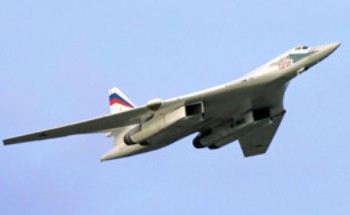
Posted for fair use....
http://www.bloomberg.com/apps/news?pid=20601087&sid=amiZGL2ts51I&refer=home
Putin to Meet Bush in Beijing After Missile Warning (Update1)
By Henry Meyer and Sebastian Alison
July 21 (Bloomberg) -- Russian Prime Minister Vladimir Putin will meet U.S. President George W. Bush next month after Russia warned it would respond militarily to U.S. plans to deploy a missile-defense system in eastern Europe.
Putin will hold talks with Bush on the sidelines of the Olympic Games' opening ceremonies in Beijing, the Russian prime minister's spokesman, Dmitry Peskov, said today by telephone in Moscow. The Olympics will open on Aug. 8.
Russia may send military aircraft back to bases in Cuba in response to the U.S. missile-defense plans, Izvestiya reported today, citing an unidentified ``highly placed source.'' The government said on July 8 that it would react with ``military- technical'' means to the U.S. system, which it said threatens Russia's security. Russian leaders threatened to aim nuclear missiles at the planned bases in the Czech Republic and Poland.
``The rhetoric is going to get real hard,'' Pavel Felgenhauer, a Moscow-based independent defense analyst, said by phone. ``Negotiations on the bases will be on hold until new leaders appear in Washington and they figure out what do to.''
Bush, who steps down as president in January, made no progress toward resolving differences on the missile shield during his meeting with Russian President Dmitry Medvedev at the G-8 summit in Japan earlier this month.
`White Swan, Bear'
Izvestiya said both the supersonic Tu-160, a nuclear bomber known as ``White Swan,'' and the strategic bomber Tu-95, known to the North Atlantic Treaty Organization as the ``Bear,'' are capable of flying as far as Cuba. Russian Defense Ministry spokesman Alexander Drobyshevsky said he hadn't read the report and declined comment.
The Czech Republic and the U.S. signed an agreement on July 8 to host a radar tracking station. Interceptor missiles would be based in Poland, which is still in negotiations with the U.S.
The Polish Foreign Ministry today denied talks with the U.S. had broken down over Poland's demands for additional security guarantees in return for housing the base after U.S. Assistant Secretary of State Daniel Fried held talks with Foreign Minister Radoslaw Sikorski this morning.
``Negotiations are definitely continuing,'' said ministry spokesman Piotr Paszkowski by phone.
The U.S. says the system is needed to defend against the threat of missile attack from Iran. Russia insists the U.S. aims to blunt the Russian nuclear capability by building the bases on its borders.
Putin, who was Russia's president for eight years, has retained a powerful role as prime minister since handing the presidency in May to his chosen successor, Medvedev.
To contact the reporters on this story: Henry Meyer in Moscow at hmeyer4@bloomberg.net; Sebastian Alison in Moscow at at salison1@bloomberg.net.
Last Updated: July 21, 2008 06:46 EDT
Posted for fair use....
http://www.bloomberg.com/apps/news?pid=20601087&sid=amiZGL2ts51I&refer=home
Putin to Meet Bush in Beijing After Missile Warning (Update1)
By Henry Meyer and Sebastian Alison
July 21 (Bloomberg) -- Russian Prime Minister Vladimir Putin will meet U.S. President George W. Bush next month after Russia warned it would respond militarily to U.S. plans to deploy a missile-defense system in eastern Europe.
Putin will hold talks with Bush on the sidelines of the Olympic Games' opening ceremonies in Beijing, the Russian prime minister's spokesman, Dmitry Peskov, said today by telephone in Moscow. The Olympics will open on Aug. 8.
Russia may send military aircraft back to bases in Cuba in response to the U.S. missile-defense plans, Izvestiya reported today, citing an unidentified ``highly placed source.'' The government said on July 8 that it would react with ``military- technical'' means to the U.S. system, which it said threatens Russia's security. Russian leaders threatened to aim nuclear missiles at the planned bases in the Czech Republic and Poland.
``The rhetoric is going to get real hard,'' Pavel Felgenhauer, a Moscow-based independent defense analyst, said by phone. ``Negotiations on the bases will be on hold until new leaders appear in Washington and they figure out what do to.''
Bush, who steps down as president in January, made no progress toward resolving differences on the missile shield during his meeting with Russian President Dmitry Medvedev at the G-8 summit in Japan earlier this month.
`White Swan, Bear'
Izvestiya said both the supersonic Tu-160, a nuclear bomber known as ``White Swan,'' and the strategic bomber Tu-95, known to the North Atlantic Treaty Organization as the ``Bear,'' are capable of flying as far as Cuba. Russian Defense Ministry spokesman Alexander Drobyshevsky said he hadn't read the report and declined comment.
The Czech Republic and the U.S. signed an agreement on July 8 to host a radar tracking station. Interceptor missiles would be based in Poland, which is still in negotiations with the U.S.
The Polish Foreign Ministry today denied talks with the U.S. had broken down over Poland's demands for additional security guarantees in return for housing the base after U.S. Assistant Secretary of State Daniel Fried held talks with Foreign Minister Radoslaw Sikorski this morning.
``Negotiations are definitely continuing,'' said ministry spokesman Piotr Paszkowski by phone.
The U.S. says the system is needed to defend against the threat of missile attack from Iran. Russia insists the U.S. aims to blunt the Russian nuclear capability by building the bases on its borders.
Putin, who was Russia's president for eight years, has retained a powerful role as prime minister since handing the presidency in May to his chosen successor, Medvedev.
To contact the reporters on this story: Henry Meyer in Moscow at hmeyer4@bloomberg.net; Sebastian Alison in Moscow at at salison1@bloomberg.net.
Last Updated: July 21, 2008 06:46 EDT
Posted for fair use...
http://uk.reuters.com/article/worldNews/idUKL2138060120080721
Russian military scoffs at Cuba refuelling report
Mon Jul 21, 2008 7:18pm BST
By Dmitry Solovyov
MOSCOW (Reuters) - Russian Defence Ministry officials on Monday poured cold water on a newspaper report that suggested Moscow could use Cuba as a refuelling base for nuclear-capable bombers.
Izvestia newspaper quoted a "highly placed source" as saying Russia could land Tu-160 supersonic bombers nicknamed "White Swans" in Cuba as a response to a planned U.S. missile defence shield in Europe which Moscow opposes.
"Will the White Swan settle on the Island of Freedom ? Russian military aircraft may return to Cuba," it said in a front-page headline.
The newspaper cited a "highly placed interlocutor in the headquarters of strategic aviation" as saying the possibility of using Cuba for landing the supersonic bombers had been discussed but no political decision had been taken on this.
The Kremlin declined immediate comment. The Defence Ministry questioned the story, saying it was written under a false name and quoted a source at an organisation that did not exist.
"Were our strategic bombers ever deployed in Cuba before?" a Defence Ministry official said when contacted by Reuters by telephone and asked whether bombers would be "returning" to the Caribbean island, 90 miles (150 km) from the U.S. coast.
Izvestia editor-in-chief Vladimir Mamontov stood by the story and said several of his journalists had worked under a pseudonym because of the story's sensitivity.
"The first remark was really made by a very competent person," Mamontov told Reuters.
Russia says U.S. plans to place parts of a missile defence shield in Poland and the Czech Republic threaten its security and that it will take unspecified retaliatory measures.
Former Russian President Vladimir Putin ordered Moscow to pull out from a Cold-War listening post on Cuba in 2001 but ordered the military last August to resume Cold War-era flights of strategic bombers around the globe.
(Reporting by Dmitry Solovyov; Editing by Timothy Heritage)
© Thomson Reuters 2008. All rights reserved.
http://uk.reuters.com/article/worldNews/idUKL2138060120080721
Russian military scoffs at Cuba refuelling report
Mon Jul 21, 2008 7:18pm BST
By Dmitry Solovyov
MOSCOW (Reuters) - Russian Defence Ministry officials on Monday poured cold water on a newspaper report that suggested Moscow could use Cuba as a refuelling base for nuclear-capable bombers.
Izvestia newspaper quoted a "highly placed source" as saying Russia could land Tu-160 supersonic bombers nicknamed "White Swans" in Cuba as a response to a planned U.S. missile defence shield in Europe which Moscow opposes.
"Will the White Swan settle on the Island of Freedom ? Russian military aircraft may return to Cuba," it said in a front-page headline.
The newspaper cited a "highly placed interlocutor in the headquarters of strategic aviation" as saying the possibility of using Cuba for landing the supersonic bombers had been discussed but no political decision had been taken on this.
The Kremlin declined immediate comment. The Defence Ministry questioned the story, saying it was written under a false name and quoted a source at an organisation that did not exist.
"Were our strategic bombers ever deployed in Cuba before?" a Defence Ministry official said when contacted by Reuters by telephone and asked whether bombers would be "returning" to the Caribbean island, 90 miles (150 km) from the U.S. coast.
Izvestia editor-in-chief Vladimir Mamontov stood by the story and said several of his journalists had worked under a pseudonym because of the story's sensitivity.
"The first remark was really made by a very competent person," Mamontov told Reuters.
Russia says U.S. plans to place parts of a missile defence shield in Poland and the Czech Republic threaten its security and that it will take unspecified retaliatory measures.
Former Russian President Vladimir Putin ordered Moscow to pull out from a Cold-War listening post on Cuba in 2001 but ordered the military last August to resume Cold War-era flights of strategic bombers around the globe.
(Reporting by Dmitry Solovyov; Editing by Timothy Heritage)
© Thomson Reuters 2008. All rights reserved.

Wildweasel
F-4 Phantoms Phorever
Tu-95s and Tu-160s? Even the Su-34s and other fighter-type aircraft mentioned.
Mere practice targets for Patriot PAC-3 batteries that could be installed around Homestead Air Force Base and Key West Naval Air Station. Not to mention the fighters based at both locations.
The early warning radar systems are already in place, via the tethered-ballon radars at Key Westand the AWACS that patrol the area scanning for drug runners. Not to mention the Over-The-Horizon Backscatter (OTH-B) radar system that scans the Carribean from southern Virginia and the OTH-B that monitors the North Atlantice from Maine.
Russian bombers doing a Cuba run would become very familiar with various well-armed US fighters that will watch them every mile of the way.
WW
Mere practice targets for Patriot PAC-3 batteries that could be installed around Homestead Air Force Base and Key West Naval Air Station. Not to mention the fighters based at both locations.
The early warning radar systems are already in place, via the tethered-ballon radars at Key Westand the AWACS that patrol the area scanning for drug runners. Not to mention the Over-The-Horizon Backscatter (OTH-B) radar system that scans the Carribean from southern Virginia and the OTH-B that monitors the North Atlantice from Maine.
Russian bombers doing a Cuba run would become very familiar with various well-armed US fighters that will watch them every mile of the way.
WW
Tu-95s and Tu-160s? Even the Su-34s and other fighter-type aircraft mentioned.
Mere practice targets for Patriot PAC-3 batteries that could be installed around Homestead Air Force Base and Key West Naval Air Station. Not to mention the fighters based at both locations.
The early warning radar systems are already in place, via the tethered-ballon radars at Key Westand the AWACS that patrol the area scanning for drug runners. Not to mention the Over-The-Horizon Backscatter (OTH-B) radar system that scans the Carribean from southern Virginia and the OTH-B that monitors the North Atlantice from Maine.
Russian bombers doing a Cuba run would become very familiar with various well-armed US fighters that will watch them every mile of the way.
WW
In the case of the Tu-95s and Tu-160s the concern should be the ALCM loadout on them. The Su-30s and Su-34s should be seen as an anti-shipping and/or anti-oil rig threat.
Like I said prior in posting #26, the fixes are "readily" available, "all" it takes are a couple of budget line items.
"[FONT=Verdana,Arial] The crisis was resolved after 12 days when the Soviet leader, Nikita Khrushchev, backed down and ordered the missiles removed."
[/FONT][FONT=Verdana,Arial]FWIW, the missiles were NOT removed-at least not for at least a year or so, and may still be there. This little known fact came from my (now deceased) inside Cuban source. By night, the missiles were trucked to be hidden in caves in Cien Fuego (an ironic name - place of a hundred fires). Empty crates were loaded onto the ships to be sent back to the USSR.
My own opinion is that our government was well aware of this, but both countries agreed to this face-saving play for the US.
There are lots of things that are staged for the public's consumption. Everything is not what it seems. There is no telling what the reality is of the dangers that we face, so much is hidden.
[/FONT]
Thank you, TC.

momof23goats
Deceased
I thought about what you said Cappy, when i heard this. Looks like this is going to get bad. you were correct on that. IF Russia does this. and i am sure they probably already have some there.