04/09: "The Winds of War" - Iran Prepared for Possible Attack

=


04/08: "The Winds of War" - U.S. Could Have "Triggered" Accidental War
http://www.timebomb2000.com/vb/showthread.php?t=236869


<B><center>Iran Prepared for Possible Attack

Agencies
http://www.arabnews.com/?page=4&section=0&article=94760&d=9&m=4&y=2007 </center>
TEHRAN, 9 April 2007</b> — Iran will not discuss its “obvious right” to master nuclear technology but is open to talks that could reassure the West that its atomic plans were not aimed at making bombs, the Foreign Ministry said yesterday.

Ministry spokesman Mohammad Ali Hosseini also told a weekly news conference that the Islamic Republic’s military was “totally prepared to defend the country and Iran is totally prepared for any possible military strike.”

The United States, which believes Iran is trying to build an atomic bomb, has said it wants a diplomatic solution to the row over Tehran’s nuclear ambitions but has not ruled out military action if that route fails.

Some diplomats speculate President Mahmoud Amadinejad could announce progress in expanding Iran’s nuclear fuel work on a visit to the Natanz uranium enrichment plant today.

Hosseini said Iran’s chief nuclear negotiator, Ali Larijani, and European Union foreign policy chief Javier Solana had been in contact over the dispute, which has prompted the United Nations to slap two rounds of sanctions on Iran.

But he said Iran would not discuss its right as a member of the nuclear Non Proliferation Treaty to enrich uranium, a process which can be used to make fuel for power stations, or material for warheads if enriched to a high enough level.

“The talks should have a purpose and Iran’s obvious right will not be discussed. We want talks without preconditions to remove ambiguities and to assure the other parties there will be no diversion (to military uses),” Hosseini said.

Meanwhile, Iran warned neighboring Iraq that its failure to secure the release of five Iranians detained there by US forces could impair Tehran’s cooperation with Baghdad, a senior official was quoted yesterday as saying.

Washington says the five men, detained in January in northern Iraq, are linked to Iran’s Revolutionary Guards and backing militants. Iran insists they are diplomats, wants them freed and has requested access.

“We are serious about the way we will confront those behind the arrest of the Iranian diplomats in Iraq,” the semi-official Fars news agency, seen as close to the Revolutionary Guards, quoted Foreign Minister Manouchehr Mottaki as saying.

“On Friday I sent a letter to the Iraqi foreign minister and other officials in Iraq and pointed out that their efforts over the release of the diplomats have had no results and I emphasized that if this situation continues we will have problems in taking other steps to help Iraq,” he said.

Earlier yesterday, a senior adviser to Iraqi Prime Minister Nuri Al-Maliki said Iran had refused to allow a plane carrying the Iraqi leader on a trip to Asia to cross its air space overnight.

Iranian Foreign Ministry spokesman Hosseini played down the incident at a regular news conference and it was not clear whether it was linked to Mottaki’s warning.

Mottaki, whose comments were originally made to an Iranian television channel, added that Iran had requested the help of UN Secretary-General Ban Ki-moon over the arrested Iranians.

The US military has said it is considering an Iranian request to visit the men. An International Committee of the Red Cross team has visited the detained Iranians twice, a US military official said on Friday.

Yesterday, the families of five Iranians held for three months in US detention in Iraq met an ICRC representative to ask for news about their health, state media said.

The meeting came after an Iranian diplomat kidnapped in Baghdad in February said after his release last week that he had been tortured “day and night” and interrogated by CIA officials. Washington denied the claims.

“The families of the five kidnapped diplomats asked the ICRC to play a more active role in alleviating their concerns,” state radio reported.

“The families asked for video footage of the detained diplomats to reduce their concern,” the radio said, adding that the ICRC had described the request as beyond the organization’s authority.

Iran is also reviewing the case of a French academic forced stay in the country for two months over work “incompatible” with his visit plan but hopes the case will be resolved soon, the Foreign Ministry said yesterday. France says Stephane Dudoignon, a historian specializing in Islam, was detained in January for photographing the rite of Ashura in the southeast of the country. He was freed but his passport was confiscated.

The Iranian authorities are also trying to discover what has happened to a US citizen who Washington said it believed went missing several weeks ago while on private business in Iraq.

The United States sent an official inquiry about the missing former FBI agent, Robert Levinson, to Iran earlier this month via Swiss diplomats, who act as go-betweens with Tehran because the two countries do not have diplomatic relations.
 
=


<B><center>Ahmadinejad promises nuclear announcement tomorrow</b>

Mon-09-Apr-2007 11:33am
http://www.tv3.co.nz/News/InternationalNews/tabid/187/Default.aspx?ArticleID=24763 </center>
Iran's leader is promising to make an announcement tomorrow about his country's nuclear programme.

He will do this on a visit to the uranium enrichment facility where the west says Iran is mastering the skills needed to make atomic bombs.

Iran has rejected UN demands to halt enrichment.

Diplomats believe President Ahmadinejad will announce that Iran has installed more centrifuges, the machines used in the enrichment process.
 
=


<center>Monday, 9, April, 2007 (21, Rabi` al-Awwal, 1428)

<b>Why Iran Distrusts UK</b>

Neil Berry, albionroad@tiscali.co.uk
http://www.arabnews.com/?page=7&section=0&article=91965&d=9&m=4&y=2007 </center>
Twenty-five years ago this summer the Conservative government of Prime Minister Margaret Thatcher rejoiced over British victory in the Falklands War. Fought to rescue the Falkland Islands, one of the last remnants of the British Empire, from invasion by Argentina, the war transformed Mrs. Thatcher’s political fortunes. She emerged as the “Iron Lady”, the warrior politician who restored Britain’s imperial prestige.

The huge political benefit Mrs. Thatcher reaped from war was not lost on the young Tony Blair. Indeed, considering that he has committed Britain to no fewer than five military conflicts during the past ten years, Blair could be said to have learned all too well how waging war can enhance a leader’s standing.

It’s ironic to recall that, when he came to power in 1997, Thatcher herself volunteered the opinion that Britain would be safe in Blair’s hands. She could hardly have guessed that the country was electing a prime minister who would put her own bellicosity in the shade, while making Britain much less safe than it had previously been.

Thanks to Blair’s martial excesses, there is now a disposition, even among those who deplored the Falklands War, to acknowledge that the war was a comparatively reasonable enterprise, a justifiable response to Argentinean aggression. The Falkland Islands had after all been invaded by Argentina in clear breach of international law. In conception and execution, the Falklands War was an essentially British undertaking (although Britain received clandestine US logistical support). Admirers of Mrs.

Thatcher boasted about how she had demonstrated that Britain was still capable of pursuing its own foreign policy — something that had no longer seemed feasible after the setback of the 1956 Suez crisis when US President Dwight D. Eisenhower forced Britain to abort its attempt to invade Egypt in concert with France and Israel.

By contrast, Britain’s intervention in Iraq lacked any clear legal justification. Nor could any national interest be said to have been at stake. It came about because, under Blair, Britain entered into a relationship with US President George W. Bush so servile as to make Mrs. Thatcher’s protestations of loyalty to the then president, Ronald Reagan, seem eminently dignified.

All the same, it is fair to say that Thatcher prepared the way for Blair’s warmongering career. For Blair is very much a creature of the Thatcher era and the Falklands War gave a fresh lease of life to the illusion that Britain was still a great, not to say invincible, military power, with a God-given right to intervene in foreign lands. As British victory precipitated the downfall of the junta of Gen. Galtieri and stimulated the growth of Argentinean democracy, it also revived conviction that Britain remains a force for good in world affairs.

The extraordinary tenacity of the British imperial mentality had more than a little bearing on the recent standoff between Britain and Iran that could so easily have escalated into a major international crisis. Who could miss the imperial hauteur informing the moral outrage of Blair and Foreign Secretary Margaret Beckett as they denounced Iran for presuming to arrest British sailors in what they insisted counted as waters where British writ runs?

Soaked in antique assumptions of racial superiority, here was the tone of Olympian indignation that has long been the hallmark of the British establishment. The habit of towering British colonial condescension is particularly ingrained in relation to Iran. Certainly, though the country never belonged to the British Empire, Britain has yet to stop treating Iran as though it is a vassal state, which ought to accept as self-evident the British Navy’s entitlement to police the Gulf. That Britain is nowadays viewed by Iran and the rest of the world as a mere stooge of the United States never seems to occur to Britain’s high-handed political elite.

It is a measure of this institutionalized racist arrogance that, even among educated Britons, knowledge about Britain’s historic relationship with Iran is at best sketchy. No more than a tiny minority has ever troubled to familiarize themselves with the unedifying story of British interference in Iran, and it is doubtful if that minority includes Britain’s current prime minister. It follows that few have the least understanding why, to this day, there is much Iranian suspicion of Britain, a tendency to detect its hand behind Iran’s past and present adversities, and even to believe that it is the endlessly cunning British who are manipulating the foreign policy of the United States.

The roots of this profound distrust lie in the long record of ruthless British exploitation of Iran, especially of its oil wealth, which began years before the US became involved in the Middle East. It must be remembered, too, that the coup of 1953 which led to the ousting of the democratically elected Iranian leader, Muhammad Mossadeq, who nationalized Iranian oil, was instigated by British Intelligence, even if it was ultimately carried through by the CIA. The truth is that the tortured evolution of modern Iran owes quite as much to British as it does to US imperialist meddling.

Given this ignorance, it would not be surprising if British people needed little encouragement to participate in the US demonizing of Iran. However, the general reaction in Britain to the recent crisis has been relatively muted. It is true that there have been hotheads calling for the nuking of Tehran but, to judge from radio phone-ins, not a few Britons question why British Marines were operating in Iranian waters in the first place.

This mounting unease about British persistence in old imperial habits stems in no small measure from Blair’s duplicity and demeaning behavior toward the US. For his emulation of the strident patriotism of Thatcher has all too patently been inseparable from selling out his own country; by this stage indeed his willful embroiling of Britain in military ventures dreamed up in Washington is seen as anything but patriotic. His sorry legacy is a widespread sense of injured national pride, with American visitors to Britain much subject to crude abuse.

Rumors have circulated that the Bush regime intends to make fresh use of Blair as a champion of US foreign policy, one who can make the case for bombing Iran rather more eloquently than the American president. Blair may yet prove happy to oblige, but the blustering equivocation of his response to the Marines crisis has underscored the collapse of his credibility both at home and abroad.

The 25th anniversary of the Falklands War might have been the occasion for a fresh outpouring of British jingoism. Yet the signs are that increasing numbers of Britons are beginning to appreciate the disastrous cost of sustaining Britain’s imperial pretensions. It is just possible that one day Britain may learn to live with the fact that it is no longer a great empire. The worry is that it will not be before self-aggrandizing British politicians have helped the United States to destabilize the whole world.
 
=


<b><center>DPA: Hezbollah warns against attack on Iran</b>

9 April 2007 | 00:43
FOCUS News Agency
http://www.focus-fen.net/?id=n109730 </center>
Lebanon. The secretary general of Lebanon's militant Hezbollah movement, Sheikh Hassan Nasrallah, warned Sunday against any attack on Iran. "If anyone in Lebanon is building hopes that Iran will be attacked I tell them if this happens the whole region will not stay the same and counting on such calculations will prove to be wrong," Nasrallah, who is backed by Iran and Syria, told a group of his followers during a ceremony in Beirut's southern suburbs.


<B><center>===================================</b></center>


<center>Middle East News

<b>Hezbollah warns against attack on Iran</b>

Apr 8, 2007, 18:27 GMT
http://news.monstersandcritics.com/...22.php/Hezbollah_warns_against_attack_on_Iran </center>
Beirut - The secretary general of Lebanon's militant Hezbollah movement, Sheikh Hassan Nasrallah, warned Sunday against any attack on Iran.

'If anyone in Lebanon is building hopes that Iran will be attacked I tell them if this happens the whole region will not stay the same and counting on such calculations will prove to be wrong,' Nasrallah, who is backed by Iran and Syria, told a group of his followers during a ceremony in Beirut's southern suburbs.

Nasrallah, whose group is leading the opposition against Lebanon's Western-backed government headed by Premier Fouad Seniora, accused some members of the anti-Syrian parliamentary majority of deluding themselves by counting on major regional changes to change the current situation in Lebanon.

The Hezbollah chief said in reference to the internal Lebanese political crisis that the dialogue between the Lebanese factions has failed and he proposed a referendum to resolve the deadlock between the pro-and anti-Syrian camps.

'The two camps have reached a deadlock. It is best to hold a referendum and early elections, where the people can decide who will rule the country,' Nasrallah said.

Lebanon has been locked in a political crisis since six pro-Syrian ministers resigned from the Seniora government in November.

The opposition have been calling on the cabinet to resign and form a national unity government by granting the pro-Syrian opposition veto power.

The demand is widely rejected by the anti-Syrian camp, who accuse the opposition of trying to block the formation of a national unity government to protect their Syrian allies who are widely believed to have been behind the 2005 assassination of former Lebanese premier Rafik Hariri.

Nasrallah reasserted that 'Hezbollah would not allow itself to be dragged into a civil war ... we will continue all our useful, democratic and civil means' of protest against the cabinet.
 

Housecarl

On TB every waking moment
http://www.smh.com.au/news/World/Iran-set-to-announce-nuclear-plans/2007/04/09/1175970981801.html

Iran set to announce nuclear plans
April 9, 2007 - 10:24AM


Iran's president has promised to disclose news about Iran's nuclear program on Monday when he visits its uranium enrichment facility, where the West says Iran is mastering the skills needed to make atomic bombs.

Iran has rejected UN demands to stop enrichment, a process than can make power plant fuel or material for warheads, and has instead vowed to expand what it insists is peaceful atomic work.

Diplomats speculate President Mahmoud Ahmadinejad could announce that Iran has installed more centrifuges, the machines used in the enrichment process, at the Natanz facility in central Iran.

But Iranian officials have been tightlipped.

"If you wait 24 hours, you will all find out," Foreign Ministry spokesman Mohammad Ali Hosseini told a news conference on Sunday when asked what the president would announce.

Journalists will accompany the president with senior officials from Iran's Atomic Energy Organisation to the site about 200km south of Tehran.

Ahmadinejad, who said in February he would announce "great" nuclear achievements in the days to April 9, is expected to hold a news conference.

Sunday's Jam-e Jam newspaper wrote: "The installation and start up of 3,000 centrifuges and the injection of uranium hexafluoride (UF6) gas will be announced by the president."

UF6 gas is fed into centrifuges as feedstock.

Iran, the world's fourth largest oil exporter which says it wants a network of nuclear power plants, runs 350 experimental centrifuges at an above ground pilot facility at Natanz.

The IAEA said in February Iran had set up two cascades of 164 centrifuges below ground, where Iran is installing 3,000 machines as part of its "industrial" enrichment plans.

Diplomats who follow Iran's nuclear file say Iran has set up four more cascades since February, bringing the total number now in the underground section to six cascades or 984 centrifuges. The diplomats have said no feedstock has been fed in yet.

The Islamic Republic's refusal to accept UN demands to stop enrichment has prompted the UN Security Council to pass two sanctions resolutions on the country since December.

The UN's nuclear watchdog, the International Atomic Energy Agency, says it has gaps in its knowledge about Iran's plans that need to be filled before it can confirm they are peaceful.

Angered by the second sanctions resolution in March, Iran said it would limit co-operation with the IAEA by not giving early word of plans to build new nuclear installations, backing out of a voluntary agreement to provide such information.

© 2007 Reuters, Click for Restrictions
 
=


<center>03:33 09/04/2007

<b>Nasrallah: Hezbollah will stay armed to offset Israel </b>

By The Associated Press
http://www.haaretz.com/hasen/spages/846660.html </center>
The leader of the militant Hezbollah, Sheik Hassan Nasrallah, on Sunday vowed that Hezbollah will keep its weapons until a strong Lebanese army capable of defending the country against Israeli attacks is established.

The Hezbollah leader apparently was responding to repeated calls by the country's anti-Syrian parliamentary majority for his group to disarm in line with a UN resolution that ended last summer's Israel-Hezbollah war.

Nasrallah also said Sunday that a dialogue among feuding Lebanese leaders has failed to resolve the country's political crisis and proposed a public referendum or early parliamentary elections as a way out of the four month long stalemate.

Nasrallah spoke at a ceremony in south Beirut marking the graduation of more than 1,700 Hezbollah supporters from Lebanese universities. After his speech that lasted more than an hour, he handed certificates to the graduates during the ceremony attended by thousands of people.

The latest bilateral dialogue has reached a dead end, Nasrallah said, referring to last month's meetings between Parliament Speaker Nabih Berri, an opposition leader aligned with Hezbollah, and Saad Hariri, the leader of parliament's pro-government majority.

When we reach a deadlock, the only logic is to resort to the people who are the source of power, rather than resorting to the outside world because the outside world is a party (to the conflict) and is supporting a party, Nasrallah said, referring to Arab and Western countries that support the Lebanese government.

There are two democratic formulas in the world: either a Lebanese public referendum on a solution or early parliamentary elections, the black-turbaned Shiite cleric added.

Anti-Syrian parties, who do not support neighboring Damascus' involvement in Lebanese affairs, won a majority in the 128-member legislature during the 2005 parliamentary elections and have rejected the opposition's demand for early elections. The next elections are due in 2009.

The Hezbollah-led opposition has been campaigning with protests and sit-ins since Dec. 1 in downtown Beirut - just outside the prime minister's office - to try to force him to resign or share power in a national unity Cabinet that would give the opposition veto power.

U.S.-backed Prime Minister Fouad Saniora has refused to resign. Hariri and his allies in the anti-Syrian coalition have rejected the opposition's demand for Cabinet veto power on key decisions, calling it a political suicide.

Nasrallah said he will no longer accept the opposition's demand for 11 seats in a 30-member Cabinet, saying such an offer is silly and weak.

The Berri-Hariri meetings came after months of dispute in which feuding politicians traded insults and their supporters clashed in the streets, leading many to fear that the country was returning to the violence of the 1975-90 civil war. Political and sectarian tensions turned violent in January, with nine people were killed in street clashes.

Berri last week called on Saudi Arabia to host a conference of rival Lebanese leaders to reach a solution to the crisis. But this was rejected by pro-Saniora leaders who insisted the country reach its own solution before going to Saudi Arabia.

In his speech, Nasrallah rejected claims that Hezbollah, which has refused to hand over its weapons to the government, was acting like a state within a state.

Hezbollah stood fast in the face of the 34-day devastating Israeli air and artillery bombardment of its positions in south and eastern Lebanon as well as Beirut's southern suburbs. The war ended with a UN cease-fire resolution on Aug. 14.

Nasrallah vowed to keep Hezbollah weapons until a powerful army capable of defending Lebanon is formed.

"The only solution is that there must be a strong state and a strong army capable of confronting any Israeli aggression on Lebanon," he said.
 
=


<center>SUNDAY, APRIL 08, 2007
20:28 MECCA TIME, 17:28 GMT

NEWS MIDDLE EAST

<b>Nasrallah gives up hope of deal</b>

http://english.aljazeera.net/NR/exeres/A4ED3D67-1702-4489-8011-FB67F0A7961D.htm </center>
Hassan Nasrallah says he has given up hope of reaching a deal with Lebanon's government to end the country's political deadlock, but said he will not be dragged into civil war.

The leader of Hezbollah used a speech on Sunday to say that the only way to end the stalemate with Fouad Siniora's government was through a referendum or early elections.

"The dialogue is deadlocked. What do we do? We don't want a civil war. If the stalemate continues for a while until a solution is found or we go to a civil war, then let the stalemate continue," Nasrallah said at a graduation ceremony in south Beirut.

Nasrallah said Hezbollah and its Shia and Christian allies no longer demanded veto power in Siniora's government but the only way out of the crisis was through a referendum to resolve the deadlock or early elections - a proposal that the prime minister and his allies have rejected.

Stalemate

Otherwise, he said, the opposition was willing to bide its time until circumstances become convenient for a solution or regular elections are held in 2009.

Saudi-backed talks last month between the majority and the opposition failed to resolve the five-month-old standoff.

Lebanon has been experiencing political stalemate since six opposition ministers, including all Shias, resigned from the government in November because of Siniora's refusal to give them 11 seats in the 30-member cabinet and in effect hand veto power to his opponents.

"We in the opposition became like beggars ... I don't want this 19-11 [formula] any more," Nasrallah said, closing the door for any negotiations with the majority.

Violence

"Today, the courageous decision is to return to the will of the Lebanese people."

Ten people have been killed in violent clashes since the opposition took to the streets shortly after the resignations.

Hezbollah, believed to be supported by Syria and Iran, is the most powerful group in the opposition.

The parliamentary majority is led by the Sunni, Saad al-Hariri, son of the late prime minister, Rafik al-Hariri, who was assassinated in 2005.

Nasrallah criticised the majority for asking the UN Security Council to set up an international court to try suspects in the killing of al-Hariri despite opposition demands that its laws be amended and passed by parliament.
 

skip1

Membership Revoked
Not For What's Coming

Mullahs only expect limited bombing. However when MISS
jennifer_eccleston_miss_shock_and_awe.jpg
& AWE COMES a KNOCKING, they will SOON realize its an Invasion then they will be calling on Damascus
1653517429
Nancy to save their
bacon.jpg
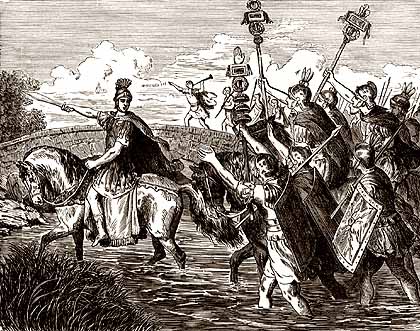
but Mullahs Crossed the
CaesarRubicon.jpg
as far as Bush is concerned & Mullahs will be NO MORE
 
=


<B><center>Hezbollah sees deadlock, Lebanon crisis continuing</b>

By Nadim Ladki
Sun Apr 8, 12:33 PM ET
http://news.yahoo.com/s/nm/20070408/wl_nm/lebanon_hezbollah_dc </center>
BEIRUT (Reuters) - Shi'ite Muslim Hezbollah has given up hope of reaching a compromise deal with Lebanon's Western-backed majority coalition to end the country's political crisis, the group's leader said on Sunday.

Sayyed Hassan Nasrallah said Hezbollah would not be dragged into civil war despite the failure of last month's Saudi-backed talks between the majority and the opposition to resolve the five-month-old standoff.

"The dialogue is deadlocked. What do we do?," Nasrallah said at a Hezbollah ceremony in Beirut's southern suburbs.

"We don't want a civil war. If the stalemate continues for a while until a solution is found or we go to a civil war, then let the stalemate continue."

Nasrallah said Hezbollah no longer demanded veto power in Prime Minister Fouad Siniora's government but the only way out of the crisis was through a referendum to resolve the deadlock or early elections -- a proposal Siniora and his allies have already rejected.

Otherwise, he said, he and his opposition allies were willing to bide their time until circumstances become ripe for a solution or regular elections are held in 2009.

Lebanon is facing its worst crisis since the end of the 1975-1990 civil war. Opposition ministers, including all Shi'ites, resigned from government in November because of Siniora's refusal to give them 11 seats in the 30-member cabinet and effectively hand veto power to his opponents.

"We in the opposition became like beggars ... I don't want this 19-11 (formula) anymore," Nasrallah said, closing the door for any negotiations with the majority.

WILL OF THE PEOPLE

"Today, the courageous decision is to return to the will of the Lebanese people," Nasrallah said.

Sectarian violence has killed 10 people since the opposition took to the streets shortly after the resignations, raising fears of bloody Sunni-Shi'ite strife.

Hezbollah, backed by Syria and Iran, is the most powerful group in the opposition. The majority is led by Sunni leader Saad al-Hariri, son of late Prime Minister Rafik al-Hariri, who was assassinated in 2005.

Nasrallah slammed the anti-Syrian majority for asking the U.N. Security Council to set up an international court to try suspects in the killing of Rafik al-Hariri despite opposition demands that its laws be amended and passed by parliament.

The majority, which accuse the opposition of trying to thwart the tribunal's establishment to protect its allies in the Syrian government, has demanded a session of parliament so lawmakers can vote on the tribunal draft.

But Parliament Speaker Nabih Berri -- a Hezbollah ally -- has yet to convene the chamber. He says he will not call it to debate the tribunal until President Emile Lahoud, also a Syrian ally, has signed the draft and a new government is formed.

Majority leaders accuse Damascus of the 2005 killing and a string of other attacks on anti-Syrian figures that are all being probed by a U.N. investigation. Syria denies involvement.
 
=


<b><center>Nasrallah: 'We have to return to the people'</b>
By Rym Ghazal
Daily Star staff
Monday, April 09, 2007
http://www.dailystar.com.lb/article.asp?edition_id=10&categ_id=2&article_id=81276 </center>
BEIRUT: Hizbullah leader Sayyed Hassan Nasrallah declared on Sunday that Hizbullah will not be dragged into a civil war and is "giving up" its demand of "19+11" as the formula for the new cabinet - and told the government of Prime Minister Fouad Siniora to go ahead and "replace" the six ministers who left in November.

"We don't want the 19+11, thank you very much, as you," said Nasrallah, who made a point of noting that he was speaking on behalf of Hizbullah, "not the opposition" as a whole.

"If we have to pick between a civil war and keeping the situation as it is, we prefer to continue with the political deadlock," he said during a ceremony honoring 1,734 university graduates belonging to the resistance.

After offering his best wishes to Christians on the occasion of Easter, Nasrallah told his followers that the doors are "completely closed" against further dialogue and there now exists "only two solutions" to five months of political impasse.

"Now we have to return to the people, and do a national poll on what they want, or we carry out early parliamentary elections. These are the only two ways out now," Nasrallah said.

He also warned the ruling coalition to decide "soon."

"Now it is easier to reach a settlement than later," he said, "because later, we will be deciding whether or not to give you the 11."

Nasrallah also denied reports that his party will be sending the UN Security Council a detailed list of modifications to the international court to try suspects in the assassination of former Prime Minister Rafik Hariri.

"Many have asked to see the list, including Iran and Saudi Arabia ... but we refuse to show it to anyone, expect the other Lebanese side," he said. "Unfortunately, the majority never wanted to discuss our modifications seriously."
http://www.dailystar.com.lb

"[UN Secretary General] Ban Ki-moon and others have now become the experts on Lebanese Constitution and have started to rule Lebanon," he quipped, criticizing pro-government MPs for having sent a petition that called on Ban to establish the court through the UN security Council.

Nasrallah accused the ruling majority of "scheming" and taking "their orders from the US."

"They don't want a national army, they want a sectarian one they can manipulate," he added. "But the army will not give in to the rule by militia leaders."

He also praised President Emile Lahoud as a "man" who withstood "wave after wave of insults and campaigns by the ruling majority."

Nasrallah also criticized the "weak" state, saying: "When you become a strong state, then come and talk to us about us becoming a state within a state."

Druze leader Walid Jumblatt has accused Hizbullah on Saturday of setting up "a state within the state," saying a settlement to the political crisis was not in the offing and urging the army to control tunnels allegedly used to smuggle weapons from Syria.

"The opposition is a state run by Iran and the Syrian regime in Lebanon. There is a state within the state," Jumblatt said in an interview with al-Jazeera satellite television. "We have the Hizbullah army in addition to the Lebanese Army, we have Hizbullah intelligence in addition to the Lebanese Army intelligence, there are territories that the Lebanese Army cannot enter and the Lebanese state cannot practice its authority on such lands."
 
=


<B><center>Al-Qaeda focuses on economic targets</b>

By Hrach Gregorian
Commentary by
Monday, April 09, 2007
http://www.dailystar.com.lb/article.asp?edition_id=1&categ_id=5&article_id=81277 </center>
Along with guerrilla warfare, cyber-war and ideological indoctrination, one of the pillars of Al-Qaeda's operational objectives in its war against the West is striking at targets of high economic value, the so-called "bleed-until-bankruptcy plan" first made public by Osama bin Laden in December 2004.

"One of the main causes for our enemies' gaining hegemony over our country," bin Laden reasoned, "is their stealing of our oil; therefore [Islamic fighters] should make every effort ... to stop the greatest theft in history of the natural resources of both present and future generations, which is being carried out through collaboration between foreigners and [local] agents." Note the tarring of local regimes along with "foreigners."

Al-Qaeda has been careful to spare oil wells, which are seen as critical to the success of "the soon to be established Islamic state, by Allah's Permission and Grace," concentrating instead on petroleum industry personnel, refining and transportation infrastructure.

A new call for attacks on oil facilities appeared early this year in the online magazine "Sawt al-Jihad" (Voice of the Jihad), issued by Al-Qaeda in the Arabian Peninsula, expanding the list of targeted countries to include such key US suppliers as Canada, Mexico and Venezuela. Al-Qaeda has also called on Nigerian insurgents in the Niger Delta and "mujahideen" in the Caspian Sea region to take action against Western oil interests.

These calls have not fallen on deaf ears. On September 15, 2006, two attacks were mounted by Al-Qaeda affiliates in Yemen. One targeted the Canadian Nexen Petroleum Company's oil refinery in Al-Dhabba, while the other took aim at the US-owned Hunt Oil Company refinery in Safer. Both sites are located in the eastern provinces of Marib and Hadramawt.

In signature fashion, the attacks came 35 minutes apart. Both attacks were thwarted by security guards, but in the Marib case suicide bombers were just 100 meters from pipelines containing over 15,000 cubic feet of gas and a control room for lines pumping crude oil. Al-Qaeda's message after the incident warned: "Let the Americans and their allies among the worshippers of the cross and their apostate aides ... know that these operations are only the first spark and that what is coming is more severe and bitter."

More successful in its quest to disrupt oil markets was the Al-Qaeda "franchisee," the so-called "Al-Qaeda Organization in the Islamic Maghreb" (formerly the Salafist Group for Preaching and Combat). Last March 3, the group killed a Russian engineer and three Algerians, as well as wounding five others, traveling in a convoy at Hayoun, near Ain Defla in southern Algeria.

All were employees of the Russian company Stroytransgaz and were laying gas mains between Ain Defla and Tiaret, some 340 kilometers southwest of Algiers. Al-Qaeda announced that this "modest conquest" was being dedicated to "our Muslim brothers in Chechnya ... victims of the criminal [Russian President Vladimir] Putin." But no doubt an equally important objective was the oil industry. Three months ago this group killed one and injured nine in a similar attack on a bus carrying staff of Brown and Root Condor, a subsidiary of the Algerian oil company Sonatrach and of the US construction firm Halliburton.

Why Yemen and why Algeria? Aside from the fact that they are good targets of opportunity and there are in these countries indigenous elements sympathetic to or directly aligned with Al-Qaeda, they offer a twofold return on a rather modest investment.
http://www.dailystar.com.lb
 

daisy

Inactive
Iran to announce installation of 3,000 centrifuges in Natanz plant

http://www.ynetnews.com/articles/0,7340,L-3385906,00.html

Published: 04.08.07, 22:36 / Israel News

Iranian President Mahmoud Ahmadinejad is expected to announce on Monday the installation of 3,000 centrifuges for uranium enrichment in the Natanz nuclear facility, the official Iranian news agency reported.

The announcement will be made as part of the Islamic Republic’s “National Nuclear Day” celebrations. (Dudi Cohen)

The crazy b@st@rd just won't stop will he?
 

DoomBuggy

Veteran Member
The crazy b@st@rd just won't stop will he?
__________________

So the question remains, when are WE and/or Israel going to stop him?! :sht:
 

skip1

Membership Revoked
The crazy b@st@rd just won't stop will he?
__________________

So the question remains, when are WE and/or Israel going to stop him?! :sht:


He is not crazy, far from it. Only an Invasion & toppling of the Mullahs WILL END THE THREAT & STABILIZE THE REGION. Invasion & occupation is the only sure way to find & destroy their nuke program & make sure it never restarts. That is why Israel only as a last resort will bomb Iran (Yrs away) & at that point IT WILL BE WITH Nukes. Now at this point in history Bush is the only one with the power the courage & the window of opportunity to do the job. But Mullahs don't think the rest of our leadership (Think Damascus Nancy & Field Marshall Von Murtha) have the ba*** to do (Invasion) it. Well just have to wait & see.
 
Last edited:
=

<i>It has long kinda 'irked' me that we keep hearing that Iran will take so many years to build and or pocess a workable Nuclear Device!

Especially since the Manhatten Project only took 4 years from start to finish (the destruction of 2 Japanese cities). And those scientists had to start with out knowing all the steps, all the processes of making a theroy into a "working Nuclear Weapon".

<B><center>Manhattan Project</b>

From Wikipedia, the free encyclopedia
Jump to: navigation, search
http://en.wikipedia.org/wiki/Manhattan_Project </center>
This page is about the World War II nuclear project. For other uses of the name "Manhattan Project", see Manhattan Project (disambiguation).

<b>The Manhattan Project resulted in nuclear weapons, and the first-ever nuclear detonation, at the Trinity test of July 16, 1945.<font size=+0 color=red>The Manhattan Project was the project to develop the first nuclear weapons during World War II by the United States, the United Kingdom and Canada. Formally designated as the Manhattan Engineering District (MED)</font>, it refers specifically to the period of the project from 1942-1946</b> under the control of the U.S. Army Corps of Engineers, under the administration of General Leslie R. Groves, with its scientific research directed by the American physicist J. Robert Oppenheimer.

The project succeeded in developing and detonating three nuclear weapons in 1945: a test detonation on July 16 (the Trinity test) near Alamogordo, New Mexico; an enriched uranium bomb code-named "Little Boy" detonated on August 6 over Hiroshima, Japan; and a plutonium bomb code-named "Fat Man" on August 9 over Nagasaki, Japan.

The project's roots lay in scientists' fears since the 1930s that Nazi Germany was also investigating such weapons of its own. Born out of a small research program that began in 1939, the Manhattan Project would eventually employ more than 130,000 people and cost a total of nearly $2 billion USD ($20 billion in 2004 dollars based on CPI), and result in the creation of multiple production and research sites operated in secret.[1]

The three primary research and production sites of the project were the plutonium-production facility at what is now the Hanford Site, the uranium-enrichment facilities at Oak Ridge, Tennessee, and the weapons research and design laboratory which is now Los Alamos National Laboratory. Project research took place at over thirty different sites spread across the United States, Canada, and the United Kingdom. The MED maintained control over U.S. weapons production until the formation of the Atomic Energy Commission in January 1947.

<A href="http://www.answers.com/topic/manhattan-project">Manhattan Project: Definition and Much More from Answers.com</a>

(<i>engineering) A United States project lasting from <b>August 1942 to August 1946,</b> which developed the atomic energy program, with special reference to the atomic bomb.</i>)

<A href="The Manhattan Project">The Manhattan Project</a>

(<i>The United States in late 1941 established a secret program, which came to be known as the Manhattan Project, to develop an atomic bomb, a powerful explosive nuclear weapon. The aim of the project, directed by physicist J. Robert Oppenheimer, was to build an atom bomb before Germany did.</i>)

Iran does not have to figure out the correct way to make enriched (bomb grade) uranium; or Plutonium! They do not have to figure out the correct process of making a workable nuclear device! They do not have to experiment with a 'triggering' device. ALL THAT WAS DONE FOR THEM - LONG AGO!

You figure it all out! (IMHO) Some one is "snow balling" all of us! "One mustn't scare the sheep - you know!
 

Housecarl

On TB every waking moment
=

<i>It has long kinda 'irked' me that we keep hearing that Iran will take so many years to build and or pocess a workable Nuclear Device!

Especially since the Manhatten Project only took 4 years from start to finish (the destruction of 2 Japanese cities). And those scientists had to start with out knowing all the steps, all the processes of making a theroy into a "working Nuclear Weapon".


Iran does not have to figure out the correct way to make enriched (bomb grade) uranium; or Plutonium! They do not have to figure out the correct process of making a workable nuclear device! They do not have to experiment with a 'triggering' device. ALL THAT WAS DONE FOR THEM - LONG AGO!

You figure it all out! (IMHO) Some one is "snow balling" all of us! "One mustn't scare the sheep - you know!

Heck, an even better one than that, i.e. a group that knows the steps and the basics.....The Nth Country Experiment
http://www.gwu.edu/~nsarchiv/news/20030701/


1960s "Nth Country Experiment" Foreshadows Today's Concerns Over the Ease of Nuclear Proliferation

July 1, 2003

William Burr, editor

Recent issues of the Bulletin of the Atomic Scientists and the Guardian (UK) (Note 1) describe a fascinating experiment, sponsored by Lawrence Radiation Laboratory during the mid-1960s, to determine whether a non-nuclear power could develop a nuclear weapons capability more or less from scratch, without access to classified information. For U.S. government officials this was not an academic exercise; since the mid-to-late 1950s, U.S. policymakers, intelligence analysts, and policy-oriented academics had been thinking and writing about the "Nth country problem"--the possibility that some undetermined number of countries would develop nuclear weapons capabilities. The problem of nuclear proliferation, as it eventually became known, provoked concern that the addition of new nuclear-armed states would create a more unstable and perilous world. For example, during a 1963 press conference, President John F. Kennedy suggested that the possibility of a world, during the 1970s, with 15 or 20 nuclear powers, posed the "greatest possible danger and hazard." (Note 2)

To better gauge the threat of nuclear proliferation, administrators at Lawrence Radiation Laboratory wanted to determine what it would it would take for a single-minded Nth country to build a bomb. The lab hired two newly-minted physicists, David Dobson and Robert Selden, with no access to or knowledge of classified information, to "produce a credible nuclear weapons design." Although Dobson and Selden lacked access to classified information, they knew, just as every would-be nuclear proliferant has known since August 1945, the most important nuclear "secret" of all: that it is possible to design and produce nuclear weapons. As Manhattan project director General Leslie Groves had testified in 1945, "the big secret … that the thing went off … told more to the world and to the physicists and scientists of the world than any other thing that could be told to them." (Note 3) The two scientists received "Q" clearances for nuclear weapons design information because any information that they developed on nuclear design would, under the law, be considered secret and "born classified." After three "man-years", the two physicists had produced a "credible" design for an implosion nuclear weapon that would be triggered by a plutonium pit. According to the articles, which are based on interviews with the participants, the experiment was a success. The amateur bomb designers learned that they had produced a plan for a device that, if constructed and tested, would have as much explosive force as the weapon that had devastated Hiroshima in August 1945.

Both the Bulletin and the Guardian articles draw on the "Summary Report of the Nth Country Experiment," edited by Lawrence physicist W. J. Frank in March 1967. The Energy Department partly declassified this report in 1995 in response to a FOIA request by the National Security Archive. The document is heavily excised; for example, a bibliography of the unclassified publications that the designers read during the experiment is completely withheld. In addition, the Energy Department excised specific conclusions about the practicability of the design. Plainly, the Department of Energy's reviewers did not want to release information that would increase anyone's confidence that they could design and develop their own nuclear weapons. While access to fissile materials remains the most significant barrier to the proliferation of nuclear weapons, at a time when Al Qaeda is racing to get the bomb it is difficult to find fault with the judgment that the release of nuclear weapons design information requires the utmost caution.
__________________________


1. Dan Stober, "No Experience Necessary," The Bulletin of the Atomic Scientists, May-June 2003, at <http://www.thebulletin.org/issues/2003/ma03/ma03stober.html>, and Oliver Burkeman, "How Two Students Built an A-Bomb," Guardian, 24 June 2003, at <http://www.guardian.co.uk/g2/story/0,3604,983646,00.html>. Unfortunately, the article in The Guardian shows some confusion about the administration of the U.S. nuclear weapons labs by claiming that the Nth Country Experiment was a "U.S. Army" project. Although the U.S. nuclear labs had significant military missions, after World War II, Los Alamos laboratory and Lawrence Radiation Laboratory, where the Nth Country experiment took place, were projects of the civilian Atomic Energy Commission and managed by civilian scientists.

2. Press Conference, 21 March 1963, Public Papers of the President John F. Kennedy, 1963 (Washington, D.C., Government Printing Office, 1964), p. 280

3. As quoted in Arvin Quist, Security Classification of Information: Volume I. Introduction, History and Adverse Impacts (Oak Ridge, Tennessee: Martin Marietta Energy Systems, Inc., September 1989), p. 63.

and...Lawrence Radiation Laboratory, University of California, Livermore, "Summary Report of the NTH Country Experiment," W. J. Frank, ed., March 1967. (copy of original report in PDF format)

http://www.gwu.edu/~nsarchiv/news/20030701/nth-country.pdf
 

skip1

Membership Revoked
FYI

Saddam's scientists built a crude A-bomb back in 1990 codename beach ball clamed by the head of Iraq's nuke program. Saddam was going to detonate this nuke to kill a lot of US soldiers. However just prior to assembly, some components to final assembly were destroyed by US bombing, so thank God it was never used.


The name of the book is Brighter Than The Baghdad Sun by Shyam Bhatia & Daniel McGrory.
 
=


<B><center>US says Ahmadinejad's declarations justify sanctions</b>

Published: 04.09.07, 18:03 / Israel News
http://www.ynetnews.com/articles/0,7340,L-3386008,00.html </center>
Iranian President Mahmoud Ahmadinejad and other Iranian officials are behaving in a manner that justifies UN Security Council sanctions against their country, US State Department officials said Monday.

Earlier Monday, during a ceremony marking 'National Nuclear Day', Ahmadinejad announced that Iran has the capacity to create nuclear fuel, . (AFP)
 
=


<B><center>U.S. says Iran statements show Tehran's defiance</b>

Mon Apr 9, 2007 11:19AM EDT
http://www.reuters.com/article/politicsNews/idUSWAT00726420070409?feedType=RSS </center>
WASHINGTON (Reuters) - Iran's latest statements on its nuclear program were "another signal" that Tehran was defying the international community's call to give up enrichment activities, the United States said on Monday.

"It's a missed opportunity," State Department spokesman Sean McCormack said when asked about Iran's announcement that it had begun industrial scale nuclear fuel production. "This is another signal that Iran is defying the international community."

Western nations, led by the United States, suspect Iran's nuclear program is aimed at producing atomic weapons. Iran says the nuclear fuel will only be used to generate electricity.

McCormack said he hoped "reasonable" Iranian leaders would do the cost-benefit calculations and see that the current approach did not benefit Iran's people.

"There is a way out. There is a negotiation alternative should the Iranian leadership choose to take it. To date they have not and today is another indication that they have chosen not to," said McCormack.

He said Iranian President Mahmoud Ahmadinejad's speech showed that U.N. actions against Tehran were legitimate and justified. The United Nations has imposed two rounds of sanctions against Tehran for its refusal to give up sensitive enrichment work.

"The overall trend line is Iran continuing to defy the international system and once again only raising questions about the intentions of their nuclear program," McCormack said.
 
=


<center>2007/04/09

--------------------------------------------------------

<b>270 tons of UF6 produced </b>

06:10:47 È.Ù
http://www.iribnews.ir/Full_en.asp?news_id=234729 </center>
Vice President and Head of Iran's Atomic Energy Organization Reza Aqazadeh said on Monday that over the past one year, 270 tons of UF6 have been produced in the Islamic Republic of Iran.

Speaking on the occasion of the National Day of Nuclear Technology, Aqazadeh said, "We have gathered here today to celebratethe entry of the uranium enrichment project into an industrial level, thanks to God's blessing."

"Today, with the start of uranium enrichment on industrial scale, another step was taken for the progress of the Islamic Republic," he said.

Outlining Iran's objectives in acquiring peaceful nuclear technology, Aqazadeh said access to higher level of technology of nuclear fuel cycle, production of energy at power plants to serve as a substitute to oil and gas and scientific and industrial progress in different nuclear fields have been among Iran's nuclear objectives.

He said that the Islamic Republic of Iran has made such progress thanks to the efforts of domestic experts and technicians as well as localizing nuclear technology. He added that implementation of sophisticated nuclear projects at he least cost has been among the objectives behind Iran's peaceful nuclear technology.

Elsewhere in his remarks, Aqazadeh said production of yellow cake as the basic substance for nuclear fuel production through establishment of related facilities in Ardakan, Yazd province, and Bandar Abbas, Hormuzgan province, have been among the IAEO activities.

He said the UF6 production through establishment, inauguration and opration of the UCF in Isfahan are among the projects the IAEO has put on its agenda.

M.H.Z
 
=


<B><center>Iranian nation will strongly defend its rights, president Natanz, Isfahan province</b>
April 9, IRNA

President-Nuclear Program
http://www2.irna.ir/en/news/view/line-17/0704092659174432.htm </center>
President Mahmoud Ahmadinejad said on Monday that the Iranian nation will strongly defend its rights.

He said that Iranians consider morality and justice as the cornerstones of peace, security and stability in the international community and is the forerunner in this respect.

"Several world powers are using their influence to stop Iranian progress. They should know that the great Iranian nation will not allow them to do so," he said in his address to mark the 'National Day for Nuclear Technology'.

"The great nation of Iran has been a pioneer in the field of science for several centuries and will go ahead with progress to reach the heights of science and technology
 
=


<B><center>April 9, 2007 Stop the War on Iran

<font size=+1 color=blue>Kuwaiti media: U.S. to attack Iran by end of April</font>

Global Research, April 8, 2007
Xinhua - 2007-04-04
http://www.globalresearch.ca/index.php?context=viewArticle&code=20070408&articleId=5304 </center></b>
<b>Editor's note</b>

The following report quotes the Arab Times. While this report must be acknowledged, there is no firm corroborating evidence regarding the timing of a US sponsored attack on Iran. See our earlier report. The report does not provide indications as to sources of its information.

While the US and allied forces are in an "advanced state of readiness", there are several important factors which suggest, from a military organizational standpoint, that unless we are dealing with a case of sheer political madness, the Pentagon is not ready to launch an attack on Iran.

Several key military appointments were made in the course of the month of March. Of significance, Admiral. William J. Fallon, was appointed Commander of U.S. Central Command (CENTCOM) on March 16 by Defense Secretary Robert M. Gates. It is unlikely that Admiral Fallon would activate a military operation directed against Iran, within a few weeks following his appointment as CENTCOM Commander. See Michel Chossudovsky, The War on Iran.


Michel Chossudovsky, Global Research, 8 April 2007

------------------------------------------------------

<b>KUWAIT CITY, April 4 (Xinhua)</b> -- The United States is planning to attack Iran's nuclear reactors and other nuclear facilities by the end of this month, Kuwait-based daily Arab Times reported Wednesday.

Citing anonymous sources in Washington, the Times said that various White House departments have already started preparing the political speech, which will be delivered by the U.S. president later this month, announcing the military attack on Iran.

The speech will provide the "evidence" and the "justification" for the United States to resort to the military option after failing to persuade Tehran to give up its nuclear ambitions, said the report.

According to the Times, one of the justifications expected to be provided in the speech is Iran's alleged role in the killing of American soldiers in Iraq by supporting various militias with both money and arms.

The American president's speech will also point to Iran's political interference in the internal affairs of Iraq, obviously in cooperation with Syria, said the report.

The sources were quoted as saying that U.S. will not resort to a ground attack in order to avoid human losses under a plan to achieve their aims by air attacks.
 
=


<B><center>US 'Very Concerned' Over Iran Nuclear Steps</b>

April 09, 2007
AFP
Yahoo News!
http://news.yahoo.com/s/afp/20070409/pl_afp/irannuclearpoliticsus_070409161638 </center>
YUMA, United States -- The White House said Monday it was "very concerned" about Iran's claim it was producing enriched uranium on an industrial scale and warned against "unacceptable" limits on Tehran's cooperation with the UN nuclear watchdog.

"We are very concerned about Iran's announcement that they entered an 'industrial stage' of nuclear fuel production," national security spokesman Gordon Johndroe told reporters.

"Iran continues to defy the international community and further isolate itself by expanding its nuclear program, rather than suspending uranium enrichment. Iran's decision to limit even further its cooperation with the IAEA ( International Atomic Energy Agency) is unacceptable," he charged.

Johndroe appeared to be referring to lead Iranian nuclear negotiator Ali Larijani's warning that Iran will quit the nuclear Non-Proliferation Treaty if international pressure on its enrichment program continues.

"If they pressure us further, we will have no choice but to reconsider our membership of the NPT as parliament has ruled," Larijani said.

He was referring to a law approved by Iran's parliament last year allowing the government to reduce cooperation with the International Atomic Energy Agency which conducts inspections of atomic plants under the treaty.

The UN Security Council has already imposed two packages of sanctions against Iran over its failure to heed ultimatums from the world body to suspend uranium enrichment.

"These actions deny the Iranian people the benefits they otherwise might enjoy under the incentives package offered by the US, UK, France, Russia, China and Germany. We call on the Iranian regime to comply with its obligations to the IAEA and UN Security Council," said Johndroe.

Britain, France, Germany and Russia -- backed by the United States -- have offered Iran a package of economic and political incentives if it agrees to freeze sensitive nuclear work.

Tehran denies Washington's charge that its nuclear program is cover for an atomic weapons quest.
 
=


<B><center>Russian Lawmaker:

<font size=+1 color=red>Iran Issues "direct Challenge" To World</font>

08:20 PM, April 9th 2007
by News Staff
http://www.playfuls.com/news_10_23411-Russian-Lawmaker-Iran-Issues-direct-Challenge-To-World.html </center>
Iran has issued "a direct challenge to the world community" with its announcement of producing nuclear fuel at an industrial scale, said Konstantin Kossachov, the chairman of the Foreign Relations Committee in the Russian parliament on Monday. </b>

Iran had again shown that it was not ready for a compromise on its nuclear activities, Kossachov said.

He added however that as long as there was no direct proof that Iran was working on nuclear weapons, there was no alternative to political negotiations.

Iran on Monday announced that its nuclear programme had entered a new phase, stepping up the Islamic Republic's defiance of the United Nations Security Council resolutions and risking an escalation of tensions over its nuclear programme.
 
=


<center>April 09, 2007

<b> TERRORISM IN GERMANY</b>

<font size=+0 color=brown>Failed Bomb Plot Seen As Al-Qaida Initiation Test</font>

By Andreas Ulrich
http://www.spiegel.de/international/germany/0,1518,476238,00.html </center>
Germany narrowly escaped what could have been its worst-ever terrorist attack last July when two bombs placed on trains failed to detonate. The case comes to trial in a Lebanese court this week with German police suspecting that the attack was an initiation test for potential al-Qaida recruits.</b>

Jihad Hamad, one of the suspected train bombers, stands trial in Beirut this week.
German authorities believe that the two Lebanese studentswho tried but failed to detonate self-made bombs in two German trains last July may have done so to qualify themselves for al-Qaida missions in Iraq.

The trial of the two alleged would-be bombers, Youssef el Hajdib, 21, Jihad Hamad, 20 and four other men starts on Wednesday in the Lebanese capital Beirut. Youssef al-Hajdib, who is in custody in a Berlin jail, is being tried in absentia.

Youssef and Jihad had made crude bombs from gas canisters filled with petrol and diesel and deposited them on two German regional trains hidden in large suitcases on July 31. They both boarded trains at Cologne's main train station and got off after depositing the bombs.

The devices, fitted with alarm clocks for timers, failed to detonate. If they had, they would have created a fireball up to 15 meters wide and hurled deadly shrapnel up to 100 meters, explosive experts said. It could have been the worst terrorist attack on German soil in the country's history.

They were arrested a few weeks later after being recognized from Cologne station's security camera footage. Youssef was detained in Germany and Jihad turned himself in to Lebanese authorities after hiding at his parents' house. At the time, it had looked like an isolated plot because they declared they had been radicalized by the row over the publication of cartoons of the Prophet Muhammad in European newspapers.

But eight months on, after analyzing computer hard drives, mobile phone data, DNA traces and interrogation records, German authorities have reached a different conclusion -- that the attacks were commissioned by a man with links to al-Qaida as a test of courage to qualify them for attacks on US-led forces in Iraq.

The investigation has broadened to include Youssef al-Hajdib's older brother, Chalid Ibrahim, 37, who has been living in the Swedish town Malmo and is believed to be in custody in Lebanon. Swedish authorities suspect Chalid Ibrahim of having recruited fighters for the conflict in Iraq and collecting money to fund terrorism. He is believed to have contacts with al-Qaida.

The suspicion that the attacks were a test was reinforced by an e-mail from Youssef al-Hajddib to his Jihad Hamad six weeks before the attack. In the e-mail, Youssef wrote that his brother in Sweden had rung and said he would come to Germany on June 29. Hajdib went on to say they would need to be patient for a little longer "until we have totally made it and passed the initiation test. Then we'll travel to Iraq together."

cro
 
=


<B><center>Jordan Islamists see political situation heading to 'crisis'</b>

Posted : Mon, 09 Apr 2007 17:42:01GMT
Author : DPA
Category : Middle East (World)
http://www.earthtimes.org/articles/show/49617.html </center>
Amman - Jordan's largest party, the Islamic Action Front (IAF), said Monday the political situation in the kingdom was heading towards "crisis" because of the government's failure to carry out promised political reforms and the forging of "stronger ties" with Israel. The remarks came at the end of an ordinary session of the IAF Consultative Council, the party's top decision-making body.

"The political situation in the country is heading toward a state of crisis," an IAF statement said.

"Therefore, the IAF has decided to postpone taking a decision on whether to participate in the forthcoming general elections pending further consultation and coordination with other political forces in the country," it added.

King Abdullah II has promised to hold the general elections later this year in accordance with the constitution, but no date has been set for the polls so far.

The IAF and other opposition parties have been critical of the government's failure to abide by the monarch's designation letter which committed the cabinet of Prime Minister Marouf Bakhit 14 months ago to carrying out a number of political reforms.

On top of these reforms was the enactment of a "modern election law" to help speed up the country's democratization process.

The opposition parties and local press have expressed surprise over the government's failure to include a new election law in the draft legislations, which the outgoing lower house of parliament is due to discuss in an extraordinary session starting April 15.

In its statement, the IAF Consultative Council urged Arab and Islamic governments to support Iraqi and Palestinian resistance against the "US and Zionist occupation forces."

"The party discussed the ongoing US-Zionist war on several Arab and Islamic countries and hereby urges enhancing awareness of peoples with a view to foiling this aggression," the statement said.
 
=


<B><center>Heavy fire in the West Bank city of Nablus</b>

Front page / Hotspots and Incidents
04/09/2007 21:39 Source: AP ©
http://english.pravda.ru/news/hotspots/09-04-2007/89371-heavy_fire-0 </center>
Palestinian security officers and militants exchanged heavy fire in the West Bank city of Nablus ,injuring three people.

The clash between the police and militants from the Al Aqsa Martyrs' Brigades terrified residents and shoppers in the bustling city center, prompting them to shutter their windows and flee the area. The militant group is affiliated with the Fatah Party of Palestinian President Mahmoud Abbas.

Police and the gunmen sped through the streets and ran over rooftops, shooting at each other. Three people were injured, at least one of them a bystander, rescue officials said.

"I saw, from where I was, dozens of Palestinian police and gunmen chasing each other and shooting," said Ghassan Tabila, a street vendor.

Tensions had been high in the city, known as a hotbed of militant activity, since police officers last week confiscated the car of an Al Aqsa militant. The group responded days later by shooting at a police car, injuring an officer. Police had put out notice that they were searching for three members of the group before the fight erupted Monday.

Fatah and the militant Hamas movement agreed last month to share power in an effort to end the deadly fighting between the two groups in Palestinian towns. But clashes between Al Aqsa and Palestinian security which is largely comprised of Fatah loyalists have been rare.
 
=


<B><center>Mufti urges Muslims to 'get in trenches' with IranBy Richard Kerbaj</b>

April 09, 2007 12:00am
http://www.news.com.au/story/0,23599,21525531-421,00.html </center>
<u>AUSTRALIA'S most senior Islamic cleric</u>, Sheik Taj al-Din al-Hilali, called on the Muslim world to unite behind the radical Iranian regime and to serve in its "trenches" in comments published during a visit to Tehran last weekend.

As Iran was involved in a standoff with Western powers over the detention of 15 British naval personnel seized after they were accused of trespassing in its waters last month, the Iranian media were using Sheik Hilali's quotes in a propaganda drive.

The controversial Australian mufti was quoted as saying that the global Islamic nation would never "kneel" to its enemies.

In reports published in Iran on Saturday, Sheik Hilali was quoted as saying that Muslims needed to overcome their sectarian divisions that have led to much "bloodletting" in Iraq.

Leaders in Australia's Muslim community have attacked the Egyptian-born cleric over his reported comments and said he had no authority to speak on their behalf.

The comments will increase the pressure on the mufti, who caused a national furore last year when he compared scantily clad women with uncovered meat.

He is under police investigation over allegations he passed money raised by members of the Muslim community in Australia to supporters of al-Qaeda and Hezbollah's terrorist arm during a visit to Lebanon last year.

The Australian revealed last week the Sydney-based Lebanese Muslim Association had raised $70,000 in conjunction with other Islamic bodies following the Israel-Hezbollah war in Lebanon. The money was earmarked for war victims.

The weekend reports of Sheik Hilali praising Iranian President Mahmoud Ahmadinejad's hardline Islamic regime follow his outburst on Egyptian television in January when he described Westerners as "the biggest liars".

"Anglo-Saxons came to Australia in chains, while we (Muslims) paid our way and come in freedom. We are more Australian than them," he told Egyptian television.

In Tehran, the mufti was billed as a celebrity by the Islamic Republic's newsagency.

"The mufti of Australia has called on the Islamic world to stand in the trenches with the Islamic Republic of Iran which possesses the might and power," Iran's al-Alam News reported on its website in Arabic on Saturday.

The Australian understands that Sheik Hilali remained in Iran yesterday but will soon travel to Turkey to attend another Islamic conference.

Prominent Sydney-based imam Khalil Shami said Sheik Hilali was further damaging the image of local Muslims by wrongly expressing their commitment to the "radical" Iranian regime.

"As an Australian Muslim, it's very worrying to me that he's speaking on (our) behalf," he said.

"Because really, the Iranian people don't know that we're not behind Hilali. And if you ask Sunni Muslims, you will find that 99 per cent are not with Iran. So this hurts us and worries us."

Another Islamic leader, Mustapha Kara-Ali, a former member of John Howard's Muslim Community Reference Group, warned that Sheik Hilali's support for Iran would be potentially used by extremists in Sydney to recruit alienated young Muslims.

"Hilali's new (declaration) will play into the hands of underground extremists in Sydney's southwest who will use this edict as ammunition to further recruit disenfranchised Muslim youth."

Sheik Hilali's position remains under a cloud, with a significant section of the Australian Muslim community wanting him deposed.

But the new president of the Australian Federation of Islamic Councils, Ikebal Patel, dismissed reports that Sheik Hilali had been sacked as mufti.

"No, we haven't sacked the mufti... (Sheik Hilali) is still the mufti," he said.

"The position of mufti itself is very much there and the... incumbent, while not being paid for the position, is still the holder of the position."

The federation said it was up to the Australian National Imams Council to decide the fate of the mufti, with a decision expected by the end of June.
 

Kadee

Inactive
I find these short little Russian clips disturbing.

http://www.kommersant.com/p-10486/r_527/Zolqadr_visit/

Apr. 09, 22007

Russia Visited by Iran’s General Not Allowed to Leave His Country

Iranian General Mohammad Bagher Zolqadr, who cannot leave his country under the U.N. resolution, visited Russia all restrictions notwithstanding.
General of Islamic Revolutionary Guards Corps, Mohammad Bagher Zolqadr spent six days in Russia, deliberating with spokesmen of the RF government on cooperation in the fields of border control and eliminating aftereffects of natural disasters, the state media of Iran reported.

As to Zolqadr, he attributed his clear neglect of the U.N. Security Council’s resolution to the lack of efficiency of the document.

But the actual time of the general’s tour to Russia is yet unclear. Security Council passed the sanctions resolution March 24, 2007. Tehran called the document illegal and stopped any cooperation with International Atomic Energy Agency (IAEA).
www.kommersant.com


And another from the same paper..........................Bolding mine.


Apr. 02, 2007


18-Month Military Draft Opens in Russia

The spring military draft began in Russia this Monday to become the first 18-month conscription term
Russia’s President Vladimir Putin on Thursday signed a decree to open the military draft which will last from April to June and will recruit 133,500 men aged from 18 to 27 years old.

Despite the cut in the draft term to eighteen months, an additional 10,000 conscripts are to be recruited this year, according to Deputy Chief of the General Staff, Colonel-General Vasily Smirnov. The colonel-general notes that a shorter term of conscription as well as good information promotion will help cut the number of hazing incidents in the army as all conscripts will be recruited in the same draft.

Meanwhile, Deputy Prime Minister Sergey Ivanov pledged that conscripts will not be sent to conflict zones. “The conscription term goes down to eighteen months this year and to twelve months in 2008, which will be extremely helpful in boosting discipline among conscripts,” Mr. Ivanov said in an interview with the RIA Novosti news agency.

However, there are no plans to abolish conscription in the Russian army altogether. According to Sergey Ivanov, Russia “with its historical traditions and vast territory needs reservists, which is a major mobilization resource that can be boosted rapidly in case of any hypothec exacerbation of the global situation”.
www.kommersant.co

And, one more......new missle systems

Apr. 05, 2007

Moscow Missile Forces Test Fire at Hijacked Jet

Moscow Region-based anti-aircraft missile forces have held a mock operation to strike a passenger plane hijacked by terrorists, Interfax reported Thursday, quoting a high-ranking military official.
Russia adopted a bill last year to permit missile forces to strike jets hijacked by terrorists. In a recent military exercise, anti-aircraft missile forces have fired a missile at a hijacked plane. Commander of the Special-Purpose Command Forces Colonel-General Yury Solovyev emphasizes that missiles will be employed only when hijackers are to be clearly going to strike an object.

This August new S-400 Triumph anti-aircraft missile complexes will go on duty to defend Moscow airspace, Colonel-General Solovyev told Interfax. The systems can also be used for defense in near space. They are not designed to strike intercontinental ballistic missiles, the colonel-general underscored.

S-400 missiles are to take place of the S-300 and S-200 complexes. It is of note that one S-400 complex is able to substitute three old systems. Triumph surpasses all similar anti-aircraft missile systems and can potentially become the backbone of the Russian missile shield. S-400 may also be used in creating the European anti-aircraft defense system though the final decision has not been taken yet.
 

Housecarl

On TB every waking moment
http://www.redstate.com/stories/foreign_affairs/the_pirates_of_tehran

The Pirates of Tehran
By Fred Thompson
7 April 2007

Oil prices fell. The stock market rose. Video images of smiling British soldiers with Iranian President Ahmadinejad were everywhere. So were pictures of the 15 freed hostages embracing family members back home. The relief over the return of the Brits was so tremendous; you could almost hear birds singing.

Maybe it's because military action won't be needed or maybe it's just because the ordeal won't drag on and on, but the world is breathing easier now. A lot of folks are happy. The problem, as I see it, is that Ahmadinejad seems to be the happiest.

And why shouldn't he be? He has shown the world that his forces can kidnap British citizens, subject them to brutal psychological tactics to coerce phony confessions, finagle the release of a high-ranking Iranian terror coordinator in Iraq, utterly trash the Geneva conventions and suffer absolutely no consequences.

The UN Security Council summoned its vaunted multilateral greatness to issue a swift statement of sincere uneasiness. The EU, which has pressured Britain to rely on Europeans for mutual defense instead of the US, wouldn't even discuss economic sanctions that might disrupt their holidays. Even NATO was AWOL.

Please do keep reading . . .

Tony Blair doesn't appear to be in much of a mood for celebrating. I don't know how he could be, given the troubling spectacle of British soldiers shake the hand of their kidnapper as a condition of release. In the old days, they would have kissed his ring -- but wearing Iranian suits and carrying swag more appropriate to a Hollywood awards ceremony may have been as embarrassing. Ironically, Blair's options are fewer by the day as his own party moves to mothball the British fleet, once the fear of pirates and tyrants the world over.

Some in the West seem part of Iran's propaganda war; claiming that the release of the hostages was a victory that proves the Iranian dictatorship can be reasoned with. To misrepresent unpunished piracy as a victory is as Orwellian as the congressional mandate banning use of the term "the global war on terror." What are we — Reuters?

Ahmadinejad must be particularly pleased to see "deep thinking" journalists making the case that American actions in Iraq were the true cause of the kidnappings. To believe this, all you have to do is ignore the history of the Iranian Revolution, which has been in the extortion business ever since it took power. Between the 1979 American embassy crisis in Tehran and the seizure of Israeli soldiers last year by Iran's Hezbollah proxies, there have been more than a hundred other examples.

If you include the imprisonment of pro-Democracy dissidents and non-Shi'a Muslim minorities within Iran, the number reaches easily into the tens of thousands. The dwindling and persecuted Christian population of Iran, I suspect, found little joy in Ahmadinejad's explanation that he was freeing his victims as an "Easter gift."

It is critical that we see this incident as part of a long pattern of behavior -- that will continue as long as the current leadership is in power. More importantly, it will escalate unimaginably if Iran achieves nuclear status, and with it the ability to hold millions rather than individuals hostage.

I have no idea if Ahmadinejad and those who put him in power really believe the Shi'a Twelver doctrine that they can spur the messiah to return by triggering Armageddon. You have to admit, though, that the possibility that they look forward to entering paradise as martyrs would make them a whole lot scarier as a nuclear power than the USSR ever was.

There is hope, though. The Iranian people are not an anti-Western horde. They're an educated and freedom-loving people for the most part, and reformers there have been begging us for support and sanctions that would weaken the ruling theocracy. Instead, they've just seen the Iranian dictatorship successfully bully the West into impotent submission. This is not a good thing.

We need to understand this and use every means at our disposal, starting with serious and painful international sanctions, to prevent Iran's rulers from becoming the nuclear-armed blackmailers they want to be. Unfortunately, we are hearing demands that we abandon the people of the Middle East who have stood up to Islamo-fascism because they believed us when we said we would support them.

If we retreat precipitously, the price for that betrayal will be paid first in blood and freedom by the Iranian people, the Kurds, the Afghanis, the secular Lebanese, the moderates in Pakistan and the Iraqis themselves. And America's word may never be trusted again.

Right now, the pirate Ahmadinejad is clearly more confident about the outcome of the Global War on Terror than we are. That ought to give us pause.
 

Housecarl

On TB every waking moment
http://www.pinr.com/report.php?ac=view_report&report_id=638&language_id=1

09 April 2007
''Intelligence Brief: Syria's Regional Position Strengthens''​

During the past few weeks, new events demonstrated how Syria's position in the Middle East has strengthened since last year. Although the Bush administration has aimed to isolate Syria, there are new signals pointing in the opposite direction, such as the March bilateral talks in Iraq between the United States and Syria. Moreover, U.S. House Speaker Nancy Pelosi's recent trip to Damascus has been an important success for Syrian President Bashar al-Assad since it creates the image of Syria as an element of stability in the region.

In light of these changes, Syria appears to be modifying its foreign policy to demonstrate how it could play an important role in guaranteeing the stability of the Middle East. Syria is hoping that outside powers will recognize its vital interests -- Lebanon, the Israeli-Palestinian conflict, and Iraq -- and if they do so then Damascus will assist in stabilizing Iraq. If, however, its interests are not recognized, then Syria will resume brewing instability in the region.

Lebanon is a key point of disagreement within the Arab world. Saudi Arabia, and to a lesser degree Egypt, is backing Lebanon's Fuad Siniora-led government against Syria, the latter of which supports the groups that are attempting to cause the current government in Beirut to collapse. Currently, Syria's moves in Lebanon are dictated by international contingencies, such as the upcoming elections in France. Assad wants to stall for time in order to delay a Lebanese vote on the establishment of a Hariri tribunal until after the departure of French President Jacques Chirac, one of Assad's main political enemies. Syria hopes that the next French president will take a softer line with Damascus. Therefore, for now Syria wants to keep the question of the tribunal in limbo.

In Lebanon, Syria's main interest is to regain leverage in the country in order to preserve and strengthen its regional status, especially within the Arab world. The Arab states, however, accuse Syria of being a "geopolitical instrument" in the hands of Iran, as Tehran is becoming an important concern for some of the Arab states, especially for Saudi Arabia.

On the Palestinian issue, Assad also wants to stall for time. He played the role of a mediator and used Damascus' influence over Hamas leader Khaled Meshaal in order to find an agreement on a national unity government. By pursuing this objective, Syria avoided being accused of attempting to foster instability in the region. Again, however, Syria's interests have remained the same in regard to this conflict. It wishes to avoid an agreement between Israel and the Palestinians as long as no peace agreement is signed between Israel and Syria. By avoiding an agreement between Israel and the Palestinians, Damascus is able to use the Palestinians as leverage when it negotiates with Israel over the Golan Heights.

In Iraq, Syria is maneuvering itself along a precipice. Damascus has an interest in using the instability in Iraq as a tool to pressure the United States, especially in regard to supporting the Sunni insurgents there. Syria's calculations show that this approach is an instrument to convince Washington to let Syria achieve its other interests in the region. These interests include: Washington's acceptance of Syrian influence over Lebanon; pressuring Israel to return the Golan Heights; assurances over the emergence of a united and non-aggressive Iraq; and, finally, certainty that Washington has dropped all plans to foster regime change in Damascus.

This Syrian policy, however, is full of risk. By fostering instability in Iraq, Syria increases the number of refugees fleeing Iraq to Syria. These refugees are a challenge for the government and this will remain so until security is established in Iraq.

Moreover, an implosion of Iraq and its possible division would be dangerous to Syria's territorial integrity and internal stability. The creation of a Sunni Arab state in central Iraq, where many radical jihadist groups would find refuge, could end up as a direct menace to regime security in Damascus. The Ba'athist government in Damascus is perceived as an enemy by many radical Sunni groups, both for its secular ideology and for the fact that Syria is led by an Alawite elite. The Alawites are a small and heterodox Islamic sect seen as a "heretic" movement by radical Salafi Sunnis. Additionally, an independent Kurdistan in northern Iraq would encourage separatism among Syrian Kurds, who have been repressed for years by Damascus.

Finally, an Iranian influenced Shi'a state in southern Iraq would be perceived as a threat to the regional balance and could affect the interests of Damascus negatively. Indeed, despite its alliance with Iran, Syria does not want to see a further increase in Iran's regional power. The emergence of a state that could become a regional hegemon and polarize the regional system is not in Syria's interests. Instead, Syria wants a more fluid and widespread distribution of power, which is ideal for Damascus since it would allow it to play a more effective role in the region.

Therefore, Syria's alliance with Iran is merely tactical, as well as are Syria's ties with the radical groups within the Middle East, such as Hezbollah and Hamas. Assad has strengthened Syria's relations with these groups during the past few years with the aim of resisting the rising pressure placed on his regime in the wake of Rafiq Hariri's assassination. If international pressure on Assad's government decreases, as it has during the past few weeks, Syria will probably pursue a more flexible and moderate approach toward the main issues of the region.

Nevertheless, Syria's interests have remained the same. If there is another attempt to isolate Syria, Damascus will again play the role of destabilizer, as was seen during the crisis in Lebanon last year. If engagement with Syria continues, however, it is likely that Damascus will slacken its ties with Iran, Hamas and Hezbollah.

The Power and Interest News Report (PINR) is an independent organization that utilizes open source intelligence to provide conflict analysis services in the context of international relations. PINR approaches a subject based upon the powers and interests involved, leaving the moral judgments to the reader. This report may not be reproduced, reprinted or broadcast without the written permission of enquiries@pinr.com. PINR reprints do not qualify under Fair-Use Statute Section 107 of the Copyright Act. All comments should be directed to comments@pinr.com.
 

Housecarl

On TB every waking moment
http://www.weeklystandard.com/Content/Public/Articles/000/000/013/498xlbwl.asp

The Weekly Standard
The Roggio Report
The Coalition has regained the initiative.
by Bill Roggio
04/09/2007 12:00:00 AM


The Baghdad Order Of Battle as of April 9, 2007.
Click map to view. http://billroggio.com/maps/baghdadOOB08Apr2007.php

IT'S NOW BEEN nearly eight weeks since the Baghdad Security Operation was first announced, and Baghdad is now relatively calm compared to the security situation just last year. There have been no major mass casualty attacks inside Baghdad since the suicide bombing in the Shia market on March 29. The deaths in Baghdad over the past week have been attributed to low level attacks such as roadside bombs, mortar attacks, and street fighting. Casualties from sectarian violence have remained much below the levels reported prior to the inception of the security plan.

The mass casualty suicide attacks, which have incited the Shia population to support sectarian violence in the past, have been absent from Baghdad since an attack at a Shia market on March 29th. Al Qaeda has conducted several attacks in the provinces, most notably a chlorine gas suicide strike in Ramadi and conventional suicide bombings in Kirkuk and Khalis. The Ramadi attack, the eighth chlorine attack in Anbar province, was another attempt to break the Anbar Salvation Council, a grouping of Sunni tribes and former insurgent groups opposed to al Qaeda's Islamic State of Iraq. The Khalis strike was intended to stir up sectarian violence in the mixed Sunni-Shia province of Diyala, while the Kirkuk strike was an effort to pit Kurds against Arabs in the contested and oil rich northern city.

In Baghdad, the establishment of neighborhood security stations and troop deployments in support of the Baghdad Security Plan continues. The Joint Security Station (JSS) concept, which puts Iraqi Army, police, and U.S. troops directly inside the neighborhoods, has proven so successful that the number of stations has expanded. There are currently 54 JSS and small Combat Outposts (COP) inside Baghdad. Major General William Caldwell stated that 76 JSSs and COPs will ultimately be built and that the Baghdad Commander, General Aboud, has considered raising that number to 104 stations.

The 3rd Brigade, 3rd U.S. Infantry Division (Mechanized) has arrived in Iraq, and "will be deployed in and around the city of Baghdad." This is the third U.S. combat infantry brigades assigned to the Baghdad Security Plan to arrive in theater. The 3rd Battalion, 2nd Brigade of the 4th Iraqi Army Division, a Kurdish battalion, is en route to Baghdad from Kirkuk.

To date, 16 Iraqi Army battalions and five brigade headquarters have deployed into Baghdad from the provinces. The first brigade to deploy into Baghdad, the 4th Brigade of the 1st Iraqi Army division, is soon expected to rotate back to Anbar province as it has reached the end of its 90 day deployment to the capital. Another brigade from the 1st Division is expected to replace the 1/4. The Bayaa district currently does not have an Iraqi Army unit; however, two battalions from the Kurdish provinces are expected to deploy soon. The 7th Brigade of the 2nd Iraqi National Police Division was relieved by the 2nd and 3rd INP brigades. The 7th INP Brigade is expected to attend Quicklook II, the operation designed to vet, retrain, and reequip the Iraqi National Police units.

The Baghdad Security Plan has resulted in the death or capture of three senior al Qaeda operatives over the past week. The Iraqi Army announced that Abu Bara'a Al Libi (the Libyan), who was described as "one of the prominent leaders in Al Qaeda," was killed in a raid. U.S. forces announced the capture of two unnamed al Qaeda leaders. One was described as the "gatekeeper to the al-Qaeda emir of Baghdad." The other ran a car bomb cell which has upwards of fifty members.

While U.S. and Iraqi forces are still in the process of deploying into Baghdad, operations are underway in the provinces. Al Qaeda and the insurgency have increased attacks in the provinces after moving significant numbers of forces from Baghdad in anticipation of the Baghdad Security Plan. Operations in Diyala, Diwaniyah, Anbar, and Mosul were underway last week in an effort to disrupt al Qaeda, the insurgency, and, in Diwaniyah, the Mahdi Army.

Violence in Diyala has spiked since U.S. forces began to draw down in the province, and worsened since al Qaeda redeployed forces from Baghdad in February. Multinational Forces Iraq deployed a Stryker Battalion to Baqubah, the provincial capital, and since has been conducting a series of targeted raids, clearing operations, search and destroy missions and some permanent presence missions in the Diyala River Valley north of the city. The latest operation resulted in 30 terrorists killed and another 28 captured. The raids also uncovered an al Qaeda in Iraq training facility and 25 weapons caches.

In Mosul, over 179 insurgents were captured and eight killed during operations over the past week. Violence in Niwena province has increased since U.S. and Iraqi forces shifted towards Baghdad. In Anbar, Iraqi and Coalition forces are pushing outward from the larger cities and towns into the rural farmlands that snake along the Euphrates River Valley.

Operations are ongoing in Diwaniyah, where elements of Muqtada al Sadr's Mahdi Army fled after the announcement of the Baghdad Security plan. The split in Sadr's Mahdi Army has left a large segment of that group looking to reconcile with the Iraqi government. The extremist elements of the militia have reestablished themselves in Diwaniyah, and security in the city is said to have been deteriorating ever since. The Iraqi government and the Coalition are pursuing the Mahdi Army holdovers remaining in Diwaniyah. Thirty-nine Mahdi fighters have been captured since the operation began on April 6, and several have been reported killed.

Sadr has made a semi-personal plea for Iraqi forces fighting in Diwaniyah to break from the Coalition and halt the fighting. On April 8, Sadr issued an official statement, "which was distributed in the holy Shi'ite city of Najaf and stamped with Sadr's seal." The statement called for Iraqi Security Forces to end the fighting against the Mahdi Army. Reuters excerpts portions of Sadr's letter:

"And here we can see in ... (Diwaniyah), a civil strife the occupier planned, to drag the brothers into clashing, fighting and even killing... Oh (Mahdi Army) and my brothers (Iraqi forces) enough of this clashing and killing. This is success for your enemy ... and (Iraqi army and police) don't be dragged behind the enemy... God has ordered you to be patient in front of the enemy and to unify your efforts against it, not against the sons of Iraq."

The operation in Diwaniyah is likely an attempt to preempt Sadr's forces. Sadr called for a protest against the U.S. occupation on April 9, the date of Iraq's liberation, and shrewdly asked Iraqis to fly the Iraqi flag to capitalize on their patriotism. Sadr also instructed his followers to demonstrate in Najaf.

The demonstration in Najaf has been muted. While Middle East Online claimed "hundreds of thousands of Shiites burned and trampled on US flags," the reality is the protest was far smaller than Sadr would have liked. Reuters puts the protest size in the thousands, and during a press round table briefing today, Rear Admiral Mark Fox noted that the Coalition is closely monitoring the protest, and put the number of demonstrators between 5,000 and 7,000. The protest is monitored both on the ground and via air, which allows for a relatively accurate count of the number of protesters. Sadr's weak showing during the April 9 protests highlights the setbacks he has suffered both politically and militarily since the inception of the Baghdad Security plan and his flight to Iran.

We have witnessed some positive signs during the first eight weeks of the Baghdad Security Plan. Prime Minister Nouri al Maliki's government has shown a willingness to move forward on reconciliation and appears committed to curbing the power of the Shia militias. Sadr's flight from Baghdad to Iran, and the subsequent fragmenting of his Mahdi Army, have been a pleasant surprises. The Iraqi Army has redeployed its battalions into Baghdad from the provinces, something it could not do just last fall. The reduction in sectarian attacks has provided a welcome respite to the Iraqi government and the people of Baghdad. The relaxation of the U.S. rules of engagement and the commitment to end the catch & release program, where insurgent prisoners are released from custody within months of capture, will pay dividends in the long run. The Coalition has regained the initiative and is taking the fight into the provinces, even though the full contingent of U.S. combat brigades has yet to reach the theater.

Bill Roggio writes on the war at billroggio.com. You can read daily updates on the war in Iraq from Bill Roggio at THE WORLDWIDE STANDARD. DJ Elliott and CJ Radin also contributed to this report.

© Copyright 2007, News Corporation, Weekly Standard, All Rights Reserved.
 

Housecarl

On TB every waking moment
http://www.usnews.com/usnews/news/articles/070408/16muslims.htm


U.S. News & World Report
Monday, April 9, 2007
Fighting for the Soul of Islam
How a decades-old crisis of authority affects the campaign against terrorism
By Jay Tolson
Posted 4/8/07

Americans have heard it repeatedly since September 11: The acts of terrorism inflicted on our shore were the murderous consequences of an ongoing struggle within Islam. At its most dramatic extremes, that conflict pits radical jihadists against moderate Muslims. But a quieter front in the struggle is probably of greater import. It involves the millions of Muslims who are being wooed by the proselytizers of a puritanical, and often highly politicized, strain of the faith. This volatile blend of Saudi Wahhabi Islam and political Islam-dubbed Islamism by one of its early-20th-century founders-is the assembly line of future jihadists, some experts hold, and its agents are busy indoctrinating young Muslims from Lahore to Los Angeles.

The outcome of this clash will bear directly on the course of the war on terrorism by answering the most fundamental question: Is mainstream Islam compatible with democracy and basic rights and freedoms established by international law?

While the stakes of this struggle are enormously high, American and European efforts to make sense of it have so far proved to be inadequate. A new Rand report, only the most recent such critique, charges that the U.S. government-almost six years after 9/11-still lacks a "consistent view on who the moderates are, where the opportunities for building networks among them lie, and how best to build the networks."

The difficulties of identifying who speaks for Islam-much less whom the West would like to be speaking-were on ample display last month in Florida, where two groups of Muslim activists and concerned experts assembled for conferences on opposite coasts.

In St. Petersburg, the Secular Islam Summit, sponsored by a humanist organization called the Center for Inquiry, featured Muslim speakers who ranged from angry ex-believers to devout reformers. They differed sharply on particulars, but all shared the conviction that Islam must be compatible with secular democracy. Their closing manifesto, "The St. Petersburg Declaration," affirmed the separation of mosque and state, gender equality in personal and family law, and unrestricted critical study of Islamic traditions.

Identity. On the same weekend, the south Florida office of the Council on American-Islamic Relations held its conference in Fort Lauderdale. Among its speakers, Geneive Abdo, a Lebanese-American (of Christian background) and author of Mecca and Main Street, discussed how young American Muslims have been strengthening their Islamic identity since 9/11.

At least as significant as the meetings themselves, however, were the denunciations hurled back and forth by attendees of the separate events. Repeatedly, speakers in St. Petersburg denounced CAIR as typifying fellow-traveling Islamism. Absorbed with grievance-group politics and hypersensitive to any criticism of Muslims, it receives, various speakers noted, generous funding from Saudi Arabia and other Arab states. More disturbingly, as many in St. Petersburg pointed out, some CAIR officials have refused to denounce Hamas and Hezbollah as terrorist organizations, while others have been too quick to declare who is, or who is not, a true Muslim.

Playing to type, the executive director of the Tampa chapter of CAIR, Ahmed Bedier, dismissed the St. Petersburg crowd as a bunch of "atheists and non-Muslims" with no standing in the Muslim community. Later, in the Washington Post, Abdo observed that despite the attention western media lavish on secularized Muslims, they represent only a small minority. By contrast, those Muslims associated with CAIR, she wrote, "more closely reflect the views of the majority not only in the United States, but worldwide."

Law of the land. And what does this majority want? Well, for one, Abdo explained, the implementation of Islamic sharia law as the law of the land for Muslim countries and even the restricted use of sharia within some western countries. Abdo concluded that Muslims living in the West are unlikely to be fully integrated into their societies, while nations in the Muslim world are likely to be "much more Islamic than western."

To speakers at the Secular Islam Summit, accepting such views is giving up the cause without a fight. Yet the frequent intemperance of the secularists' remarks, including the claim by the Syrian-American psychiatrist Wafa Sultan that there is no difference between "radical Islam and regular Islam," played almost perfectly into the hands of CAIR. As its board chairman, Parvez Ahmed, noted, "The [Secular Islam Summit] drew an amalgam of extreme right-wing and neocon voices who touted as role models of 'reform' those who are deep in their hostility to Islam."

Such mutual mudslinging only hints at the complexity of what has been going on within the house of Islam for over a century. And unfortunately, American attempts to make sense of it have been handicapped by ignorance of Islam and by our own partisan divides and culture wars.

Take the seemingly simple matter of reform and reformation. Repeatedly called for by westerners, a reformation is precisely what Islam has been undergoing since the late 19th century, largely in response to the perceived causes and consequences of western domination of Islamic lands.

New caliphate. While this reformation has had many tendencies and fathers, the most militant of the reformers hope to reassert a dominant role for Islam in all areas of life and society, particularly the political. (This is one reason that liberal and secular Muslims say Islam needs an Enlightenment, not another Reformation.) Rejecting secularists like Turkey's Kemal Atatûrk and harking back to the age of the first caliphates, ideologues like India-born Sayyid Abul A'la Mawdudi, Egypt's Hassan al-Banna (founder of the Muslim Brotherhood), and fellow Egyptian Sayyid Qutb laid out the main lines of modern Islamist thought and action. Borrowing elements of European fascist ideology, they backed extensive social welfare programs while tirelessly promoting the idea of an Islamic state governed by Islamic sharia law. For some, the ultimate goal is the creation of a transnational community of believers, or umma, united under a new caliph. In addition to spawning organizations such as the Palestinians' Hamas and Jordan's Islamic Action Front, the Brotherhood has seen the emergence of rival groups boasting more militant, if not quite violent, programs. Hizb ut-Tahrir (HT), nearly banned in Britain after the London subway bombing, is now active in more than 40 countries and openly boasts of its ambition. "The winner of this battle [the ideological struggle] will decide whether the future belongs to Islam or western secular liberalism," declares one official on the Australian HT website.

But the rise of Islamism is only part of what Columbia University historian Richard Bulliet calls, in a Wilson Quarterly article, "a crisis of authority that has been building within Islam for a century." The crisis, which grows out of the religion's decentralized and relatively weak authority structures, has undermined the power of the traditional ulema (the leading Muslim scholars), who once were able "to disqualify or overrule a man who does not speak-or act-for Islam."

The crisis has three related causes, Bulliet argues. The first is the gradual marginalization of the leading sheiks and muftis, in part because of their close association with authoritarian governments that control the purse strings of important mosques and other religious establishments. The second factor is the emergence of self-proclaimed authorities with little traditional learning but superior mastery of the media. And the third cause is the spread of literacy, which has created a huge and receptive audience for those new voices.

This is not the first crisis of authority in Islam, Bulliet explains. In medieval times, Sunni legal schools proliferated to the point of anarchy, but four schools finally emerged as authoritative. Typically, voices on the periphery eventually become the new center. Today, Bulliet says, the fringe consists of three parts. There are diaspora Muslims in Europe and America, whose voices range from the Swiss activist Tariq Ramadan to thinkers like Iranian legal scholar Afshin Elian, now teaching in the Netherlands. The second part of the fringe is found in the major universities in predominantly Muslim countries outside the Middle East that combine traditional religious and modern studies rather than separate each, as in the universities in the Middle Eastern core. The third part of the fringe consists of the Islamist parties.

Bulliet believes that the United States needs to engage with all of these new players, including the Islamists, among whom he sees great variety. Dismissing them all as advocates of Taliban-style regimes, he charges, is like saying that "every socialist was a Stalinist." Just as absurd, in his view, is the U.S. ban on Ramadan, who advocates an Islam fully compatible with western liberalism.

Shady. Such sentiments are dismissed by conservative activists like Daniel Pipes, director of the Middle East Forum, as the dangerous products of political correctness. And sometimes they are. Scholars in some American university Middle East programs (often recipients of generous Saudi bequests) manage to smell almost nothing bad in Islamist groups or CAIR-style organizations, however shady they may be. The liberals, meanwhile, see the conservatives as pro-Israel shills who want all Muslims to be secularized Jeffersonian democrats. Not surprisingly, both camps have influenced different parts of the U.S. government, where conflicting ideological agendas often subvert consistent policies.

Yet some of the rigid positions are changing. Conservatives and neocon-servatives are at least entertaining the idea of engaging with the Islamists. Former CIA operative Reuel Marc Gerecht, a resident fellow at the American Enterprise Institute, has argued that the road to democracy in Muslim states will inevitably involve Islamist groups. Other conservatives, including Robert Leiken, director of the Immigration and National Security Program at the Nixon Center, are now making the case that some Islamist groups are modifying their views. He points out, in a coauthored article in Foreign Affairs, that the Brotherhood-founded Muslim Association of Britain has earned praise from Scotland Yard for "deradicalizing" young militants. Diversity within Islamist groups, he concludes, "suggests Washington should adopt a case-by-case approach, letting the situation in each individual country determine when talking with-or even working with-the Brotherhood is feasible and appropriate."

Other conservative scholars insist that engagement with Islamists is tantamount to legitimizing them. But retired Ambassador William Rugh counters, "They are already legitimized. Our not talking to them doesn't make a difference."

Some liberal Middle East experts say that we should be asking the Islamists to be more clear on what exactly they stand for. In a policy paper, three Carnegie Endowment associates, Amr Hamzawy, Marina Ottaway, and Nathan Brown, call for clarification in six "gray zones": application of sharia, violence, political pluralism, individual freedoms, minorities, and women's rights. So, for example, engaging the Brotherhood in Egypt should mean getting clear answers on whether it supports full tolerance of Coptic Christians and on what it means by sharia-a set of general ethical principles or a narrowly restrictive code of rules and punishments.

Turkish political economist Zeyno Baran, director of the Hudson Institute's Center for Eurasian Policy, supports that kind of "engagement for a purpose," but she still fears that emphasizing Islamists can further imperil the plight of moderate, secular Muslims, who are feeling squeezed from every direction. Not that America has been deft in approaching them. "They don't want to be seen doing the bidding of the U.S. government," Baran says. "They don't want to become anybody's good Muslims."

So, what, if anything, can the United States do, even if it is simply to do no harm? Some have called for a radically different kind of organization dedicated to dealing with the war within Islam, an organization that is sensitive, above all, to the power of culture and religion. "Just as we created the OSS to deal with the challenge of the Axis powers in World War II, so we now need an organization to come to terms with this new, religiously grounded ideological struggle," says Ross Newland, a former CIA station chief. This outfit-call it, tentatively, the Organization of Islamic Affairs-would not be a government agency, though it would receive funding from the government. An independent think tank and advocacy group, it would employ a range of specialists, including foreign nationals, to give direction and coherence to government programs. Above all, its specialists would know how to listen to what is going on in the Muslim world. As things are now, says Williams College political scientist Marc Lynch, "we don't listen to the terms in which Muslims are carrying on their debates. Or we listen through American filters."

Terms of Conflict

Wahhabism: A puritanical strain of Islam set forth in the 18th century, now being spread by Saudi wealth.

Islamism: A variety of modern reform Islam that aims to "restore" the religion to political power.

Caliph: A successor to the Prophet Muhammad. Kemal Atatûrk abolished the Ottoman caliphate in 1924. Some Islamists hope to create a new, transnational caliphate.

Sharia: Islamic law. Understood by moderates as broad ethical principles; by puritans, as a set of narrow prohibitions and punishments.

This story appears in the April 16, 2007 print edition of U.S. News & World Report.


Copyright © 2007 U.S.News & World Report, L.P. All rights reserved.
 

Housecarl

On TB every waking moment
http://www.timesonline.co.uk/tol/news/world/iraq/article1632802.ece

From The Times
April 10, 2007
Rally against US masks divisions in Mahdi Army
James Hider in Baghdad

Tens of thousands of Shia demonstrators rallied to a call by Moqtada al-Sadr, the anti-American cleric, to protest against coalition forces in Iraq yesterday, the fourth anniversary of the fall of Baghdad.

The vast gathering of men burning US flags, carrying giant Iraqi ones and waving banners denouncing President Bush was a huge show of strength for the firebrand cleric. Policemen stayed in their bases and armed militiamen from Hojetoleslam al-Sadr’s al-Mahdi Army enforced security.

But behind such displays of unity, many point to fault lines developing in the militia, estimated to number 20,000 gun-men. With its leaders in exile — Hojatoleslam al-Sadr is believed to be in Iran — hiding or in US custody, many militiamen are increasingly frustrated. Iran is thought to be fishing for rogue elements to bring under its influence.

“Iran is afraid of the Americans now and wants to make sure the Mahdi Army can control Iraq and beat the Americans,” said Abu Bakr, an al-Mahdi commander in Baghdad. A Western diplomat in Iraq said that there were splits within the militia and the political movement allied to it. “Every week that goes by, and we’ve been seeing this since November, there’s another example of how fractured it is,” he said.

Al-Mahdi fighters were ordered to stand down at the start of the US security surge in Baghdad, to avoid being blamed should it fail. But some are champing at the bit to fight the “occupiers”. In Diwaniyah, a Shia town in central Iraq, al-Madhi forces clashed with US and Iraqi troops before their leader ordered them to allow Iraqi forces to take control.

Some see the cracks as a positive sign that parts of the Sadrist movement, a keystone of the Government, may be looking for a more constructive political role. Others worry that if it splits, the Government will face an unpredictable foe.

Developed from an armed militia to protect poor Shia areas after the US-led invasion, the al-Mahdi Army became an influential force. It may now have become a victim of its own success, a sprawling mob that often operates at the whim of local commanders. “There are at least three elements,” said the diplomat. “The criminals and opportunists, those close to Moqtada and those with an Iranian agenda.”

Since last summer, the militia has became associated with death squads terrorising the capital, but has tried to distance itself from the killers and kidnappers. Abu Haidar, an al-Mahdi fighter, said that the movement had an intelligence service to find criminals and Sunni “terrorists”. Thirty al-Mahdi members had been executed in the past five months for abusing their positions.

Despite orders to halt operations, Abu Haidar said that al-Mahdi hit squads were still abducting suspected Sunni extremists. Before the latest US expansion in Baghdad, dozens of bodies were dumped on the streets every day and al-Mahdi militiamen passed easily through checkpoints, where soldiers were complicit or cowed.

In the boots of their cars were victims heading for Sharia tribunals or corpses on the way to the river. “Our guys buy cars according to the size of the boot. The Toyota Crown Super saloon is a favourite,” Abu Haidar said. “You can get four people in the boot.”

The number of corpses has dropped, but many Shia complain of attacks by Sunni extremists. Unless US and Iraqi troops contain the violence, the militia may return, but with even more popular backing.
 
Top