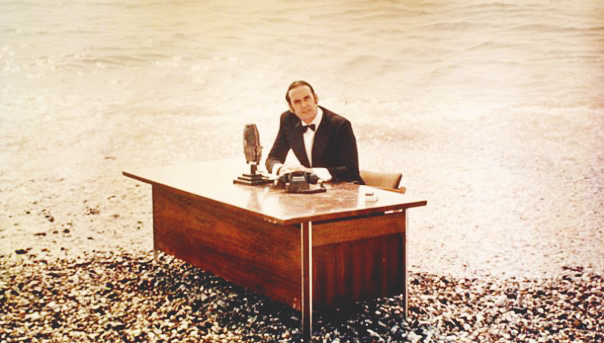
ALERT OBAMA CAUGHT ON TAPE MAKING A SECRET DEAL WITH RUSSIA

Garryowen

Deceased


Obama-angry-400x267.jpg


"I was misquoted as usual. What I actually said was 'This is my
last erection. After my erection, I have more flexibility.' I was
discussing personal male issues with Medvedev. Sheesh! It's
gonna be a bitch dealing with spin control damage this year!"

Bumblepuff, are you really the King of Spain in disguise?
 

Maryh

Veteran Member
We need to pray for our country. Miracles do happen. Does anyone know if our elections are going to be monitored by the UN? I thought there was some talk about that. Maybe they will be tampered with by the "monitors and BHO knows it.
 

workerbee

* Winter is Coming *
Absolutely we need to pray!

I just listened to KD on blogtalk @ 4:30...

I'm just now watching/listening to
1) Live local coverage on Trayvon Martin (right now Jesse Jackson is blathering on)
and
2) GBTV...

While I'm reading TB and TF, checking Drudge and occasionally checking twitter.....

I just wish Season 2 of Game of Thrones would be on tonight 'cause I am damned tired of reality.....

I HAD to give it to God, this shit is beyond my control!
 

ainitfunny

Saved, to glorify God.
That proves; He is governing this nation with the highest priority being to benefit himself and his interests personally above those of the people and the nation.
 

Grammytomany

Inactive
Exactly what I was thinking...he is cocky sure about being re-elected. The White House insider has said the same thing.

Also scary is that he feels if re-elected, there will be no barrier to what he can do to us. He will have 4 years of free reign where he doesn't have to worry about being re-elected and can do what he wants.

I don't recall his saying "If". I think he pretty much knows how to fix everything his way or no way. SICK
 

Bumblepuff

Has No Life - Lives on TB
Bumblepuff, are you really the King of Spain in disguise?

Monty-Python-445x329.png


"My answer is Ni, for I wrestle not in mud, thou miscreant!"
.
.
.
.
.
.
.
.
.
.

MontyPython-completelydifferent1.png


"And now for something completely different. President Obama was so delighted to
receive Medvedev's gifts of charming Russian nesting dolls for his daughters Sasha
and Malia that he secretly agreed to strategic armament withdrawals after his re-
election if the Russian leader could procure another set of the colorful dolls for him-
self without letting First Lady Michelle know about it. In another update the nation
of Liechtenstein has decided to cancel sales of whales to Wales if they catch any."

.
.
.
.
.
.
.
.
.
.

tin-foil-hat2.jpg


"That was tenuous conceptual continuity."
 

almost ready

Inactive
Obama to Russia: More flexibility after elections
AP foreign, Monday March 26 2012

ANNE GEARAN

AP National Security Writer= SEOUL, South Korea (AP) — President Barack Obama told Russia's leader Monday that he would have more flexibility after the November election to deal with the contentious issue of missile defense, a candid assessment of political reality that was picked up by a microphone without either leader apparently knowing.

"This is my last election," Obama is heard telling outgoing Russian President Dmitry Medvedev. "After my election, I have more flexibility."

Medvedev replied in English, according to a tape by ABC News: "I understand. I will transmit this information to Vladimir," an apparent reference to incoming President Vladmir Putin.

Obama and Medvedev did not intend for their comments, made during a meeting in Seoul, South Korea, to be made public.

Once they were, the White House said Obama's words reflected the reality that domestic political concerns in both the U.S. and Russia this year would make it difficult to fully address their long-standing differences over the contentious issue of missile defense.

Obama, should he win re-election, would not have to face voters again.

"Since 2012 is an election year in both countries, with an election and leadership transition in Russia and an election in the United States, it is clearly not a year in which we are going to achieve a breakthrough," White House deputy national security adviser Ben Rhodes said.

Tensions over missile defense have threatened to upend the overall thawing of relations between the U.S. and Russia in recent years.

Both leaders acknowledged as much in their public statements to reporters following their meeting. Obama said there was "more work to do" to bridge their differences; Medvedev said each country had its own position on missile defense but there was still time to find a solution.

Mitt Romney, the leading Republican contender to face Obama this fall, said in a statement the president's unguarded remarks "signaled that he's going to cave to Russia on missile defense, but the American people have a right to know where else he plans to be 'flexible' in a second term."

Romney, a former Massachusetts governor who often faces charges of having been flexible on his own policies over the years, said Obama "needs to level with the American public about his real agenda."

Rep. Mike Turner of Ohio, Republican chairman of the House Armed Services Subcommittee on Strategic Forces, wrote to the president requesting an "urgent explanation of (his) comments to President Medvedev in Seoul this morning."

"Congress has made exquisitely clear to your administration and to other nations that it will block all attempts to weaken U.S. missile defenses," Turner said. "As the chairman of the Strategic Forces Subcommittee, which authorizes U.S. missile defense and nuclear weapons policy, I want to make perfectly clear that my colleagues and I will not allow any attempts to trade missile defense of the United States to Russia or any other country."

Congress, as part of the fiscal 2012 defense authorization act, constrained Obama's ability to share classified U.S. missile defense information with Russia. Obama signed that legislation into law.

Russia has been strongly critical of plans for a U.S.-led NATO missile defense in Europe. Russian officials believe the planned missile shield would target Russia's nuclear deterrent and undermine global stability, while the U.S. insists the planned missile shield is intended to counter threats from Iran.

Putin said earlier this month that Washington's refusal to offer Moscow written guarantees that its missile defense system would not be aimed against Russia deepened its concerns.

Putin won elections held earlier this year and will return to the presidency later this spring. He is expected to name Medvedev prime minister.

The U.S. and Russia have also clashed recently over their approach to dealing with violence in Syria. The U.S. has sharply criticized Russia for opposing U.N. Security Council action calling on Syria's president to leave power.

Obama said Monday that despite past differences on Syria, he and Medvedev agreed they both support U.N. envoy Kofi Annan's efforts to end the violence in Syria and move the country toward a "legitimate" government
.http://www.guardian.co.uk/world/feedarticle/10164347

******

So - What's he going to give away that is so unacceptable it would prevent his re-election?
 

Burt Gummer

Veteran Member
I was just thinking.............maybe he made the coment because he already actually knows that he will win the election.
 

Housecarl

On TB every waking moment
For links see article source....
Posted for fair use.....
http://www.weeklystandard.com/blogs...missile-defense-comments-medvedev_634487.html

Congressman Demands Explanation of Obama’s Missile Defense Comments to Medvedev
12:21 PM, Mar 26, 2012 • By ROBERT ZARATE

Congressman Mike Turner, a Republican from Ohio, sent a letter to President Obama demanding an “urgent explanation of [his] comments to [Russian] President Medvedev in Seoul this morning,” only hours after a hot microphone caught Obama privately telling Medvedev this morning that he’ll have “more flexibility” after the November 2012 elections to deal with Russian objections to U.S.-NATO missile defense.
Obama and Medvedev sign Prague Treaty 2010.jpeg

Although the United States and NATO have repeatedly assured the Kremlin that their missile defense systems are aimed at defending against Iran and other threats emanating from the Middle East, the Russian government continues to claim that the missile shield is aimed against its nuclear-armed missile forces.

Turner writes: “Congress has made exquisitely clear to your Administration and to other nations that it will block all attempts to weaken U.S. missile defenses. As the Chairman of the Strategic Forces Subcommittee, which authorizes U.S. missile defense and nuclear weapons policy, I want to make perfectly clear that my colleagues and I will not allow any attempts to trade missile defense of the United States to Russia or any other country.”

Related Stories

* Russia Responsible for U.S. Embassy Bombing
* Obama in 2013: ‘More Flexibility’
* Obama to Russia: ‘After My Election I Have More ...
* Is Putin’s Next Ploy Russia’s Last Gasp?
* Monsters’ Ball

More by Robert Zarate

* America’s ‘Deteriorating’ Nuclear Weapons ...
* Lawmaker Urges Transparency on Obama’s Unilateral ...
* Lawmakers Urge Obama to Abandon Unilateral Nuclear ...
* Bolton and Markey: Is Obama Embracing a Post-Iran ...
* Washington Post Debunks Nuclear Spending Hyperbole

Congressional testimony and news reports suggest that the Obama administration, in the hopes of mollifying the Kremlin’s concerns, is now willing to offer to share with the Russians classified U.S. information about the performance of U.S.-NATO missile defenses as part of future bilateral negotiations. However, the National Defense Authorization Act for Fiscal Year 2012 (NDAA) contains a measure that limits the executive branch’s ability to share classified U.S. information about missile defenses with the Russians.

But when President Obama signed that the NDAA legislation into law on December 31, 2011, he created a controversy by issuing a signing statement suggesting that he treats that measure as “non-binding.”

Section 1244 [of the FY 2012 NDAA] requires the President to submit a report to the Congress 60 days prior to sharing any U.S. classified ballistic missile defense information with Russia. Section 1244 further specifies that this report include a detailed description of the classified information to be provided. While my Administration intends to keep the Congress fully informed of the status of U.S. efforts to cooperate with the Russian Federation on ballistic missile defense, my Administration will also interpret and implement section 1244 in a manner that does not interfere with the President's constitutional authority to conduct foreign affairs and avoids the undue disclosure of sensitive diplomatic communications…. Like section 1244, should any application of these provisions conflict with my constitutional authorities, I will treat the provisions as non-binding.

Read Turner’s letter to President Obama here.

____

Turner's letter....

http://turner.house.gov/UploadedFiles/Turner_Letter_to_POTUS_on_Missile_Defense.pdf
 

Housecarl

On TB every waking moment
For links see article source....
Posted for fair use....
http://www.latimes.com/news/politic...roubling-development-20120326,0,6140833.story

Romney: Obama's exchange with Medvedev a 'troubling development'
By Maeve Reston
Comments 7
March 26, 2012, 12:03 p.m.
Reporting from San Diego—

While campaigning in California on Monday morning, Mitt Romney pounced on President Obama’s offhand comments to Russian leader Dmitri A. Medvedev — calling the conversation caught on a hot microphone “an alarming and troubling development.”

During a nuclear security summit meeting in Seoul, Obama was captured on tape telling Medvedev that after the November election he would “have more flexibility." The remarks were interpreted by some as a suggestion that Obama plans to delay discussions with Russian leaders about a missile defense system based in Europe that has been a source of tension between the two nations. Explaining the remark, a White House official said since 2012 is an election year in both countries “it is clearly not a year in which we are going to achieve a breakthrough.”

Diverting from his remarks about Obama’s healthcare program during a speech at a San Diego medical device company, Romney followed the lead of the Republican National Committee — which put out an ominous video mocking the exchange — by calling Obama’s open mike comments “revealing.”

“This is no time for our president to be pulling his punches with the American people,” Romney said. “And not telling us what he’s intending to do with regards to our missile defense system, with regards to our military might, and with regards to our commitment to Israel and with regard to our absolute conviction that Iran must have a nuclear weapon. I will make it very clear that the relationship we have around the world is one where America will be strong, that America’s strength and commitment to our friends and allies will be unshakable and unwavering."

Obama’s campaign spokesman Ben LaBolt said Romney was “undermining his credibility by distorting the president’s words,” adding that the GOP candidate had been “all over the map on the key foreign policy challenges facing our nation today, offering a lot of chest-thumping and empty rhetoric with no concrete plans to enhance our security or strengthen our alliances.”

maeve.reston@latimes.com
 

plantman

Veteran Member
He doesn't give a sh_t about you, your state, much less your country. He was put in by mobsters and he's playing their game.
 

tiger13

Veteran Member
The Usurper will not leave the Office of the Presidency under his own power.

This part I like the best....
 

undead

Veteran Member
Hussein Obama don't don't give a shit what the average law-abiding American thinks.
 

Attachments

  • 2012-03-08-WRFIN.jpg
    2012-03-08-WRFIN.jpg
    15.6 KB · Views: 141

homecanner1

Veteran Member
I don't discount for a single second that he deliberately leaked this, knowing he had a hot mic on. Advance trial balloon of foreign policy strategy.

That clip tho, may end up in a GOP campaign ad come this autumn.
 
Well boys and girls there ya have it; if you really don't have your act together come November you REALLY could be in trouble.

Like Shane says..... Panic early, beat the rush!
 
I would also state that O, at this point, is only 51% of the problem, the other 49% falls on Americans for continuing to let it happen. What will it take for us to water the tree?
 

susie_q

Inactive
To assume no one will pay attention to Obama's comment, is quite a stretch considering the first time I heard it today was on the NBC Nightly News. I hope he just buried himself for good.
 

northern watch

TB Fanatic
Mitt Romney: Russia is America's 'number one geopolitical foe'

Mitt Romney has been dragged into the Obama open mic row after describing Russia as America’s “number one geopolitical foe” in an interview with CNN

By Amy Willis, Los Angeles
1:13AM BST 27 March 2012
The Telegraph Group

The Republican front-runner was reacting to comments made by President Obama in South Korea on Monday where he told Russia’s Dmitri Medvedev he would have more flexibility on missile defence after his reelection.

"This is my last election,” Obama was recorded by ABC News as saying. “After my election, I have more flexibility.”

“I understand. I will transmit this information to Vladimir,”
Mr Medvedev, Russia's outgoing president, responded.

Neither Medvedev nor Obama intended for the comments to be made public.

Mitt Romney’s political camp was quick to jump on the gaffe, calling it a sign that Obama intends to campaign on one policy but implement another.

Speaking to CNN's Wolf Blitzer from the campaign trail in San Diego, Mitt Romney said he found Obama's candid remarks “alarming” and “troubling”.

"Russia continues to support Syria, supports Iran, has fought us with crippling sanctions we wanted to have the world put in place against Iran. Russia is not a friendly character on the world stage and for this president to be looking for greater flexibility where he doesn't have to answer to the American people in his relations with Russia is very very troubling, very alarming. This is a president who is telling us one thing and is doing something else," he said in the live broadcast.

Mitt Romney then went further, describing the nation as America’s number one foe.

“This is without question our number one geopolitical foe. They fight every cause for the world’s worst actors. The idea that he has more flexibility in mind for Russia is very very troubling indeed, " he said.

After Wolf Blitzer challenged the statement, Mr Romney explained: "The greatest threat the US faces is a nuclear Iran ... [But] who is it who always stands up for the world’s worst actors? It’s always Russia, typically with China alongside
.”
http://www.telegraph.co.uk/news/w...-is-Americas-number-one-geopolitical-foe.html

Posted Under Fair Discussion
 

Racing22

Crew Chief
To assume no one will pay attention to Obama's comment, is quite a stretch considering the first time I heard it today was on the NBC Nightly News. I hope he just buried himself for good.

That's what I was thinking, his comment was reported on most of the MSM. This is the first time in a long time that many of them actually reported a "negative" comment made by Obama. Could it be that they are finally "WAKING UP" and deciding that they won't "run cover" for him anymore. Could it be possible that the MSM are seeing him for what he truly is and what he is trying to accomplish and see his "agenda"???

One can only hope!!!!
 

Beelbill

Inactive
I have been contending, for quite some time, that there will be NO election in November, 2012... The Usurper will not leave the Office of the Presidency under his own power... When it becomes apparent, even to him, that he cannot LEGALLY be re-elected, he will end the charade. He will declare Martial Law, and rule as Dictator for Life, via Presidential Decision Directives, and Executive Orders. The Constitution will no longer be in effect, and the rights, privileges, and freedoms that Americans enjoy and hold dear, will be gone...OA, out...

I agree. He is our last president. If he can get the zombies to re-elect him, then he has more time to solidify his hold before the next election. If he can't get elected legally, he will do it illegally with recounting and finding new votes like other democrats have done. If he can't do it illegally, he will just declare martial law. But, he will never leave willingly.
The Usurper is determined to do three things- Destroy the United States as a free, and independent, nation- including the eradication of any religion not of Islam. He seeks the destruction of Israel and the deaths of all Jewish people. He seeks the establishment of a worldwide Caliphate. If there is a personification of "EVIL," it is the Usurper, Barrack Hussein Obama.

OA, out...
Again you are right on. At the risk of getting flamed, I believe islam is the final antichrist kingdom and he is quite probably the antichrist.
 

momof23goats

Deceased
one would hope that the reps. will be all over this. as well as a few other things he has done, that could be tried for treason over.
 

knepper

Veteran Member
More evidence that O is in fact a KGB sleeper agent. Just a Commie spook communicating with his handler. His legend has been professionally manufactured, by someone who is a master of deceit. Who better fits that description than the KGB?
 

Countrymouse

Country exile in the city
I have been contending, for quite some time, that there will be NO election in November, 2012... The Usurper will not leave the Office of the Presidency under his own power... When it becomes apparent, even to him, that he cannot LEGALLY be re-elected, he will end the charade. He will declare Martial Law, and rule as Dictator for Life, via Presidential Decision Directives, and Executive Orders. The Constitution will no longer be in effect, and the rights, privileges, and freedoms that Americans enjoy and hold dear, will be gone...

The Usurper is determined to do three things- Destroy the United States as a free, and independent, nation- including the eradication of any religion not of Islam. He seeks the destruction of Israel and the deaths of all Jewish people. He seeks the establishment of a worldwide Caliphate. If there is a personification of "EVIL," it is the Usurper, Barrack Hussein Obama.

OA, out...

I heard some of the Supreme Court questioning today didn't look good for the "individual Mandate" portion of Obamacare, without which the whole program collapses under its own weight. I wonder, if the SCOTUS does vote against his precious "Obamacare", will that ALONE be enough to so frighten and enrage Bambams that he might "speed up" the take-over plan?
 

almost ready

Inactive
That's what I was thinking, his comment was reported on most of the MSM. This is the first time in a long time that many of them actually reported a "negative" comment made by Obama. Could it be that they are finally "WAKING UP" and deciding that they won't "run cover" for him anymore. Could it be possible that the MSM are seeing him for what he truly is and what he is trying to accomplish and see his "agenda"???

One can only hope!!!!

Very interesting. A couple of elite insider guys have stated outright that they want to dump Obama. These being unsupportable allegations, I haven't bothered to try and post them here at TB. IF the MSM is opening the door to reporting on his foibles, then those rumors would appear to have legs.

All Obama-watchers have known since before the 2008 election that there was enough information on Obama to prevent his election even once.

This may be the trickle at the beginning of a dam break...first the news programs that report on Obama get higher ratings, then others break their own stories, and so it goes.

Given the extremely poor show in Africa, where China is making huge trade in-roads, and the mid-east, where---well, you have read Dutch's thread, the US economy, and especially the Obama decision to stop the Keystone pipeline, make him, IMO, the one to remove in 2012. There will be no lack of better choices. Many are laying low rather than lose to the anointed one....but not for long, I'd wager a guess.

The Williams/Zimmerman identification will be just another mistake carving away more of O's support base.

Keep a close eye here and let's see if it was just a fluke or the beginning of a new trend. Again, I reiterate, the Keystone Pipeline blockage was a betrayal of the elite and they will not stand for it.
 

VesperSparrow

Goin' where the lonely go
Did this LYING rat-bastard illegal POTUS not promise the Palestinians something as well AFTER he was relected?

If memory serves...he damned sure did,

So who is going to put the man/thing on trial?
 

Richard

TB Fanatic
Russian is history, the country will have no influence on international affairs, it will go back to building it's own "shire"
 

Housecarl

On TB every waking moment
Jells with Richard's take....

For links see article source....
Posted for fair use.....
http://www.bloomberg.com/news/2012-...t-let-russia-veto-europe-missile-defense.html

Obama’s Slip Won’t Let Russia Veto Europe Missile Defense

By the Editors Mar 26, 2012 4:00 PM PT

President Barack Obama got caught Monday talking with the microphone left on -- again. This time, he was telling Russia’s outgoing President Dmitry Medvedev that it would be better to leave talks about NATO’s contentious missile defense system until after U.S. elections in November, when Obama would have “more flexibility.”

No shock or awe there. Anyone who believes electoral politics don’t play a big role in driving foreign policy has been leading a very secluded life. Campaign-year outrage from Obama’s rivals over the remarks is probably inevitable, but it would also be disingenuous because we all know better. Besides, nuclear missile defense is a slow-burning fuse -- talks can wait until after November without any consequence.

Yet, there was something a little worrisome in this overheard conversation: Just how flexible does Obama plan to be with Russia on the missile defense, which he redesigned once already to take account of Russian concerns?

A quick recap is in order here. Under President George W. Bush, the U.S. withdrew in 2002 from the Cold War Anti-Ballistic Missile treaty that had restricted U.S. and Soviet missile defense programs for 30 years. In 2007, the U.S. started preparations for a missile defense system -- ostensibly against an Iranian attack -- with its front legs in Europe. The forward radar for the system was to be in the Czech Republic, and Poland would host the missiles that would shoot down any long-range ballistic missiles Iran might let fly. Russia, however, saw the shield as a naked Cold War power play by the U.S. and was mad as hell.

A Diminishing Power

That anger was easy to understand. Poland is close to Russia, but a long way from Iran. A powerful U.S. radar in the Czech Republic would cover most of European Russia and the sensitive Caucasus region, as well as Iran. Above all, the plan was humiliating to Russia, challenging its already diminished strategic position in the region. The Soviet Union may have agreed in its final years to dissolve the Warsaw Pact and give up control of its central and Eastern European satellites, but replacing Russian tanks with U.S. missile systems in those countries was never part of the deal.

Fast forward to Obama’s “reset” of relations with Russia. A big piece of that policy involved a redesign of the missile defense plan, rolled out in September 2009. The system, rebranded as the European Phased Adaptive Approach, was made into a North Atlantic Treaty Organization program. It was more pragmatic than the original, because it would start small and cheap, using existing technology to address capabilities the Iranians might have in the immediate future. The system would eventually graduate to new technologies and be capable of shooting down long-range ballistic missiles by about 2020.

The early stages of the new plan don’t include Poland or the Czech Republic. The forward radar is now located instead in eastern Turkey, and the initial anti-missile batteries would be put on ships and in Romania. But by the fourth and final phase, Poland would be back in the picture.

Russia remains unhappy. It wants an equal role and a written legal guarantee from the U.S. that the missile defense system would never be turned against Russia’s nuclear arsenal. That’s something Congress would never agree to.

There was plenty of room 10 years ago for skepticism about the need for an expensive, untried missile system to protect U.S. bases, Europe and the U.S. from Iran. But the Middle East is changing quickly. In 10 or 15 years, the region may have several nuclear-armed militaries, including Iran’s, and possibly new and unpredictable regimes in charge. We think that in its revised form, NATO’s moving ahead on missile defense represents reasonable insurance against low probability but catastrophic future risks. If those risks fail to appear, the shield’s later and most expensive phases can be dropped.

Ideas for Cooperation

It would be best to have Russia on board with the program if that can be achieved. There are some interesting proposals available. Dean Wilkening, a physicist at the Lawrence Livermore National Laboratory, suggests building a joint U.S-Russian $500 million radar complex in central Russia, using U.S. technology. This, he says, would significantly improve both Russia’s dated early warning network and the coverage of NATO’s missile shield. That sounds smart to us. The U.S. and NATO have also been looking at ways to make the shield’s technology and capabilities transparent to Russia, to avoid any destabilizing paranoia. Those efforts should be redoubled.

Still, we suspect Russia’s objections are pretty much zero sum and will be tough to meet without ceding the Kremlin a veto over the system’s use, which is and should be a nonstarter. Vladimir Putin used the missile system’s alleged threat to Russia’s security to drum up votes during his recent presidential campaign -- he’ll take office again in May. Putin and Medvedev have threatened to build a new generation of missiles capable of penetrating U.S. defenses, at huge expense, if NATO’s plans are followed through. The White House should ignore this saber-rattling.

Renewing the arms race would be a terrible outcome of a missile shield’s construction, but it would damage mostly Russia. The Soviet Union discovered the risk involved in trying to match U.S. military spending from revenue that is dependent on fickle oil and gas prices. Putin would be unwise to repeat that mistake.

Obama should go on talking to the Russians about missile defense and yes, he can show some flexibility. But there is no pre-election urgency, and the decision on whether the NATO allies need a nuclear shield is for those countries alone to make. Russia’s threats should not be allowed to dilute the effectiveness of an insurance policy we might one day need.

Read more opinion online from Bloomberg View. Today’s highlights:

The editors on health-care reform’s day in court and Russia’s objections to missile defense. Jeffrey Goldberg on Israel’s overconfident leaders. Ramesh Ponnuru on how Republicans will react if the Supreme Court upholds Obamacare. Edward Glaeser on regulation that can aid entrepreneurs. Simon Johnson and James Kwak on why the U.S. abandoned the gold standard.

To contact the Bloomberg View editorial board: view@bloomberg.net.
 

Housecarl

On TB every waking moment
Government Report: DC Nuke blast wouldn't destroy city

I saw this early this morning and just now had a chance to post it. Didn't see it in a quick search so I hope it's not a dupe. http://wtop.com/?nid=109&sid=2803039 WASHINGTON (AP) - Hollywood has destroyed Washington _ or New York or Los Angeles _ lots of times with nuclear bombs detonated...
Started by MrsXtrmst‎, Yesterday 03:11 PM
http://www.timebomb2000.com/vb/show...nt-Report-DC-Nuke-blast-wouldn-t-destroy-city
______

For links see article source...
Posted for fair use....
http://thehill.com/blogs/defcon-hil...-playing-fast-and-loose-with-missile-defense-

No 'secret deal' on missile defense, Pentagon tells House
By Carlo Munoz - 03/28/12 01:14 PM ET

An Obama administration official on Wednesday said he was not aware of any "secret deal" made by the White House on missile defense as Republicans continued to hammer the president for his remarks to Russia's leader on the issue.

Republicans have questioned where there is a deal between President Obama and Russian President Dmitry Medvedev on missile defense since Monday, when Obama told Medvedev—in a private conversation picked up by a live microphone—that he would have "more flexibility" to deal with missile defense after the presidential election.

Republicans argue the conversation suggests Obama intends to compromise on U.S. missile defense plans from Eastern Europe to the Pacific.

"As we talk to the issue of North Korea . . . it raises the question what is the president's secret deal to limit our missile defense systems," Rep. Michael Turner (R-Ohio) asked officials at a Wednesday hearing.

"We are all very, very concerned about what this secret deal could be, as we face the rising threat of North Korea," he said during Wednesday's House Armed Services hearing on security issues on the Korean peninsula.

Peter Lavoy, acting assistant secretary of defense for Asia and Pacific Security Affairs, told Turner's panel he was unaware of any "secret deal," and defended U.S. missile defense policies toward the Korean peninsula.

More from The Hill:
♦ Boehner won't criticize Obama for overseas remarks
♦ McCain: Medvedev slam shows Russians want Obama reelected
♦ Panetta: ‘We cannot fight wars by polls’
♦ Pentagon revamps rules of engagement for cyberwar
♦ Pentagon presses Congress to fund missile defense for Israel


He noted that North Korea's growing arsenal has prompted the Pentagon to work closely with South Korea and other regional allies to keep track of Pyongyang's activities. "We do believe our . . . approach to missile defense in the Asia-Pacific region is very much alive," Lavoy said. "It is something we are committed to."

Republicans in the Senate—along with Sen. Joe Lieberman (I-Conn.)—on Wednesday continued to criticize Obama for his comments to Medvedev.

"This is my last election,” Obama told Medvedev during a conversation picked up by live microphones. “After my election, I have more flexibility."

Sen. John McCain (R-Ariz.) said it was crystal clear what Obama was trying to convey.

"It means he's willing to compromise to Russian demands," McCain told reporters on Wednesday.

The gaffe came days before both leaders are scheduled to attend a global nuclear security conference in South Korea.

"The president is playing fast and loose with national security," McCain said, pointing out the president had been a sharp critic of missile defense during his time in the Senate.

The president's missile defense comments were "disconcerting," Sen. Joe Lieberman (I-Conn.) said at the same Wednesday briefing on Capitol Hill.

"I don't know what the president meant when he said he could be flexible" on missile defense issues, he added.

More than 40 Republican senators, led by Minority Whip Jon Kyl (R-Ariz.) sent a letter to President Obama on Tuesday, pushing him not to reduce the U.S. nuclear arsenal in the wake of his comments.

Turner also shot off a letter to the president on Monday demanding an “urgent explanation" of his comments regarding missile defense issues in Eastern Europe.

21 Comments
 
Last edited:

Housecarl

On TB every waking moment
For links see article source....
Posted for fair use....
http://www.newparadigmsforum.com/NPFtestsite/?p=1215

16Feb/12Off
A Wary Diplomat’s Guide to Arms Control Pitfalls

Note:

Below follows the text upon with Dr. Ford based his remarks on February 16, 2012, at the Foreign Service Institute (FSI) of the George P. Shultz National Foreign Affairs Training Center.

Good afternoon everyone, and thank you very much to Rusty Ingraham and the other organizers of this course for the chance to speak to you today. It’s always a pleasure to be out here on the FSI campus.

I. The Modern American Debate

I often find it fun to talk about arms control, because different parts of the U.S. policy community have very different instincts on the subject, giving arms control debates a very different character from nonproliferation discussions. We’re all relatively consistent here in Washington on nonproliferation issues, with pretty much nobody thinking that more countries should acquire nuclear weaponry. We may disagree, inside the Beltway, about the details of how best to go about trying to ensure that, but despite divergences in atmospherics and rhetoric, there has been much nonproliferation policy continuity from the George W. Bush Administration into the Obama Administration.

But the story is different with respect to arms control, where at issue is how to approach regulating the world’s existing arms. Here, the policy community often splits into feuding camps, the members of which don’t get along very well. They may succeed each other in office, but them seldom actually talk to each other.

Arms control tends to produce debates that are remarkably absolutist and, well, theological. If you’ll permit me a bit of caricature, on one end of the stereotypical continuum is a hawkish cabal that opposes any restrictions upon U.S. power, and which thinks arms control is always bad – a trap, if you will, set by internationalist America-bashers to constrain our power while favoring that of our actual or potential adversaries.

On the other end is a gang of credulously uncritical arms control addicts, who are convinced that it is always good, unhappy with any American muscularity, and devoted to the reduction of stockpiles as a moral duty that must be fulfilled as quickly as possible, and irrespective of the strategic consequences. Each side thinks the other is at least stupid, and quite possibly actually malevolent.

This description is a cartoon, of course, and unfair to both sides. Nonetheless, there’s probably enough truth in it to make my point: our public discourse on arms control is grievously polarized. For my part, I want to confound both sides of this absolutist debate by de-theologizing arms control policy, because I think both ends of this ideological continuum will make bad policy choices if left entirely to their own devices. Arms control issues are too important to be left to absolutists.

Having said that, we don’t have all afternoon, so I need to limit my remarks. Make no mistake: I believe that arms control can contribute to U.S. national security, as well as to international peace and security. But since I suspect that none of you disagree with me on that – FSI, after all, is a State Department institution – it would be wasting your time to preach to the choir about the value of arms control.

Precisely because this is a State Department program, however – and we all know where State’s instincts lie with regard to the potential for diplomatic negotiations and international treaties to solve all the world’s ills – I’ll focus my comments on what I hope will rattle you a bit. I want to talk about when arms control doesn’t work so well, and about the traps that it can sometimes create for the unwary diplomat.

I wouldn’t argue that arms control always creates such problems, of course, any more than I’d argue that it is a per se good. If you leave with one “take-away” lesson today, I want it to be that these are emphatically not questions that can be answered a priori. These are empirical matters, and the wise diplomat needs to be aware of arms control’s potential to do both good and harm. He or she needs to be able to engineer good outcomes where this is possible, but also willing to pull the plug – and to walk unflinchingly away – when this cannot be done.

II. Critiques of Arms Control

Let me start by examining some potential ways in which arms control can be problematic simply by failing to do what it aspires to do. These possibilities are relatively well known, and not too surprising: (1) verification failure; (2) enforcement failure; and (3) manipulation of the process.

One obvious challenge is how to detect violations. This is a common locus of complaint in evaluating specific arms control measures. Opponents of the Comprehensive Test Ban Treaty (CTBT), for instance, worried a great deal about the possibility of clandestine violations, and this concern helped lead to the U.S. Senate’s rejection of CTBT in 1999. With CTBT at least theoretically still on the Obama Administration’s agenda, this issue remains salient today, since it is increasingly believed that Russia and perhaps China have been secretly conducting yield-producing nuclear tests as part of an ongoing program of developing new varieties of weapon, all undetected by the CTBT’s monitoring organization. Proponents of any agreement will naturally be expected to answer questions about its verifiability, and about the potential impact of undetected violations.

But clandestine cheating is hardly the only potential worry. One must also be able to detect cheating in time to be able to do something useful about it. Reliable verification, after all, accomplishes little if it’s just a tool for documenting one side’s strategic defeat. Detection must be timely enough to permit an effective response. Timely warning is a challenge recently raised, for instance, in connection with the relationship between International Atomic Energy Agency (IAEA) inspection schedules and the “conversion times” needed to divert safeguarded capabilities to prohibited uses.

The effectiveness of the range of available responses, once detection occurs, is also a critical factor, for it would be small consolation to get lots of warning if one lacks an effective means to respond. Nor is a lack of tools the only potential problem. Verification and compliance policy can face political challenges even where tools exist, if detection of a violation would create the need to confront difficult and painful choices such as whether to withdraw, undertake a countervailing arms buildup, or go to war. In such circumstances, pressures can arise to look the other way and avoid having to acknowledge that cheating is taking place.

(This isn’t just a curmudgeonly hypothetical, by the way. Versailles Treaty arms inspectors during the interwar years are said to have downplayed evidence of German rearmament, for example, because their home governments were unprepared to deal with it and did not want to know. President Clinton also once admitted that U.S. proliferation sanctions laws created incentives for his administration to “fudge” intelligence assessments in order to downplay proliferation transfers, lest acknowledging them disrupt diplomatic relationships such countries such as China.)

Not all arenas of arms competition are equally susceptible to effective verification and reliable enforcement, and it pays to think long and hard about such challenges in considering how to structure a deal – or whether to negotiate in the first place. Even if you choose to accept a weak deal, it’s vital at least that this be understood: trouble awaits if you plan for your future security while mistaking a weak system for a strong one.

The savvy arms controller also needs to know that quite apart from whatever agreement is actually reached, arms control negotiating can itself be used for manipulative and destabilizing purposes. A state that wishes to develop a prohibited category of weaponry, for instance, might find it useful to go through the motions of negotiating over the issue in order to prevent or delay outsiders from undertaking countermeasures during the time it needs to finish developing that capability, or at least to hide or protect the associated infrastructure.

Such a strategy of negotiation in order to buy time for strategic positioning has an ancient pedigree. Before the outbreak of the Peloponnesian War between the ancient Greek city-states of Athens and Sparta, Athenian envoys drew out negotiations with Sparta over a mutual ban on defensive walls in order to win time in which their city rebuilt its own walls higher and stronger than ever. More recently, this is the sort of thing that Iran and North Korea seem to have done in negotiations over their respective nuclear weapons programs. (Iranian nuclear negotiator Hasan Rowhani publicly bragged about doing this in 2005, but the tactic apparently still works pretty well.)

These are very real pitfalls, and the wary diplomat needs to watch out for them. For the most part, however, these potential problems represent cases in which the difficulty arises from some incompleteness in the arms control process, where arms control has failed on its own terms. I thus find them less interesting, analytically, than instances in which arms control destabilizes because of its success in imposing constraints. So let’s look at those possibilities now.

III. Arms Control and Stability

The conventional wisdom of the diplomatic community holds that arms control is essential for strategic stability, especially in a nuclear-armed world. And while arms control certainly can be valuable, let’s stretch our cognitive envelope a little by thinking a bit about when that wouldn’t be true.

When might the actual success of an arms control agreement potentially lead to instability? I will suggest four basic ways: (1) direct destabilization; (2) maladaptive “lock-in”; (3) competitive displacement; and (4) manipulative substance.

The first type, direct destabilization, is probably likely to result simply from a basic conceptual failure as one designs one’s arms control agenda in the first place. To explain the kind of thing I mean, let’s take as an example the most ambitious agenda for modern arms control: weapons elimination in the form of complete nuclear disarmament. If nuclear weapons are part of the reason that the great powers haven’t gone to war against each other for many decades, then their successful abolition might destabilize, by removing one important reason for such war-dissuasive conclusions.

There is certainly no lack of historical examples of states that have prized nuclear capabilities for their presumed effect in deterring large-scale conventional military attack, among them those of the NATO states during the Cold War, and Pakistan, Israel, and Russia today. If there is anything to such assumptions, however, a world free of nuclear weapons might be more militarily unstable than before. As I once heard one foreign diplomat from a non-nuclear-weapon state say at the Conference on Disarmament, disarmament might “make the world safe again for large-scale conventional war.”

One might perhaps argue about the degree to which this is true, but to me it is striking that so many disarmament activists do concede – at least privately – that any “nuclear zero” would need to be accompanied by some kind of psychopolitical “transformation” of international politics in order to ensure that a post-abolition world doesn’t end up looking like 1914 or 1939. To my eye, if you need to resort to such magical thinking to make your strategic theory make sense, it probably doesn’t. Either way, however, it should be clear enough that even successful arms control is not always immune to the law of unintended consequences.

Just because the abolition end-point suffers from such conceptual problems, of course, doesn’t that all steps in that direction it necessarily do. They may, or they may not. Details matter, and my distaste for categorical, a priori answers in this field drives me to think that there can be no substitute for looking at proposed measures on their individual merits. My point here is merely to use the asymptotic case of abolition as an illustration of the fact that it is possible for arms control measures to be built on structurally defective foundations, and that it behooves us to approach arms control policy with intellectual humility – with an awareness that we are fallible creatures, and that it is not utterly beyond question that some of our most strongly-held strategic-theoretical certainties will turn out to be fallacious.

But what of my second category: “lock-in”? Since the world is a dynamic place, it may also be that even an arms control formula that is initially stabilizing – as it is intended to be – can turn out to be destabilizing over time. Rigid rules can sometimes create brittleness, and fixing in place a particular technological or numerical status quo may not always be a good idea.

Imagine, for instance, that future U.S. and Russian negotiators agree to cut their forces down to a strategic “monad” of the type of delivery system classical American nuclear theorizing regards as being most “survivable” and thus likely stabilizing: submarine-launched ballistic missiles (SLBMs). Into the resulting world, however, let us a few years later introduce a “wild card.” The agreement, after all, would have increased both sides’ incentives to search for new methods of strategic anti-submarine warfare, so let’s imagine that one side gets clever, or lucky, and finds a good one. This would represent catastrophic strategic surprise for the other side, and in this case arms control would have set the stage for instability by tying one side to a single-point-of-failure force posture, upon which it would now be unable to rely in deterring potential aggression.

Arms control constraints may thus, over time, create problems by “locking in” a force posture unsuitable to changing circumstances. This is why agreements usually contain withdrawal clauses, and sometimes also “sunset” provisions that in effect prevent them from fixing anything in place for too long.

The history of the Anti-Ballistic Missile (ABM) Treaty illustrates these potential challenges. It was rooted in a theory of strategic stability pursuant to which missile defenses were deemed destabilizing because they would encourage a spiraling offense/defense arms competition.

What seemed like a good idea to the Americans in 1972, however, did not look so compelling in the post-Cold War era. Indeed, under President George W. Bush, American officials concluded, in effect, that the treaty had locked in a status quo that under modern circumstances was becoming destabilizing. After the collapse of the USSR and the end of the Cold War, the Russo-American arms race had been reversed, and both sides were dramatically reducing their arsenals. At the same time, the United States had come to perceive an emerging missile and nuclear threat from third parties such as North Korea and Iran. In this new context, the anti-defense status quo of the treaty came to be seen in Washington as maladaptive, fixing in place rules no longer necessary for their original purpose and that now seemed likely to empower rogue states to use their emerging arsenals to bully their neighbors or even threaten the great powers, who were largely defenseless against long-range ballistic missile attack.

The ABM Treaty, however, had no “sunset” provision; it was intended to prohibit defenses forever. Nevertheless, it had a withdrawal clause, and in December 2001 the United States announced its intention to withdraw. Today, the treaty is a dead letter, and even the Obama Administration’s somewhat scaled-back missile defense plans involve capabilities notably beyond what the 1972 agreement would have permitted. One can argue back and forth about the merits of withdrawing, of course, and some still do. My point here is just to point out that the “lock-in” effects deliberately created by arms control may not always be stabilizing: even if you do get the recipe right at first, circumstances can change.

An third thing to watch out for is the possibility that arms control will displace military rivalry from one arena into another. Such displaced competition may not always be as bad as unregulated competition, of course. But there’s no rule that says this has to be so; things might actually get worse. It could be argued, for example, that the numerical limits imposed by the Strategic Arms Limitation Treaty (SALT) of the early 1970s on U.S. and Soviet delivery systems helped push the superpowers more into the deployment of multiple, independently-targeted re-entry vehicles (MIRVs). (Unable to aim at more targets by building more missiles as they had previously done – but still wishing to be able to hit more targets – the powers invested in ways to do so with their existing missile force. MIRVs were that answer.)

But this was problematic, for nuclear analysts tend to believe that using MIRVs – at least on missiles in land-based silos – is less “stabilizing” than single-warhead missiles, because MIRVs seem to make it more attractive for an adversary to strike preemptively. (A single attacking weapon, hitting a MIRVed missile in its silo, can take several enemy warheads out of action, but this advantage is lost if the other side is permitted to fire first.) Since SALT encouraged the superpowers to move to pervasive MIRVing, it arguably left the arms race more “unstable” than the negotiators found it. The savvy arms controller should worry about such displacement effects: be careful your “cure” doesn’t end up being worse than the disease.

A final trap to watch out for is good, old-fashioned strategic manipulation – that is, deliberately skewed substantive outcomes – in the form of deals the other side seeks precisely because their effect would be destabilizing in its favor. Think, for instance, of Soviet support in the early 1980s for a “nuclear freeze” and the idea of “no first use,” which clearly aimed to impede NATO nuclear responses to Soviet deployments of new ballistic missiles and to the Warsaw Pact’s numerical superiority in conventional forces. Similarly, Russian and Chinese proposals for a treaty to prevent an arms race “in Outer Space” have long been phrased to preclude what they feel a potential future U.S. advantage in space-based weaponry, while leaving untouched those countries’ own ability to threaten our space assets with their terrestrially-based anti-satellite capabilities. Not all arms control is good arms control, and getting “no deal” can be better than one that the other side has “cooked.” (If you happen to “cook” a deal for your own side, of course, I suppose someone will probably give you a nice medal and a promotion. But watch out for the other guy, and think hard about what he wants you to accept.)

IV. Conclusion

Anyway, that’s my laundry list of potential arms control pitfalls of which the wary diplomat needs to be aware. Do these landmines along the road mean that arms control is invariably a bad idea, and that it cannot contribute in valuable ways to U.S. security and international peace and security? Of course not. It is often very valuable indeed, and in the unlikely event that you doubt this, we can talk about it in the question-and-answer period if you like.

But while remaining committed to getting real value out of arms control wherever possible, arms controllers also need to be smart, historically and contextually aware, attuned to the multiple ways in which good intentions can go wrong, and willing – in the right circumstances – not just to say “no” but to say “hell, no.” This is really just common sense, but in today’s theologized arms control discourse, it sometimes needs to be said anyway. Traps await the unwary if our enthusiasms outrun our wisdom.

-- Christopher Ford

About Dr. Ford
Dr. Ford is a Senior Fellow and Director of the Center for Technology and Global Security at the Hudson Institute in Washington, D.C. Previously, he served as U.S. Special Representative for Nuclear Nonproliferation, Principal Deputy Assistant Secretary of State, and General Counsel to the U.S. Senate Select Committee on Intelligence. A graduate of Harvard College, Oxford University (as a Rhodes Scholar), and Yale Law School, Dr. Ford is a contributing editor to The New Atlantis magazine, an ordained Buddhist chaplain in the Soto Zen tradition, and served from 1994-2011 as a reserve intelligence officer in the U.S. Navy, rising to the rank of of Lieutenant Commander.

 

Beetree

Veteran Member
Quote. “On all these issues, but particularly missile defense, this, this can be solved, but it’s important for him to give me space,” Mr. Obama told Mr. Medvedev at the end of their 90-minute meeting, apparently referring to incoming Russian President Vladimir Putin.

Mr. Medvedev replied, “Yeah, I understand. I understand your message about space. Space for you…” Unquote

We don't know where the commas were. Words in print, can be very different than spoken words. For instance there could be a period after..this can be solved. "I want space", might have been a separate subject. For all we know, there can be some new discovery only known to Russia and The U.S. That has to do with space. Not out of the realm of possibility, these days. One has to admit that the word SPACE has two meanings and was mentioned repeatedly. If there is to be an announcement of some kind, there could be a discussion about who will get to announce it?? I doubt it, but the wording just strikes me as strange, for some reason.
 

Housecarl

On TB every waking moment
For links see article source....
Posted for fair use....
http://online.wsj.com/article/SB10001424052702303816504577311601745664294.html?mod=googlenews_wsj

* OPINION
* April 2, 2012, 6:51 p.m. ET

What's at Stake in the Missile-Defense Debate?
The U.S. government has no higher moral obligation than to protect the American people from nuclear attack.

* Article
* Comments (6)

more in Opinion | Find New $LINKTEXTFIND$ »

By JON KYL

When President Obama beseeched the Russian president to give him "space" until after the November election to deal with Moscow's concerns about U.S. missile defenses, it was with his larger objective of a world without nuclear weapons in mind. In explaining his remarks, the president said: "I want to reduce our nuclear stockpiles; and one of the barriers to doing that is building trust and cooperation around missile-defense issues."

It appears the president is willing to compromise our own missile-defense capabilities to secure Russian support for another round of nuclear-arms reductions. To accomplish that, he may have to ignore or circumvent commitments he made to Congress to secure support for the 2010 New Strategic Arms Reduction Treaty (Start)—among them, that he would deploy all four phases of planned U.S. missile-defense systems for Europe, and that he would modernize the Ground-based Midcourse Defense (GMD) system for the protection of the U.S. homeland.

The president's re-election prospects could suffer if concessions on these systems were to be openly discussed before the election.

The Russians have made clear their concern about the range and speed of U.S. missile-defense interceptors planned for deployment later this decade, as well as American plans to base those interceptors in Poland, in Romania, and on naval vessels. In particular, the Russians decry the development of the SM-3 block IIB missile, which is planned for deployment at the beginning of the next decade. This potential missile would be the only U.S. theater missile-defense system capable of catching intercontinental-range Iranian missiles, making it important for the defense of our homeland.

Russia also wants increased involvement in actual operation of NATO missile defenses and would not want to see expansion and improvement of our existing national missile-defense system (which already has been curtailed by the president).

It is questionable whether concessions on missile defense would induce Russia to further reduce its nuclear arsenal. Unlike the U.S., Russia maintains a robust nuclear warhead production capability, and its national security strategy is to increase reliance on nuclear weapons. Russia is also modernizing ICBMs and submarine-launched ballistic missiles.

In addition to worrying about our missile-defense capability, the American people should question the assumptions behind the president's quest to reduce the number of nuclear weapons well below New Start Treaty levels. While in South Korea last month, President Obama said that he "can say with confidence that we have more nuclear weapons than we need."

U.S. military planners don't necessarily share that view. During Senate hearings in 2010 on the New Start Treaty, the then-Commander of U.S. Strategic Command Gen. Kevin Chilton testified that, "I think the arsenal that we have is exactly what is needed today to provide the deterrent."

Would the world be safer and more peaceful if the U.S. had fewer nuclear weapons? Is the current nuclear balance unstable? Are there incentives to strike first during a crisis? Are there pressures to increase the numbers of nuclear arms? Do our allies worry about the credibility of the U.S. nuclear umbrella?

The answer to all of these questions is "no." Yet very low numbers of deployed nuclear weapons, as the president appears to have in mind, could engender instability. Lower numbers of U.S. and Russian nuclear forces could encourage China and other nations to seek equivalence. Our allies would be less certain about American nuclear guarantees, and they would then have an incentive to develop their own nuclear arsenals.

Very low numbers could prove destabilizing during a crisis, when even small amounts of cheating could tip the balance. With a very small nuclear arsenal, we would be less able to respond quickly to new threats and strategic challenges. It is far from certain that the supposed benefits of the additional reductions favored by the president outweigh the risks of lower numbers in our nuclear stockpile.

As the president has noted, any new arms-control treaty would have to be supported by the Senate. His failure to request full funding to modernize our nuclear weapons laboratories—another pledge he made to secure ratification of New Start—is another reason his proposals would be met with strong skepticism in the Senate.

As he said on his recent trip to South Korea, President Obama believes that, because we are "the only nation ever to use nuclear weapons," we now have a "moral obligation" to pursue nuclear disarmament. In fact, the United States used two atomic weapons to end World War II in order to fulfill a moral obligation to save the lives of perhaps a million American GIs.

Today, the federal government has no higher moral obligation than to protect the American people and to help ensure the human race never again experiences the ruin and destruction of the wars that occurred before the advent of nuclear weapons. Supporting a robust nuclear deterrent and an effective missile defense is a moral obligation for all those who are entrusted with ensuring our nation's security.

Mr. Kyl is a Republican senator from Arizona.
 
Top